Endangered polar bears are evolving to survive global warming: Here’s how?
The US government in 2008 started to grant protective status to polar bears under the Endangered Species Act
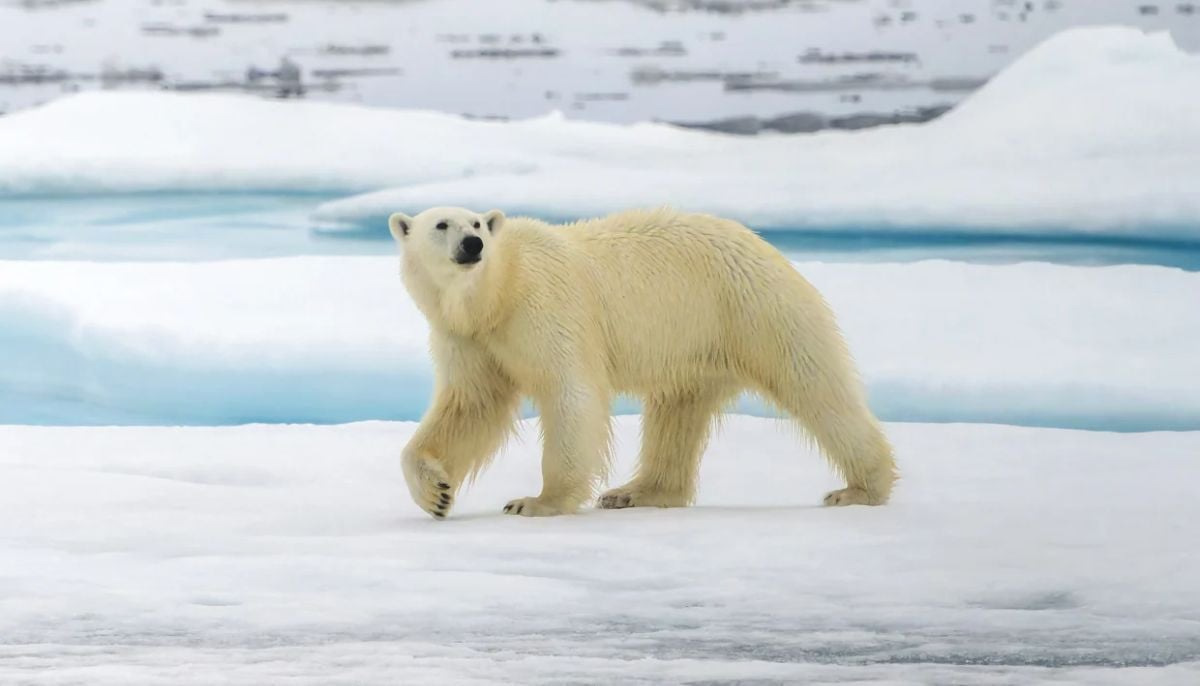
Scientists in a recent breakthrough have discovered a paradigm shift in polar bears’ genetics, helping them to adapt to disastrous realities of climate change.
Owing to human-caused global warming, two-thirds of polar bears are on the verge of “total extinction” by 2050 as their icy Arctic habitat is rapidly collapsing.
The US government in 2008 started to grant protective status to polar bears under the Endangered Species Act.
The researchers from the University of East Anglia have observed some changes in polar bear DNA, helping the animals to survive in a warmer climate. For the very first time, the study proves a major link between rising temperatures and genetic variations in wild mammal species.
As a result of climate breakdown, some genes related to heat stress, metabolism, and ageing behave distinctively in polar bears inhabited in south-east Greenland.
According to lead researcher Dr Alice Godden, from UEA’s School of Biological Sciences, such a surprising genetic shift, published in the journal Mobile DNA, offers some hope for polar bears’ conservation efforts, who are facing a massive threat of extinction by the end of this century.
“DNA is the instruction book inside every cell, guiding how an organism grows and develops. By comparing these bears’ active genes to local climate data, we found that rising temperatures appear to be driving a dramatic increase in the activity of jumping genes within the south-east Greenland bears’ DNA,” Dr Godden said.
The study reported the effective role of “jumping genes” in rewriting the genetic code. These genes are a small piece of the genome, influencing how other genes work.
Godden said, “This finding is important because it shows, for the first time, that a unique group of polar bears in the warmest part of Greenland are using ‘jumping genes’ to rapidly rewrite their own DNA, which might be a desperate survival mechanism against melting sea ice.”
However, despite the genetic adaptation in bears, the world must carry out concerted efforts to limit global warming and burning of fossil fuels.
“This research offers some hope but does not mean that polar bears are at any less risk of extinction. We still need to be doing everything we can to reduce global carbon emissions and slow temperature increases,” the lead author added.


-
 Scientists develop technology to send smells through phones
 -
 Earth’s close encounter with giant asteroid Apophis is less than 3 years away
 -
 Chinese astronomers discover real-life three-body system unlike Liu Cixin’s fiction
 -
 Hunter’s Moon 2026: When and how to watch October’s full moon
 -
 Elon Musk’s Mars colonization dream faces reality check from Nobel laureate
 -
 NASA competition model 2.0 cuts mission selection by 45%
 -
 A ‘neglected’ neutrino may hold the key to why the Universe exists
 -
 Can cancer drugs be made in space? Here’s what the new mission aims to find out