Qatar unearths 21-million-year-old tiny sea cow fossils
Salwasiren qatarensis was relatively small and weighs around 250 pounds
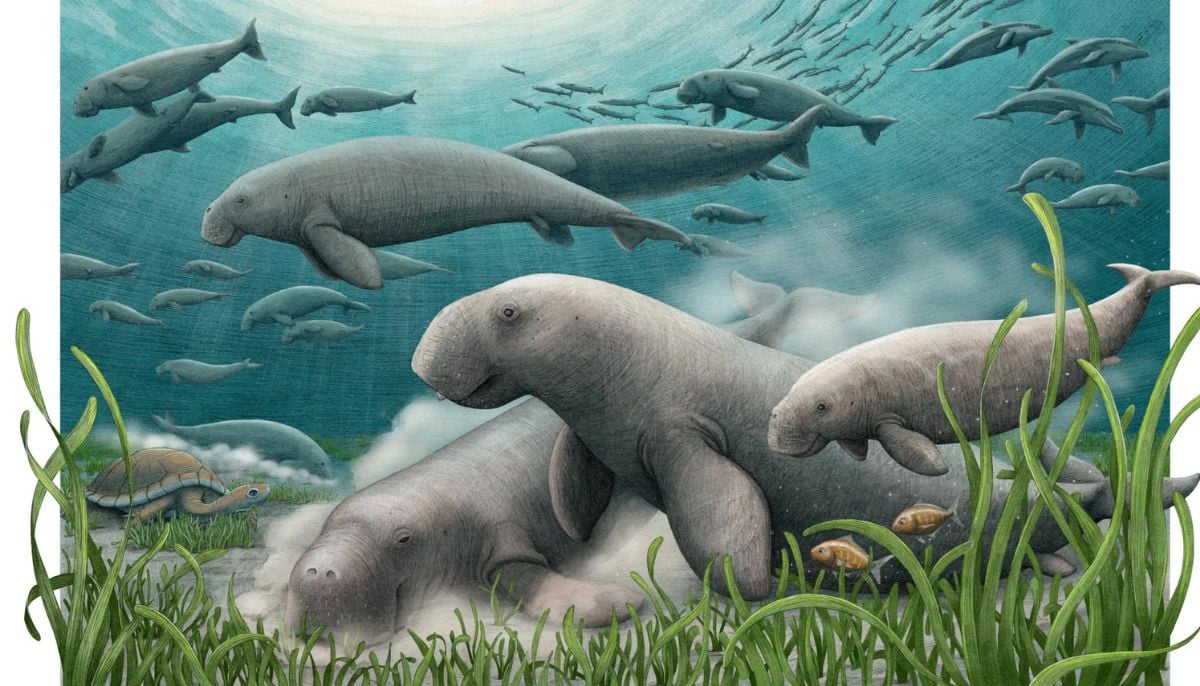
Scientists in a recent breakthrough have discovered 21-million-year-old tiny sea cow fossils in Qatar, dating back to the Early Miocene.
The researchers in partnership with the Smithsonian’s National Museum of Natural History and Qatar Museums, have attributed the fossils to a previously unknown species of ancient sea cow named Salwasiren qatarensis.
Salwasiren qatarensis was relatively small and weighs around 250 pounds, which is nearly eight times smaller than modern dugongs.
As per evidence, the sea cow ancestors have relied on aquatic plants for 50 million years.
According to Nicholas Pyenson, curator of fossil marine mammals and a lead author of the study, “We discovered a distant relative of dugongs in rocks less than 10 miles away from a bay with seagrass meadows that make up their prime habitat today.”
“This part of the world has been prime sea cow habitat for the past 21 million years -- it's just that the sea cow role has been occupied by different species over time,” he added.
These findings published in the journal PeerJ, are important as modern dugongs in the Arabian Gulf face potential threats from accidental fishing, rising temperatures, coastal development, and increasing salinity, thereby putting a strain on the seagrass meadows on which the dugongs depend on.
“If we can learn from past records how the seagrass communities survived climate stress or other major disturbances like sea-level changes and salinity shifts, we might set goals for a better future of the Arabian Gulf,” Pyenson said.
Faisal Al Naimi, coauthor of the study said, “Dugongs are an integral part of our heritage, not only as a living presence in our waters today, but also in the archaeological record that connects us to generations past.”




-
 European Space Agency to negotiate with NASA on future lunar missions
 -
 SpaceX AI satellites plan raises doubts after Microsoft setback
 -
 NASA Artemis II lifts off, sending cubesats into deep space study
 -
 Could there be life on Mars? NASA Jared Isaacman claims chances are 90%
 -
 NASA Artemis II Moon mission set for liftoff today: Here’s what to know
 -
 Did the Big Bang happen differently? New theory challenges origin of Universe
 -
 April’s Pink Moon 2026: How to see the full moon in all its glory
 -
 First-ever primordial black hole discovery? Scientists reveal breakthrough