Interstellar object 3I/ATLAS enters final Earth observation window
Global scientific community awaits answers as interstellar object 3I/ATLAS enters critical observation phase
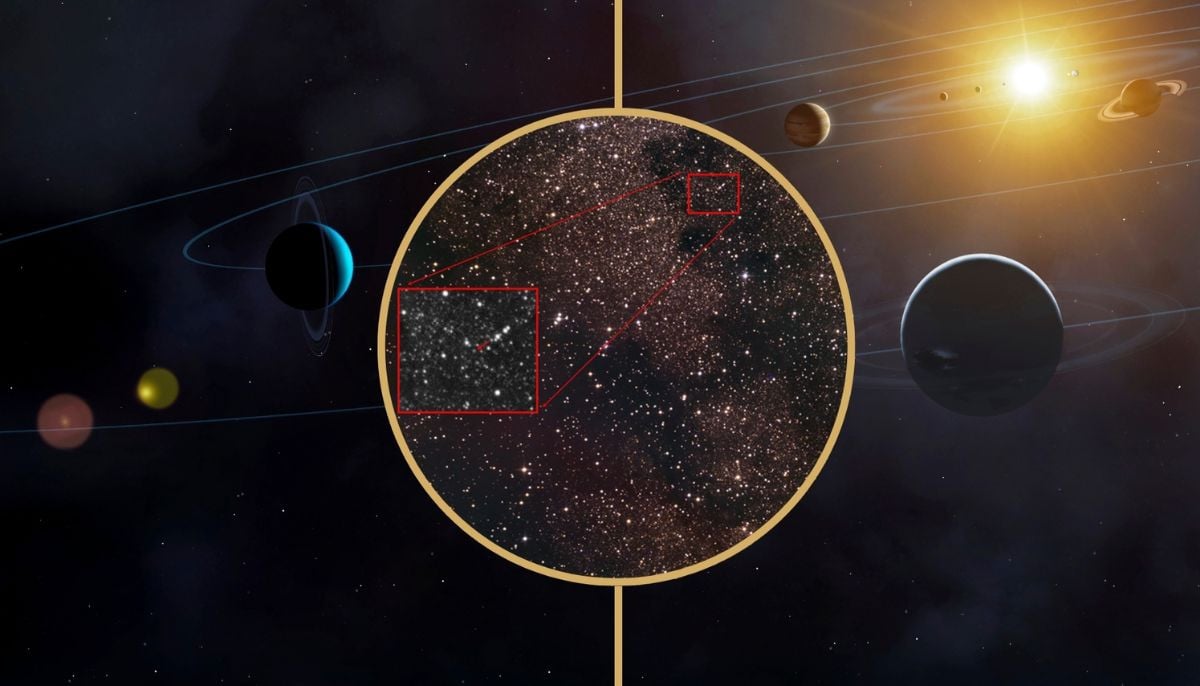
The global astronomical community is mobilizing for an unprecedented observation campaign focusing on the interstellar object 3I/ATLAS, which is now entering its final and most crucial observation window.
From the European Space Agency to National Aeronautics and Space Administration (NASA), scientists worldwide were triggered by a series of escalating anomalies that have left experts struggling for conventional explanations.
Since its perihelion, the object has defied expectations by showcasing unusual illumination and displaying non-gravitational acceleration.
This is a clear indication that forces beyond mere gravity are influencing its path.
According to the Harvard astrophysicist Dr. Avi Loeb, the orbital track of the 3I/ATLAS is influenced by a perplexing two-component acceleration i.e., a radical push away from the Sun accompanied by a transverse slide.
This pattern, he noted, has no evidence in classical cometary physics.
A lead scientist with the campaign, explaining the condition of anonymity states, “The behaviour we are witnessing is without precedent in the historical record for comets.”
“The standard explanation of natural outgassing is straining under the weight of the evidence,” he added.
The mystery surrounding the interstellar object deepens due to its unusual characteristics. Among them, a distinct characteristic is its blue color instead of the dusty red hue of a typical comet.
Additionally, its post-perihelion brightening follows an inverse seventh-power law of solar distance, a profile never documented before.
Another intriguing detail is its sharp, sunward-pointing jets, or anti-tails that have been observed in high-contrast images. Some theorists suggest it could be due to consistent controlled emissions.
The Virtual Telescope Project kicked off the intensive monitoring with a public livestream from Italy from the night of November 16.
In coming weeks, more than a hundred observatories alongside space based assets such as Webb and Hubble telescopes, will collect data on the object’s thermal properties, rotation, and jet structure.


-
 Ed Sheeran makes shock admission onstage about family amid ongoing fallout
 -
 Trump to meet NYC Mayor Mamdani at Gracie Mansion on Monday : What to know
 -
 Trump reveals two final names he’s considering for AI
 -
 NATO warns of Russian escalation as UK ‘war register’ calls intensify
 -
 Kate Beckinsale shares cryptic posts after wiping social media
 -
 CZ reveals he personally writes every social media post without team or AI help
 -
 Drake curse finally over? Exciting details inside
 -
 Rain could disrupt major sporting events across Maryland today