
Government shutdown begins as political standoff paralyzes congress
Government grinds to halt as congress fails to avert shutdown
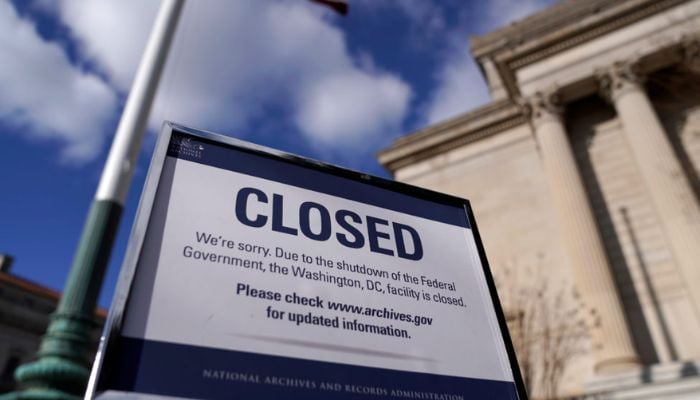
The U.S. federal government entered a partial shutdown on early Wednesday, October 1, after a deeply divided Congress failed to pass a stopgap funding bill, triggering furloughs for hundreds of thousands of workers and widespread uncertainty about how and when the impasse will be resolved.
A government shutdown occurs when Congress is unable to pass, and the President is unable to sign the required funding bills (known as appropriations) that would finance the functioning of the government's operation during the following fiscal year.
The financial year starts on October 1. In case there is no consensus by the deadline of September 30, federal agencies must cease all non-essential operations.
This comes as a result of the Antideficiency Act, which outlaws.
The initial shutdown since 2018 is the result of a standoff in the context of more subsidies under the Affordable Care Act (ACA).
Republicans in the Senate led by the Minority Leader, Mitch McConnell demanded a clean short-term extension of funding.
Democrats have, however, declined to offer the requisite votes without assuring them of maintaining the extended health care subsidies that expire at the end of this year.
“At midnight, the American people will blame them for bringing the government to a halt,” Senate Majority Leader Chuck Schumer (D-N.Y.) said before the deadline.
There is a considerable political pressure on both sides.
Republicans intend to put their funding bill repeatedly on the floor and challenge Democrats to continue with the shutdown.
The Democratic side of the political divide has begun to crack with a couple of Democratic senators, Sens. Catherine Cortez Masto (D-Nev.), Angus King (I-Maine), and John Fetterman (D-Pa.), crossing the floor and joining the GOP proposal.
The short-term effects are being experienced nationwide. It has been estimated that 800,000 government employees are being furloughed, and core workers such as air traffic controllers and Transportation security administration agents (TSA) are being forced to work without pay.
National parks are being shut down and essential services such as IRS processing for some veterans' assistance programs are being suspended.
Economists caution that a long-term closure would result in a 0.1% reduction in the GDP per week. With no obvious route to a solution, Congressmen are preparing for a long struggle, and the country is waiting for someone to come up with a solution.
What stays open during shutdown?
Services deemed essential for national security, public safety, and protection of property continue to operate. These include:
- National Security: Military operations, the FBI, CIA, and border security (CBP).
- Public Safety: Air traffic control, federal prisons, law enforcement, and emergency and disaster assistance.
- Essential Benefits: Inpatient and emergency medical care, and benefit payments for programs like Social Security and Medicare (though administrative support may be limited).
- Independent Services: The U.S. Postal Service (funded by postage) and power grid maintenance.
What closes or is disputed during shutdown?
Non-essential federal operations are halted, causing extensive inconveniences:
- Federal Workforce: Hundreds of thousands of federal workers laid off (sent home without pay) are considered non-essential workers.
- National Parks and Museums: Numerous national parks, monuments and Smithsonian museums (such as the National Zoo) can close or operate with minimal staff, creating problems such as littering and closed shops.
- Government Services: New passports and visas can be slow, the IRS customer service and audits are closed, and much regulatory work (such as part of the food inspection by the FDA) comes to a halt.
- Federal Facilities: Tours of the White House, the U.S. Capitol and other federal buildings are cancelled.
What happens to federal workers?
Federal employees will be divided into two categories i.e., excepted (essential) or non-essential.
- Excepted Employees: Must continue working to protect life and property, but they do so without pay until the shutdown ends.
- Furloughed Employees: Are placed on a temporary, non-duty status and are forbidden from working. They also do not receive pay.
While Congress has historically approved back pay for all federal employees once a shutdown ends, the delay in pay can cause significant financial hardship. Government contractors, however, typically do not receive back pay.
Impact of shutdown on public’s daily life and economy
The public feels the impact through:
- Travel: As TSA and air traffic controllers will not be receiving pay, the public may face long security lines and potential flight delays.
- Services: Longer delays in overall processing of permits, applications, and benefits.
- Health: Vulnerable families will be at high risk as special social welfare programs including WIC (Special Supplemental Nutrition Program for Women, Infants, and Children) will quickly lose funding.
In terms of the economy, the shutdowns have always been devastating. For instance, the 2018-2019 shutdown caused a loss of around $11 billion mainly because of the loss in spending and production of the government as a result of the furloughed workers.






-
 Rebecca Gayheart unveils what actually happened when husband Eric Dane called her to reveal his ALS diagnosis
 -
 Eric Dane recorded episodes for the third season of 'Euphoria' before his death from ALS complications
 -
 Jennifer Aniston and Jim Curtis share how they handle relationship conflicts
 -
 Apple sued over 'child sexual abuse' material stored or shared on iCloud
 -
 Bunnie Xo reveals why Jelly Roll refused to read her new memoir until release
 -
 Milo Ventimiglia reveals favourite activity with baby daughter
 -
 Sydney Sweeney feels 'misunderstood' amid Scooter Braun romance
 -
 'The Last Thing He Told Me' star Jennifer Garner reveals why her kids find her 'embarrassing'