
130-year-old dusty bottles reveal Denmark’s butter secrets
Two bottles containing bacterial cultures were discovered in a basement
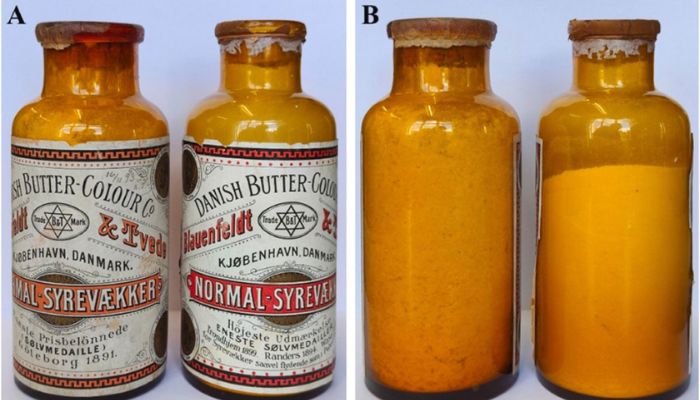
Two bottles containing bacterial cultures stored in a Frederiksberg basement since the 1890s have provided researchers with a unique glimpse into Denmark's butter-making past.
The research team's efforts enabled them to identify the contents of the bottle and exposed bacterial residues present during that period.
It has been observed that billions of individuals consume lactic acid bacteria in foods such as cheese, yoghurt, and cold soups.
These microbes play a crucial role in enhancing flavour and preserving food from harmful bacteria.
This innovation improved the safety standards of dairy products.
130-year-old bottle reveal Denmark's butter history
The evidence of this history came to light when researchers uncovered two bottles in a dusty moving box last year.
They have been untouched since the late 19th century. The bottles had been tucked away beneath the greenhouses on Rolidhedsvej near the college in Frederiksberg.
Scientists analyzed the powder in detail and compared it with bacterial DNA databases.
The results showed that the powder contained a residue of lactic acid bacteria, as purchased by Danish dairies.
They were added to cheese, milk, and butter after pasteurization to reintroduce beneficial microbes, once the heat treatment had diminished undesirable microbes.
Researchers have observed DNA from Lactococcus ceremoris, a lactic acid bacterium used to acidify milk in modern milk processing.
The analysis further revealed that bacteria contained genes for producing diacetyl, the compound that gives butter its butter aroma.
The contents of the bottles provide evidence for investigating the standardization of a dairy product.
The findings also show that hygiene conditions are very different from those of today, confirmed by anthropologist Nathalia Brichet from the Department of Veterinary and Animal Sciences.
Denmark began exporting butter to England on a larger scale at the end of the 19th century.
The discovery showcases close collaboration between researchers and the agricultural sector, which laid the foundation for Danish food exports.
This research provides insight into when dairy production becomes a global commodity.
Nonetheless, innovation and technological advancement help to explore avenues for future research.






-
 Paul Thomas Anderson shares his 'heroic' take on 'One Battle After Another' criticism
 -
 Jessie Buckley makes excited plea to husband after winning Best Actress Award at Oscars
 -
 Timothée Chalamet's 'Marty Supreme' costar gives him powerful advice amid recent controversy
 -
 Toyota Highlander seat recall issued in Canada for 2021 to 2023 models over safety risk
 -
 Barbra Streisand pays moving tribute to co-star Robert Redford at 2026 Oscars
 -
 ‘I’m Dead for Coffee’: Netanyahu appears in video addressing rumours declaring him 'dead'
 -
 The Kardashians planning Britney Spears' big comeback with major offer post DUI arrest
 -
 Hugh Jackman willing to take 'big risk' as he is gaga for lady love Sutton Foster