
‘Minibrains’ reveal secrets of brain cell formation in womb
Miniature models of the brain have yielded prominent insights into human brain development, revealing how key brain cells develop in the womb.
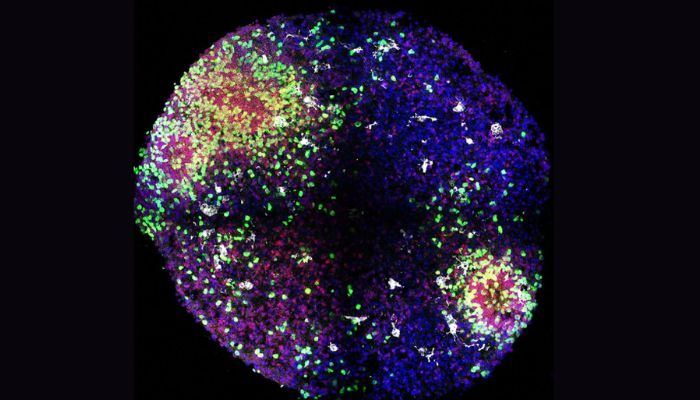
Recent groundbreaking research has provided unprecedented insights into the earliest stages of human brain development.
Primarily, human brain development is a complex process, particularly with regard to the immune cells residing in the brain, which play a far more active and crucial role than previously understood.
In addition to the statistics, inhibitory interneurons make up 25% to 50% of the neurons in the adult cortex.
The findings showed that the human cortex has more than double the number of interneurons as compared to the mouse cortex, suggesting key lines of inquiry for future research.
These internuncial neurons, between other brain cells, help keep that signalling in check with a chemical messenger called GABA (gamma-aminobutyric acid).
GABA, “inhibitory” messengers turn down brain activity by making neurons less likely to fire and balancing out the excitatory signals that intensify brain activity.
Over the past five years, scientists have begun to recognize how the immune system and nervous system develop simultaneously.
In this connection, study co-author Dr. Xihanhua Pio, a physician-scientist, told Live Science, “The microglia really fine-tune and regulate nervous development. It really adds a new dimension as to how microglia exert their function.”

The study further suggests that microglia are not just fighting for infection rather they are actively promoting the growth of interneurons by providing Insulin-like Growth Factor 1(IGF1), a previously uncommon and crucial role in healthy brain information.
The team examined that when they turned off IGF1 while signaling in various ways, they found that it blocked the instant increase in interneurons.
According to the reports written by researchers, “These findings indicate an evolutionary adaptation of microglial function to support the increased demand for interneurons in the human cortex.”
The data further suggests that organoids aren't an exact replication of the human brain, so there is a specific limit to what the 3D models can tell us.
At this stage, this model is sufficient for the study of early age development. These organoids don't do as well with later stages of brain development.
Humans have more than double the number of interneurons, and more research can provide a new avenue for understanding human evolution and cognitive abilities.
While future work will help clarify the previously unknown role of immune cells in the brain, more research is needed.






-
 Rebecca Gayheart unveils what actually happened when husband Eric Dane called her to reveal his ALS diagnosis
 -
 Eric Dane recorded episodes for the third season of 'Euphoria' before his death from ALS complications
 -
 Jennifer Aniston and Jim Curtis share how they handle relationship conflicts
 -
 Apple sued over 'child sexual abuse' material stored or shared on iCloud
 -
 Bunnie Xo reveals why Jelly Roll refused to read her new memoir until release
 -
 Milo Ventimiglia reveals favourite activity with baby daughter
 -
 Sydney Sweeney feels 'misunderstood' amid Scooter Braun romance
 -
 'The Last Thing He Told Me' star Jennifer Garner reveals why her kids find her 'embarrassing'