Massive spcaecraft designed to transport 2,400 colonists to Alpha Centauri
Reaching Proxima Centauri, the closest star system would take over 1,000 years
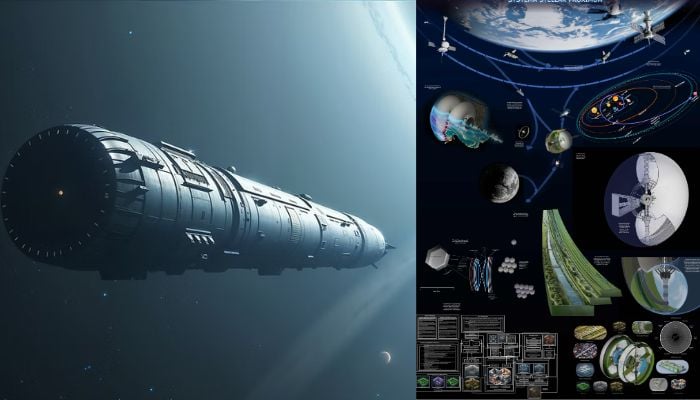
Engineers have unveiled plans for Chrysalis, a massive 36-mile spacecraft designed to transport up to 2,400 passengers on a journey to Alpha Centauri, the nearest star system to our own.
The concept of a 36-mile spacecraft like Chrysalis, while thrilling, remains firmly in the realm of science fiction for now - a captivating thought experiment that sparks imagination and fuels discussion about the possibilities of interstellar travel.
The futuristic project won the team the top prize at the Project Hyperion Design Competition, which was launched last year by an International consortium of scientists, engineers, and urban planners.

The Stars are far, far away
The idea of a spacecraft that could transport us to distant corners of the universe is thrilling, but for now, its largely a conceptual exercise that feels like something out of a science fiction novel.
With current propulsion methods, reaching Proxima Centauri, the closest star system, would take over 1,000 years - and its worth noting that Proxima Centauri itself isn’t thought to be habitable.
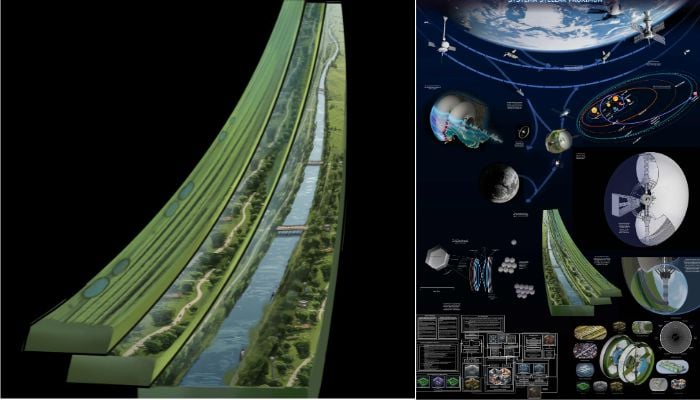
Even with futuristic propulsion concepts, the journey to nearby star systems would still take decades-between 36 to 85 years, according to Universe Today.
Generation ships offer a potential solution, enabling humans to live, thrive, and even raise families during the long journey, making the design of such vessels a thought-provoking challenge.
A self-sustaining world in space
A generation ship would need to be a self sustaining ecosystem, equipped with life-support systems like agriculture, air recycling, water purification, and waste management.
This would allow the initial crew and their descendants to live, thrive, and survive for multiple generations until the ship reaches its destination.
In other words, it needs to have all the kinds of life-support systems necessary to keep humans alive for multiple generations, such as agriculture or alternative ways to grow food.
Designing the Odyssey: A 250-year journey to the stars
The generation ship’s design would need to prioritize key features, including:
- A 250 year mission duration
- Artificial gravity, potentially shielding to safeguard the health and well-being of 500 to 1,500 inhabitants.
Although, Hyperion Project’s Organizing Committee member Andreas Hein compares it with a drone and an ocean liner.
“Think about the difference between a drone and an ocean liner,” Hyperion Project’s Organizing Committee member Andreas Hein explained.
Generation ships would likely be massive, utilizing propulsion systems like fusion-based propulsion, similar to interstellar probes.
Building a new home in space
The design competition encourages multidisciplinary approach, requiring teams to include at least one designer, engineer, and social scientist to tackle the complex challenges of building a habitable vessel for long-term space travel.


-
 David Jonsson shares training photos ahead of 'Black Panther 3'
 -
 Piers Morgan’s own book error exposed amid Earl Spencer legal threat
 -
 Tesla adds Grok AI assistant to cars for hands-free tasks: What to know
 -
 Why is Kanye West in Chicago and what is the link to his mother Donda?
 -
 Charles Spencer opens up about his childhood memories with Princess Diana
 -
 Tobey Maguire and Jennifer Meyer officially divorced yet?
 -
 Six-year-old Chinese prodigy shatters Rubik’s Cube world record twice
 -
 George Clooney leaves his Hollywood buddies behind?