What is time for SpaceX's Starship Flight 9 launch on May 27?
SpaceX targets date for its upcoming Starship megarocket flight after two unsuccessful launches
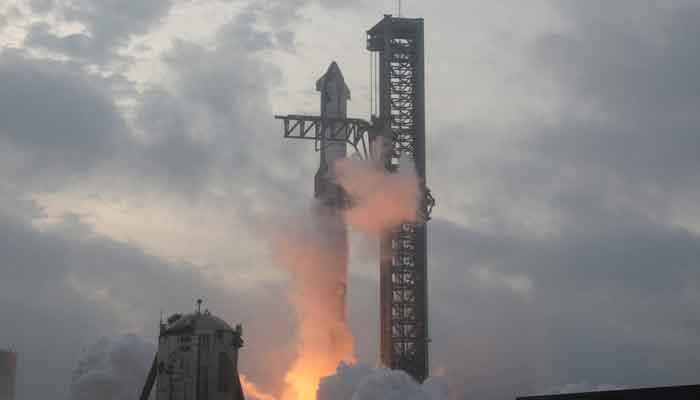
SpaceX has set a target date for its upcoming Starship megarocket flight in the hopes that this time will be different after two unsuccessful launches earlier this year.
Starship Flight 9, is set to depart SpaceX's Starbase test site near Boca Chica Beach in South Texas at 7:30pm EDT (2330GMT) on Tuesday, May 27 at the latest, reported Space.com.
This is the first attempt to reuse the massive Super Heavy booster, the first stage of Starship, but it will also be the ninth test flight of the massive SpaceX rocket, as its name implies.
It follows two unsuccessful launches this year, Flight 7 in January and Flight 8 in March. During both flights, SpaceX used enormous chopsticks to safely return its Super Heavy booster to Earth in back-to-back rocket catches; but, the rocket's Ship stage failed soon after liftoff.
As of right now, SpaceX plans to launch Flight 9 on May 27 at 7:30pm EDT (2330GMT), though the exact time may change based on the condition of the vehicle.
Texas local time will be 6:30pm Although SpaceX has not specified a time frame for the flight, it has previously operated on 30-minute windows, so if the firm does this again, the launch may occur at any point between 7:30 and 8pm EDT (2330 and 0000GMT).
Local authorities in the vicinity of SpaceX's Starbase have declared road closures through May 29, indicating that backup days on May 28 and May 29 may be conceivable, even though the launch date itself is not sooner than that day.


-
 How dogs became man’s best friend 15,800 years ago: New study reveals
 -
 Real-life ‘Project Hail Mary’ moment: 45 planets that may support alien life discovered
 -
 CERN successfully transports antimatter for first time in historic breakthrough
 -
 Astronomers spot solar system lookalike 87 light-years away
 -
 From Moon base to nuclear spacecraft: Inside NASA’s strategic overhaul to win space race against China
 -
 Northern lights wane, but watch for midnight surprise to dazzle the sky
 -
 NASA, South Korea team up for L4 deep space exploration mission
 -
 Scientists use ‘Space Archaeology’ to rebuild hidden history of giant spiral galaxy