Suparco set to launch EO-1 Satellite on Jan 17
"EO-1 satellite offers substantial benefits across various sectors in Pakistan," says space agency
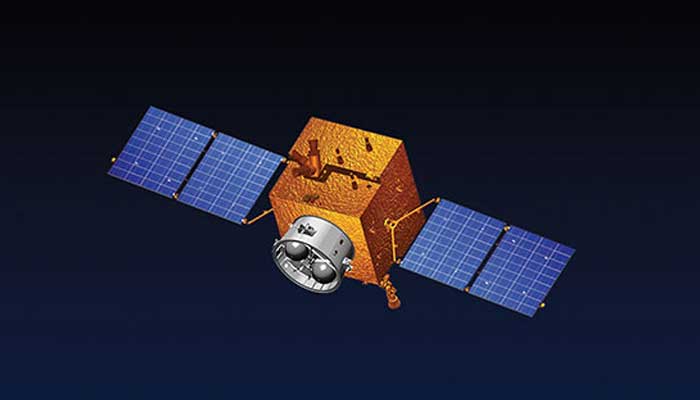
The Pakistan Space and Upper Atmosphere Research Commission (Suparco) on Monday announced that it would launch Pakistan's Indigenous Electro-Optical (EO-1) Satellite on January 17.
In China, the satellite will be launched from the Jiuquan Satellite Launch Centre (JSLC), marking a significant milestone in Pakistan's space exploration and technological advancements.
"The launch of the indigenous EO-1 mission reflects SUPARCO's dedication and expertise in advancing Pakistan's technological capabilities in space science and innovation," the body said in a statement.
This indigenously developed satellite, the statement mentioned, represents a significant achievement in Pakistan's space technology journey and is poised to enhance the country's ability to monitor and manage natural resources, predict and respond to natural disasters, support food security, and drive economic growth through informed decision-making and sustainable development.
"The EO-1 satellite offers substantial benefits across various sectors in Pakistan."
In agriculture, Suparco said, it would enable precision farming by monitoring crops, assessing irrigation needs, predicting yields, and supporting food security initiatives.
The statement further said that for urban development, the satellite will assist in tracking infrastructure growth, managing urban sprawl, and aiding city and regional planning efforts.
In environmental monitoring and disaster management, the statement said, it would provide timely updates on floods, landslides, earthquakes, deforestation, and land erosion.
Additionally, it will support extraction and conservation strategies for natural resources, including monitoring of minerals, oil and gas fields, glacier recession, and water resources.


-
 How dogs became man’s best friend 15,800 years ago: New study reveals
 -
 Real-life ‘Project Hail Mary’ moment: 45 planets that may support alien life discovered
 -
 CERN successfully transports antimatter for first time in historic breakthrough
 -
 Astronomers spot solar system lookalike 87 light-years away
 -
 From Moon base to nuclear spacecraft: Inside NASA’s strategic overhaul to win space race against China
 -
 Northern lights wane, but watch for midnight surprise to dazzle the sky
 -
 NASA, South Korea team up for L4 deep space exploration mission
 -
 Scientists use ‘Space Archaeology’ to rebuild hidden history of giant spiral galaxy