Nasa offers $3m to anyone with practical solution to THIS space problem
Despite having worked out how to get people to moon by now, Nasa still needs help solve a space problem
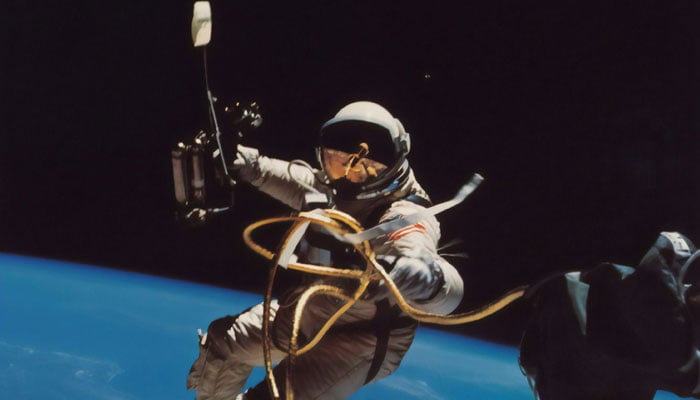
The National Aeronautics and Space Administration (Nasa) is offering $3 million in cash prizes to anyone who can solve a space-related problem, amid a flurry of challenges currently faced by the agency in outer space.
With a project that would see people on the moon once more, Nasa is pressing ahead as its firs crew, in over 50 years, is set to land on its surface in September 2026, which will see the first woman and the first person of colour on the moon.
Despite having worked out how to get people to the moon by now, the United States-based space agency needs help developing new ways to process different types of waste, including old clothing and food packaging, according to UNILAD.
Amy Kaminski, program executive for Nasa's Prizes, Challenges, and Crowdsourcing program, said: "Operating sustainably is an important consideration for NASA as we make discoveries and conduct research both away from home and on Earth.
"With this challenge, we are seeking the public’s innovative approaches to waste management on the Moon and aim to take lessons learned back to Earth for the benefit of all."
Nasa hopes to combat their problem with the recently announced LunaRecycle Challenge, a two-phase competition people can enter to help the space agency be more sustainable when it comes to space missions.
The challenge manager of the scheme and acting programme manager for NASA's Centennial Challenges, Kim Krome, added: "I am pleased that NASA's LunaRecycle Challenge will contribute to solutions pertaining to technological needs within advanced manufacturing and habitats.
"We are very excited to see what solutions our global competitors generate, and we are eager for this challenge to serve as a positive catalyst for bringing the agency, and humanity, closer to exploring worlds beyond our own."
A press release on their site stated that in preparation for future human space missions, it is important "to consider how various waste streams, including solid waste, can be minimized—as well as how waste can be stored, processed, and recycled in a space environment so that little or no waste will need to be returned to Earth."


-
 Agha says Pakistan squad equipped with players capable to play aggressive cricket
 -
 Pakistan beat Maldives to book semifinal spot at Asian Youth Netball Championship 2025
 -
 Pakistan clinch Davis Cup Juniors 2025 title
 -
 After Champion Trophy debacle, Pakistan likely to rest Rizwan, Babar for NZ T20I series
-
 Should Pluto be a planet again? Astronomers revisit its demotion
 -
 China abruptly postpones Chang’e-7 moon mission to search for water–Here’s why
 -
 Rare lunar eclipse lights up skies across the Americas: Where will it be visible?
 -
 US researchers achieve major breakthrough in quantum data transmission through open air
 -
 NASA’s Artemis missions face new risk: Earth microbes could survive on moon
 -
 Europe’s wildfires are unearthing deadly remnants of WWI, WWII
 -
 Dark matter theory challenged: New study rethinks ‘dark photons’
 -
 New neuroscents claim to clam anxiety and make new memories