90-million-year old dinosaur, who ate grass, finally found
Argentine scientists discover 90-million-year old herbivorous dinosaur
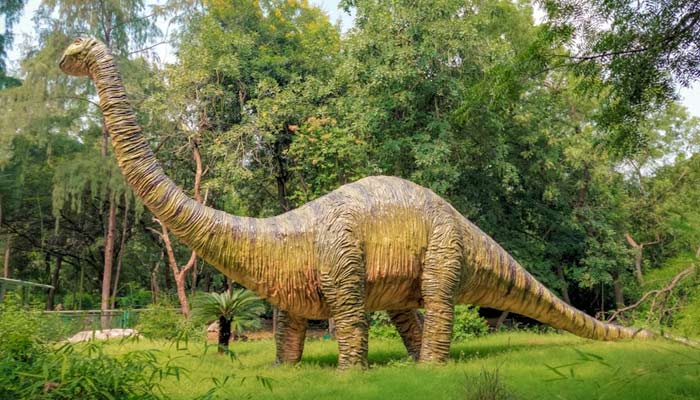
A new medium-sized herbivorous dinosaur, which lived about 90 million years ago in the Late Cretaceous period in present day Patagonia, has been discovered by paleontologists from Argentina.
Named, Chakisaurus nekul and found in the Pueblo Blanco Natural Reserve, in the southern province of Rio Negro, was found to be a fast runner, according to The Economic Times.
Chakisaurus reached 2.5 metres or 3 metres long and was 70 centimetres high (8 to 10 feet long and 27 inches high), as per scientists.
As per new yielded findings about Chakisaurus, the animal had its tail curved unusually downward.
"This new species, Chakisaurus nekul, was a bipedal herbivore that among its most important characteristics had a tail that, unlike other dinosaurs, which was horizontal, had a downward curvature," said Rodrigo Alvarez, author of the study.
"It is something super new for these animals. In addition, it is known that it was a good runner, which was something it needed because it lived with a large number of predators and its only defense was to be faster than them," he added.


-
 Savannah Guthrie makes desperate plea as mom Nancy remains missing: 'We need you'
 -
 Why did Patrick Clancy's marriage 'end so quickly'?
 -
 UK joins EU ocean monitoring programme as extreme weather risks grow
 -
 ESPN’s Chris Spatola dies unexpectedly at 47, network confirms
 -
 DOJ says Trump can ban reporters from White House over national security concerns
 -
 Russia and Ukraine signal interest in limited ceasefire, Marco Rubio says
 -
 ICE officer who shot DoorDash driver in Austin wasn’t wearing issued bodycam
 -
 Xi Jinping’s Washington visit takes an unexpected turn: What to know
-
 US delegation walks out as Iran hit back at Trump at UN: ‘We will not bow our heads’
 -
Trump to meet China’s Xi as Congress considers sweeping AI restrictions
-
Trump says Canada is ‘destroying itself’ with its immigration policies and ‘unemployment’
-
US major news outlets ask fedral judge to end Trump’s White House press ban