Elon Musk's SpaceX succeeds in third test flight of huge Starship rocket
Liftoff took place at 9:25am ET from SpaceX’s Starbase test site in Boca Chica, Texas
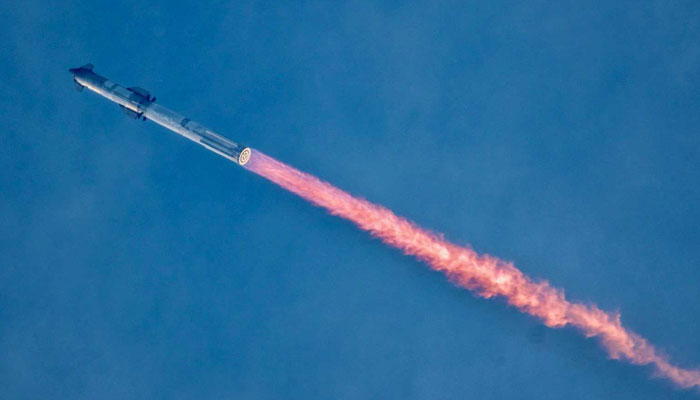
Elon Musk's SpaceX has launched a massive Starship rocket into orbit on a key test flight on Thursday, with an aim to test crucial technologies for future moon missions.
The liftoff took place at 9:25am ET from SpaceX’s Starbase test site in Boca Chica, Texas. Held on 22nd anniversary of SpaceX's founding, the test flight marked its third attempt and aimed to achieve several milestones, according to the company.
The nearly 400-foot-tall booster, known as Starship successfully, reached space for the first time ever, traveling further and faster than ever before. It even re-entered Earth's atmosphere, which is another hallmark for the program.
“This is the furthest and fastest that Starship has ever flown,” SpaceX officials said, speaking during the live broadcast of the event.
Almost three minutes after the launch, the Super Heavy first-stage booster successfully separated from the upper-stage Starship spacecraft. However, the landing wasn't smooth as it did not complete its final burn and splashed down hard in the Gulf of Mexico.
Investigators are looking into the cause. Additionally, some planned maneuvers during the flight, like opening a door in space and transferring fuel between tanks, may not have been entirely successful.
SpaceX considers the test flight a win as the company managed to gather valuable data and achieved significant progress. The company even skipped firing one of Starship's powerful engines in space to prioritise other objectives.
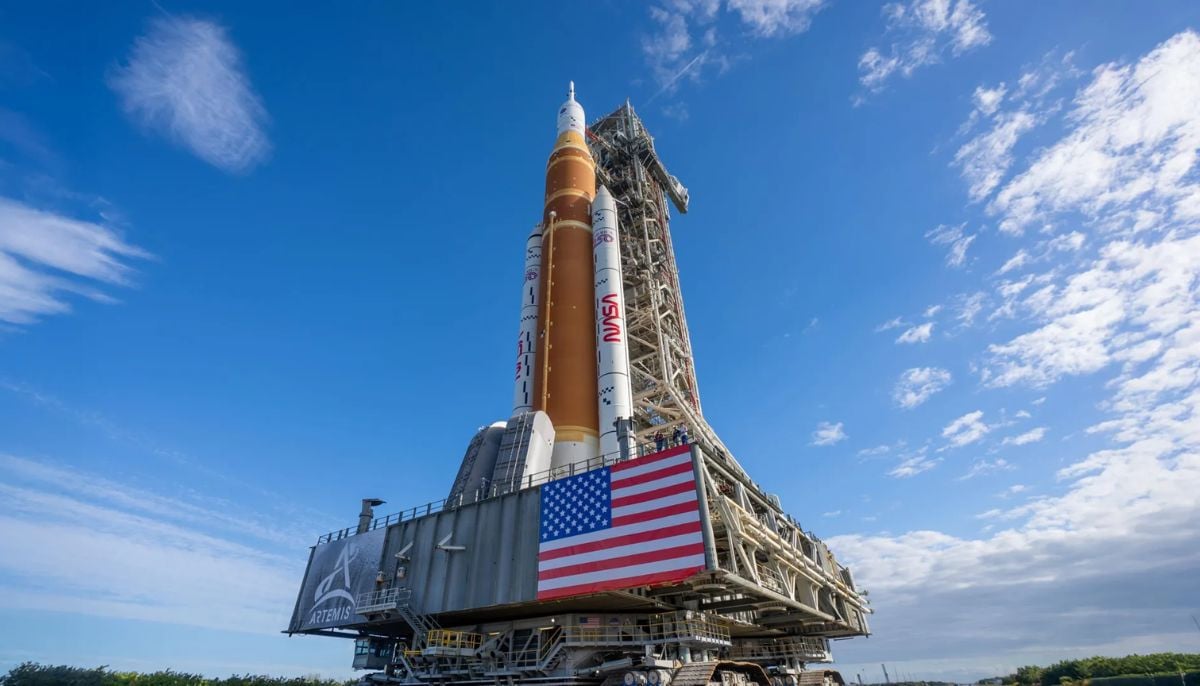
This giant rocket, nicknamed "Starship," is a key player in NASA's upcoming Artemis program. While not designed for a perfect landing this time, the flight successfully tested crucial systems needed for future missions.
This launch has brought SpaceX closer to their ultimate goal of building a fully reusable Starship capable of carrying humans to the moon and beyond. Starship was even chosen by NASA for the Artemis III mission, which could launch as early as 2026.


-
 Scientists discover alien-like systems shaping habitable planets
 -
 Japan ispace delays NASA-backed moon landing to 2030
 -
 Space babies: Can humans really reproduce beyond Earth?
 -
 Jupiter lightning proves far more powerful than Earth
 -
 NASA Artemis II moon mission ready to take off: Here’s everything to know
 -
 How dogs became man’s best friend 15,800 years ago: New study reveals
 -
 Real-life ‘Project Hail Mary’ moment: 45 planets that may support alien life discovered
 -
 CERN successfully transports antimatter for first time in historic breakthrough