SpaceX launches satellite to improve internet coverage in Indonesia
SpaceX launches its 41st Falcon-family flight with the satellite expected to operate for at least 15 years
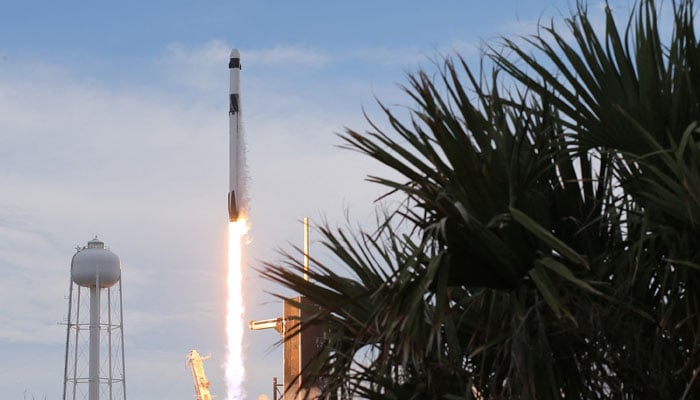
Elon Musk's company SpaceX and Indonesia have launched a satellite from the United States aimed at bringing high-speed internet to remote areas across the sprawling archipelago of more than 17,000 islands.
Over a third of Indonesia's population does not have access to internet, especially in far-flung areas of the world's fourth-most populous country.
The European-built SATRIA-1 took off early Monday morning Indonesian time from a Florida launch station, deployed by a SpaceX Falcon 9 rocket.
"SpaceX launched the PSN SATRIA mission to a geosynchronous transfer orbit from Space Launch Complex 40 at Cape Canaveral Space Force Station in Florida," the firm wrote on its website.
The satellite, built by French defence electronics company Thales, cost $540 million, and Jakarta hopes it will connect 90,000 schools, 40,000 hospitals, and government buildings.
Indonesian President Joko Widodo called it the country's "first government-owned multi-function satellite with the biggest capacity in Asia" in an Instagram post on Monday.
He said it would orbit above Papua province, Indonesia's easternmost region.
It will "distribute internet access, especially for education, health, and public service in the remote, isolated, and outermost areas", acting communication and informatics minister Mahfud MD said.
He said SATRIA was an acronym for "Satellite of the Republic of Indonesia".
The device is scheduled to come online by 2024 and will offer a connection speed of 150 gigabytes per second, three times the current speed of satellite internet in the archipelago.
Thales said in a press release that the satellite would "bridge the digital divide" in Indonesia and be "the most powerful in the Southeast Asia region".
Its construction was delayed by the COVID-19 pandemic and the war in Ukraine, added Erry Riyana Hardjapamekas, president and commissioner of PT Pasifik Satelit Nusantara (PSN), in a speech broadcast during the launch.
The company is part of the project in partnership with the Indonesian government.


-
 Blue Origin upgrades new Glenn rocket launch infrastructure to take on SpaceX
 -
 NASA’s next Mars mission targets Phobos and Deimos, not Red Planet
 -
 Is AI ready to rewrite our understanding of physics?
 -
 Astronomers identify possible first green star in 27 years of research
 -
 New study sounds alarm as Doomsday Glacier melts more aggressively than thought
 -
 Hubble data hints at planet born after its star died
 -
 NASA to brief public on Artemis III mission progress
 -
 ‘Time capsule beneath the sea’: World’s oldest shipwreck holds secrets from Great Pyramid era