China-Pakistan Economic Corridor (CPEC) is one of the rare projects on which there is a general consensus across the country.
China-Pakistan Economic Corridor (CPEC) is one of the rare projects on which there is a general consensus across the country. But a recent controversy even before the project actually gets underway has raised alarm bells and the government needs to address this row as early as possible.
The recent controversy was generated when the chief minister of Khyber Pakhtunkhwa Pervez Khattak threatened to block the CPEC passage through his province, if his demands were not met.
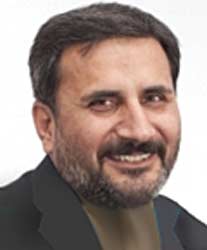 “We need the full-fledged corridor and not just a road,” the fuming chief minister told a news conference in Peshawar.
After venting his anger in public, he started enlisting support of other political parties for his stance. He sent a Pakistan Tehreek-e-Insaf (PTI) delegation even to Jamiat Ulema-e-Islam-F (JUI-F) Maulana Fazlur Rehman who has for long been at loggerheads with his party chief Imran Khan for the latter’s fierce opposition to the Maulana.
Maulana, who is a government ally and accompanied Prime Minister Nawaz Sharif to Zhob on December 30 for the ground-breaking of the two roads to be built under CPEC, also went public to express reservations over the ongoing projects.
Maulana says the first All Parties Conference hosted by prime minister on May 28 in Islamabad to forge consensus on CEPC has decided that a network of motorways would be built throughout the country.
“However in Zhob, the two roads to be built were named as N-50 and N-70,” meaning that these would be ordinary roads instead of motorways which would be accompanied by railway tracks, economic zones, and energy projects.
Moreover, he said that initially six-land roads were planned, but they were reduced to four-lanes without giving any reasons.
Apart from Khyber Pakhtunkhwa, the political parties in Baluchistan are also raising objections over some of the specifications made in the CEPC projects.
The Baluchistan National Party Mengal faction has called an APC in Quetta to discuss the matter on January 10, a day before this issue hits the stands.
The opposition parties argue that the APC called by the prime minister had decided that the eastern route of the CPEC, connecting Khyber Pakhtunkhwa and Baluchistan would be given preference, but it seems the government is giving more attention to the eastern route.
According to them, the government has allocated more funds for the eastern route than the western route.
Moreover, they say the energy projects are mainly planned along the eastern route and that is why the government has made no mention of these projects along the western route, literally reducing it to just a road link.
As the controversy grew, the federal government sent Minister for Development and Planning Ahsan Iqbal to Peshawar and Quetta to try to remove misunderstandings of the provincial governments, as well as politicians over the issue.
The minister on January 6 met with governor, chief minister, cabinet ministers as well as provincial parliamentary leaders to brief them over the project.
The meeting decided that the provincial government will set up a three member committee comprising a minister, an opposition representative as well as chief secretary of the province, which will keep a close liaison with the Planning Division with regard to the CPEC.
“The government has already set up proper forums living the parliamentary oversight committee where reservations and objections could be raised and addressed,” the minister says.
“We should avoid making such a project of national importance, controversial,” he added.
He undertook a similar trip to Quetta and met with the provincial ministers and urged them to get their objections addressed through proper forums in the greater national interest.
The government denies it has made any change in the route of CPEC as agreed in the PM-hosted CPEC and also that it has promised more funds for the eastern route.
However, Federal Minister for Frontier Regions Abdul Qadir Baluch, who is also chairman of the parliamentary oversight committee, said initially more energy projects were approved along the eastern route, as most of the country’s industries were located along this route.
Additionally, he said, it does not mean that such projects would not be set up along the western route.
“This corridor will be completed in 15 years and what is being demanded by the political parties will be provided with the passage of time. Everything can’t be done in one go,” he added.
He also said that an operational railway track already exists along the western route.
The matter is not only being questioned by political parties, which are venting their reservations in public. The governor of the State Bank of Pakistan Ashraf Mahmood Wathra in a recent interview also raised questions about the transparency of the deals being struck under the CPEC.
“I don’t know out of the $46 billion how much is debt, how much is equity and how much is in kind,” he said.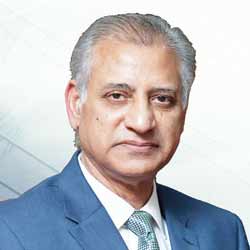
In view of the sensitivity of the matter, it is better for the prime minister to personally look into the whole affair and address the reservations of the political parties.
Such debates have occurred in the past also and China had expressed its displeasure over the controversy.
Pakistan is in dire need of foreign investment and, so, far, apart from China no foreign country has shown any interest in investing in Pakistan. Therefore, any such controversies run the risk of dissuading other foreign countries, as well private investors from putting in their capital in Pakistan.
The CPEC has also a major strategic importance for Pakistan as well as for the region.
The political parties, therefore, should also exercise extra-care while dealing with this issue. In the past such controversies adversely impacted foreign investment in Pakistan. The controversy over the setting up of the Independent Power Producers in the 1990s and the legal battle over the multibillion Reko Diq project are still fresh in the minds of foreign governments and investors.
Now reports are coming in that the Chinese government has conveyed its concerns to the Planning Commission over the latest controversy.
Therefore, it is high time for the government and political parties to resort to relevant forums to get their issues resolved.
In view of the importance of the project, there is no harm if the prime minister himself regularly interacts with the political leaders and takes them into confidence on the developments regarding this gigantic project.
The author is a senior journalist based in Islamabad