
What follows ECP verdict
The ECP verdict seems to have fallen short of the expectations of some political observers
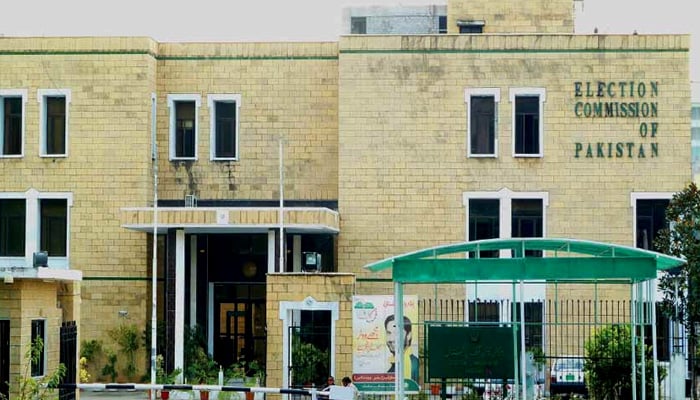
Finally, after an eight-year-long wait, the ECP has spoken on the Prohibited Funding Case instituted against the PTI on a complaint by Akbar S Babar, one of the founding members of the party.
The ECP verdict seems to have fallen short of the expectations of some political observers who thought the PTI may be dissolved and its legislators and leadership may be disqualified if prohibited funding was indeed established. The PTI, as a result, is claiming victory for its stance. Regardless, the reality is that the order passed by the ECP is as bad for the PTI as it could be within the scope of Section 6(3) of the Political Parties Order, 2002 under which the complaint was lodged.
Under the law, all the ECP was required to determine was whether the PTI had received funding from prohibited sources — and if it were so found to be, whether the ECP should make arrangements to confiscate the proceeds of such prohibited funding. This is exactly what the ECP did. It has unequivocally determined that the PTI did indeed receive funding from prohibited sources and these prohibited sources included local prohibited sources such as Pakistan-based companies as well as foreign sources of funding — both individuals and companies.
The ECP order has in fact gone a step further and quite bluntly described the certificates signed by PTI Chairman Imran Khan while he submitted the annual audited statements of party accounts for five years as “grossly inaccurate”. The ECP order has also said the party hid eight of its bank accounts, which were operated by its senior leadership; this, according to the order, was violative of Article 17 (3) of the Constitution. These are some serious charges and, if proved, may carry serious consequences.
Most importantly, the ECP order has provided the foundation for the federal government to take the charges of funding by foreign sources to the next stage by invoking Chapter III of the Political Parties Order, 2002. The federal government, if it is satisfied with the evidence provided in the ECP order, shall have to make a declaration that the PTI is a ‘foreign-aided political party’ as defined in the PPO 2002 and refer the declaration to the Supreme Court within 15 days.
If and when the Supreme Court upholds the declaration made by the federal government against the PTI, the party, according to Section 15(3), “shall stand dissolved”. This comes with very serious follow-on consequences such as de-seating of the sitting federal and provincial legislators of the party. If the members do not dissociate from the party, they will be disqualified from contesting elections for the next four years.
The ECP order also provides the opportunity to any citizen to approach the courts and seek Imran Khan’s disqualification on account of his signing a certificate that the ECP order has branded as “grossly inaccurate”. Indeed, the document signed by the PTI chairman is not an affidavit and so one may indulge in a bit of legal hair-splitting here — but the fact remains that if any statement signed by the party head is proved to be incorrect, it may lead to adverse consequences for the party head.
All these doomsday scenarios are mentioned because this is what the law entails in case the Supreme Court upholds the charges documented in the ECP order. It is quite likely the Supreme Court does not agree with the reasoning of the ECP and the federal government and absolves the PTI of any wrongdoing.
Even in the worst-case scenario, as we had seen when the National Awami Party (NAP) was outlawed in the ‘70s, if the PTI were dissolved, it may just be reincarnated as, say Tehreek-e-Insaf Pakistan (TIP) and may start functioning even the same day after it is dissolved.
This brings us to the question of the political impact of the ECP order and the possible dissolution. It remains to be seen whether Imran Khan will be able to discredit these moves through his aggressive communication strategy and retain the public support that he has at the moment or if the federal government, armed with the ECP order, can shift the political scene to its favour.
The writer is president of the PILDAT-Pakistan Institute of Legislative Development And Transparency. Email: president@pildat.org He tweets @ABMPildat


