
Israeli officials visit Saudi Arabia as ties warm up
The US is secretly brokering talks between Saudi Arabia, Israel and Egypt over the transfer of two strategic Red Sea islands to Riyadh
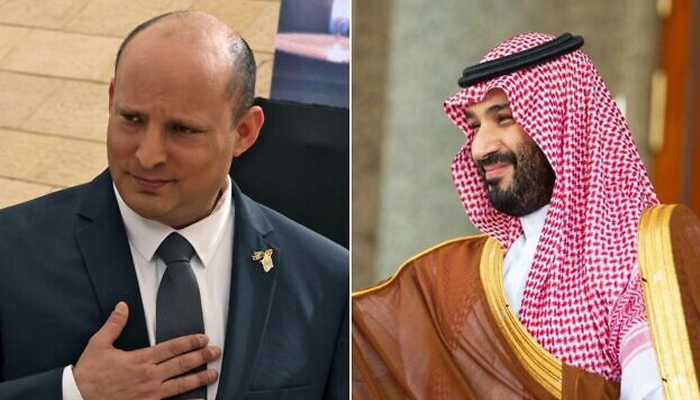
TEL AVIV: A number of senior Israeli officials have visited Saudi Arabia in recent years, including Defence Minister Benny Gantz and the past two heads of Mossad, amid growing speculation that Jerusalem and Riyadh are readying small steps toward normalising relations, newspaper Israel Hayom revealed on Sunday.
Gantz made a visit to Saudi Arabia when he served as chief of staff of the IDF from 2012 to 2016. Other officials who visited Saudi Arabia include former Mossad chiefs Yossi Cohen and Tamir Pardo.
Gantz visited Washington earlier this month for meetings with National Security Adviser Jake Sullivan and Secretary of Defense Lloyd Austin. The meetings came less than a day after Sullivan and Austin met with Saudi Deputy Defense Minister Prince Khalid Bin Salman.
The timing of both meetings led to speculation that Israel was coordinating its next moves on Iran with the US and Saudi Arabia. Israel’s ties with Saudi Arabia have received growing media attention in recent weeks ahead of a possible visit by US President Joe Biden to Saudi Arabia while he visits the Middle East in late June, a trip that will include a stop in Jerusalem.
The United States is secretly brokering talks between Saudi Arabia, Israel and Egypt over the transfer of two strategic Red Sea islands to Riyadh. The US is eyeing possible deal involving the islands of Tiran and Sanafi on the edge of the Gulf of Aqaba – otherwise known as the Strait of Tehran – that could lower oil prices in the US and push forward normalization of ties between Israel and Saudi Arabia.
Egypt, which has had possession of the islands, has already agreed to transfer them to Saudi Arabia, however, both Jerusalem and Washington have to sign off on the deal. Israel captured the islands from Egypt during the Six Day War. They were part of the territory it ceded to Egypt in its 1979 peace deal in exchange for an international peacekeeping force backed by the US.
Saudi Arabia has historically refused to set up diplomatic ties with Israel before a just resolution is found for Palestinians. Saudi Arabia has long claimed ownership of the islands and said Egypt controlled them since 1950 for protection at the request of Riyadh.
In 2018, Egypt’s Supreme Court approved a deal between the two countries that ceded the islands to Saudi Arabia despite public anger against the move.
However, the transfer was pending an agreement over the fate of a multinational force of observers — set up as part of the 1979 Egypt-Israel peace treaty — who ensured freedom of navigation at the strait.
Saudi Arabia wants to end the work of the multinational force but promised to keep it demilitarised and ensure freedom of navigation. According to the Walla report, Israel requested alternative security arrangements to end the work of the force. Israel also asked that Saudi Arabia allow it to use its airspace to shorten flights to India, Thailand and China. It also wants Saudi Arabia to allow direct flights between the two countries for those who want to perform pilgrimage to Makkah.
In 2020, Israel signed deals with the United Arab Emirates, Bahrain, Morocco, and Sudan, in what became known as the Abraham Accords. Saudi officials have repeatedly said the kingdom remained committed to the Arab Peace Initiative, which conditions recognising Israel on the establishment of an independent Palestinian state within the 1967 borders. However, in November 2020, Saudi Arabia’s MBS met secretly with Israeli Prime Minister Benjamin Netanyahu in the kingdom, according to several Israeli media reports at the time.
Touted by former president Donald Trump and his aides as a great diplomatic achievement, the normalisation deals between Arab states and Israel did not solve the conflict between Israelis and Palestinians, and none of the normalising Arab countries had ever been at war with Israel.
Dozens of Israeli tech entrepreneurs and businesspeople have recently flown to Saudi Arabia for advanced talks on Saudi investments in Israeli companies and Israeli investment funds, according to a report (Hebrew) in the Globes business daily. The kingdom refrained from signing onto the Washington-brokered Abraham Accords in 2020 as the US and Israel had hoped, but Riyadh is believed to have given the go-ahead to Bahrain, where it retains decisive influence, to join the normalisation agreement with Israel alongside the United Arab Emirates, Morocco and Sudan.
In addition, after the accords were signed, Saudi Arabia began allowing Israeli airlines to use its airspace for flights to and from the UAE and Bahrain. But Israel has not yet received such access for flights to India, Thailand and China, which as a result are significantly longer than they need be.
The businesspeople and entrepreneurs who made recent visits to Saudi Arabia entered the kingdom on their Israeli passports containing special visas.


