
Pakistan seeks bids for six spot LNG cargoes to run power plants
Experts are of the view that PLL will also get the bids at higher prices at over $35 per MMBTU as in the international market, spot LNG prices have soared to record highs
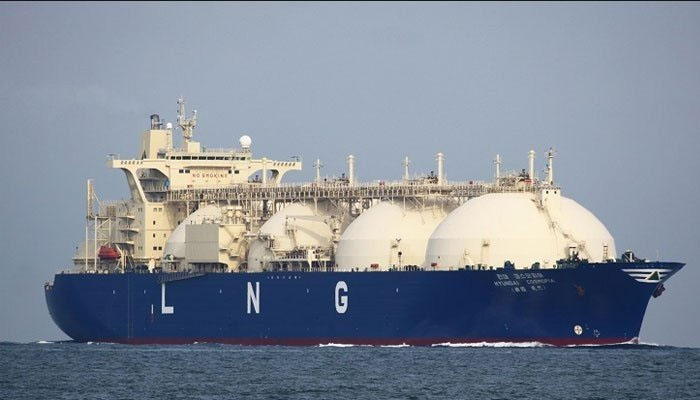
ISLAMABAD: With a new government headed by Prime Minister Shehbaz Sharif in place, Pakistan LNG Limited (PLL), which earlier decided not to buy spot LNG cargoes for April and May, has issued tenders seeking bids from international suppliers to purchase six cargoes from LNG spot market—three each for May and June at competitive prices, a senior official of the Energy Ministry informed The News.
The PMLN government which in its last era had set up three state-of-the-art LNG-based power plants in Punjab, Haveli Bahadur Shah 1,230MW, Bhiki 1,180 MW and Balloki power plant 1,230 MW, preferred to utilise them for power generation instead of power plants that run on furnace oil and diesel. The government had also started the construction of an RLNG-based power plant at Trimmu, Jhang, which is the fourth in Punjab with capacity to generate 1,263MW. It is now complete. All the four RLNG-based power plants have over 62 percent efficiency.
“PLL which was earlier least interested in procuring LNG from the spot market has now decided to purchase LNG cargoes under the directives of the new government with an aim to run the LNG power plants at their full capacity to produce maximum electricity.”
Apart from less supply to three LNG-based power plants at Haveli Bahadur Shah, Bhiki and Balloki, many other power houses, which include Liberty Power of 210MW, Rousch of 410MW, Nandipur of 525MW, FKPCL 140MW and nine units of Faisalabad GTPS, have not been producing electricity for unavailability of RLNG since Dec 12, 2021.
Currently, the Petroleum Division is getting almost 550 mmcfd for the power sector after closing down the gas supply to the CNG sector in Punjab and slashing down the supply by 50 percent to captive power plants of export and local industry because of import of just 800 mmcfd LNG. After GUNVOR cancelled its four LNG cargoes destined to provide Pakistan each in April and May and two in June, PLL also decided not to procure LNG from the spot market in the wake of the higher bids price at at $34.677 per MMBTU for April and $33.53 per MMBTU for May.
The Power Division had submitted its demand of gas of 690mmcfd for April and 800mmcfd for May. PLL has issued a new tender seeking LNG cargoes from LNG trading companies for three—each laden with 140,000 cubic meters to be delivered during the period in 12-13 May, 2022, 17-18 May and 27-28 May. The tender also sought the bids for three cargoes to be delivered on 1-2 June 2022, 6-7 June, and 16-17 June 2022.
Currently, Pakistan is getting 8 LNG cargoes per month—7 by PSO out of which 5 at 13.375 percent of the Brent and two at 10.2 percent of the Brent from Qatar under GtG agreements and one by PLL from ENI at 12.14 per cent of Brent under a 15-year agreement.
Experts are of the view that PLL will also get the bids at higher prices at over $35 per MMBTU as in the international market, spot LNG prices have soared to record highs as Europe’s push for more diversified natural gas supplies has intensified demand for liquefied natural gas (LNG) cargoes, with some being diverted away from Asia.
Average spot LNG prices in Asia during the 2021-22 heating season were more than four times their five-year average. In Europe, spot LNG prices were five times their five-year average, in spite of a mild winter. The prices were also boosted by Russia’s moves, even before its invasion of Ukraine, to drastically reduce short-term gas sales to Europe, which had left European storage levels 17% below their five-year average at the start of the European heating season.
Russia is Europe’s largest natural gas supplier, meeting 33% of the region’s demand in 2021, up from 25% in 2009. The flows of natural gas transiting through Ukraine have continued so far since the invasion, despite Ukraine itself experiencing supply disruptions and damage to its gas infrastructure.
Natural gas consumption this year is expected to fall by close to 6% in Europe. In Asia, it is expected to grow by 3% in 2022, a marked slowdown from growth of 7% in 2021. Regions such as the Americas, Africa and the Middle East are expected to be affected less directly by gas market volatility, as they principally rely on domestic gas production. But they are nonetheless being affected by the wider economic impacts of Russia’s invasion of Ukraine including rising commodity prices, weaker purchasing power and lower investment due to dented business confidence.


