
Suffering of Rawalpindi working class
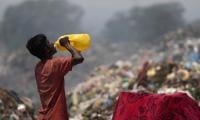
Rawalpindi:Untidy slums next to high-rise commercial buildings in the Rawalpindi city show mostly migrant labourers from other cities of the country living there who came here seeking job prospects.
“Although the city has manufacturing and industrialization units, the current scenario, however, is more service-driven where the bargaining power of the workers has shrunk drastically. Necessities considered as essential deliverables by the state have become costly to buy,” says Najeeb Hussain.
“Housing, water, health, education, and such other sectors are out of our reach. There is a wide gap between the highly-priced items and purchasing power of the poorer working class like us,” adds Najeeb.
“Financial condition of the city working class has weakened. Despite the migrant workers' large numbers, there is yet no concrete policy for them. Even the minimal social security net available to other segments of society is completely missing for them. During and after the first lockdown during Coronavirus Pandemic, they literally were forced to go back home,” says Sarmad Ali.
Naseeb Haider says, “According to survey workers across the city who returned to their family homes 80% were daily wage earners; 72% had ration in store for just two days; 89% were not paid wages during the lockdown; 75% lost their livelihoods and 53 percent were bearing additional debt burden.”
“The COVID-19 lockdown caused a fall in gross value addition in most sectors of the economy, leading to a decline in employment. The worst affected were workers in factory/construction, trade, hotels, other services, etc. Even the middle class badly suffered,” says Riffat Hasan.
“It is important to note that these are sectors that create the maximum new jobs. In a scenario where each of these sectors was contracting so sharply resulting in output and incomes falling, it led to more and more people either losing jobs or failing to get one,” adds Riffat.
“The consequence of all this is that it has undermined the probability of reducing poverty among the city poor. In fact, the latest figures show that poverty has in fact grown in the last 18 months,” says Shafqat Abbas.
“It has become almost a cliché to say that 80% of the city’s workforce is in the informal economy. Many of them are contract workers. Only one in five has a monthly salary job. Half of the workforce is self-employed,” adds Shafqat.
“Under the circumstances, it is imperative that some sort of employment guarantee is imperative to arrest rising joblessness. There should be an investment in infrastructure, but not in large capital-intensive projects but in labour-intensive projects, particularly improving municipal infrastructure,” says Musharraf Zaidi.
“The capacity of the city economy to absorb workers who came from other cities is low and for them a decent living is questionable. So labour-intensive employment schemes are the need of the day,” adds Musharraf.







-
 Savannah Guthrie Could Be Back On 'Today' Show Sooner Than Expected: Source
 -
 Fuyao Plant Fire Update: No Injuries Reported As Crews Continue Battling Blaze In Moraine
 -
 UN Issues Global Climate Warning: Earth In Critical Energy Imbalance, El Nino Threat Grows
 -
 Worldwide Caution Advisory Issued For Americans Overseas As Tensions Rise In Iran War
 -
 Microsoft Windows 11 Emergency Update Fixes Connectivity Bug Affecting Office, Teams, OneDrive
 -
 Steven Spielberg Shares Working Experience With Tom Cruise
 -
 Laguardia Airport Delays Worsen As TSA Lines Grow And Shutdown Leaves Workers Unpaid
 -
 Air Canada Plane Collides With Ground Vehicle At LaGuardia Airport
 -
 Canada Immigration: New Funding Targets Francophone Immigration Amid Workforce Shortages
 -
 Gold Price Drops Sharply Despite Global Tensions, Marking Biggest Weekly Fall Since 1983
 -
 Kylie Jenner, Timothée Chalamet Plan To Take Their Relationship To Next Level: Report
 -
 'Supernatural' Actress Carrie Anne Fleming's Cause Of Death Revealed
 -
 Why Jessica Biel Wants To 'move Past' Justin Timberlake Arrest Drama?
 -
 Jude Law's Ex Opens Up As Chappell Roan Denies Involvement
 -
 Sarah Ferguson Breaks Silence On Claim About Cloning Queen Elizabeth's Corgis
 -
 Doja Cat's Family Drama Deepens As Father Speaks Out