
Ordinance to lapse in a few days: No forward movement on NAB chairman’s appointment
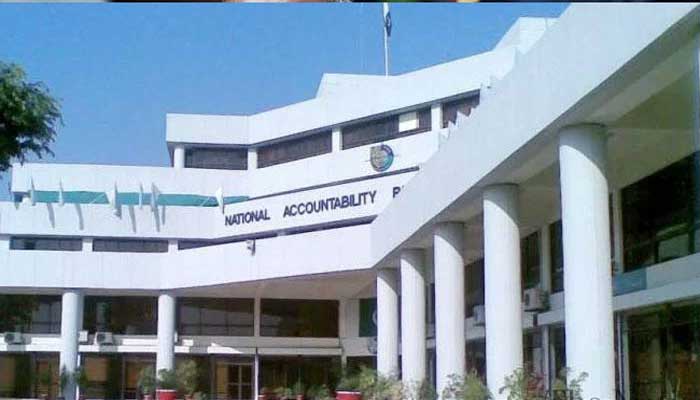
ISLAMABAD: With no forward movement on the selection of the next National Accountability Bureau (NAB) chairman, the presidential ordinance that altered the procedure for this key nomination expires in less than a month after its initial 120-day constitutional life.
The previous method for the appointment of the NAB chairman will stand revived if the ordinance lapses without approval from parliament or if it is shot down by a disapproving resolution by the Senate. The government has the option to get it extended only once for another 120 days through a motion passed by the National Assembly.
Under the mechanism specified by the ordinance, the incumbent chairman can also be nominated for the post as the previous condition of a non-extendable term has been deleted. The present NAB head can continue in office till the appointment of his replacement. It is under this clause that Justice Javed Iqbal is holding his position despite the expiration of his tenure in October.
The ordinance has also provided for the creation of a 12-member bi-partisan parliamentary committee, with equal representation of the government and opposition parties, to clear the appointment.
The ordinance has created a role for the president of Pakistan to hold consultations with the premier and opposition leader to decide on the nomination. The president has not been given any powers to nominate any candidate and his role is only to hold discussions with the two parties that must be consulted. In the present case, Imran Khan and Shehbaz Sharif plus the parliamentary committee have the exclusive authority to select the new NAB chairman.
Under the law, the prime minister and opposition leader must first attempt to reach a consensus on a name. If they fail, they must forward their recommended names to the parliamentary committee. However, the ordinance is silent on the way out if there is also a deadlock in the parliamentary panel.
Imran Khan and Shehbaz Sharif have so far held no meaningful consultations to evolve an agreement on any name. They have put forward names of their preferred nominees but no tangible progress has been made. No direct consultation has been held between the two on key appointments in over more than three years, contrary to what is required under the law and the Constitution.
Officials point out that the NAB law fixes no timeframe for meaningful, result-oriented consultations between the prime minister and opposition leader. If the ordinance expires or is struck down by the Senate before that, the stay of the incumbent NAB chairman in office on the force of this temporary executive law will come to an end.
The Pakistan Muslim League-Nawaz (PMLN) has suggested the names of retired bureaucrats Nasir Mehmood Khosa, brother of former Supreme Court chief justice Asif Saeed Khosa, and Salman Siddique; the Jamiat-e-Ulema-e-Islam-Fazl (JUI-F) has recommended the name of former Supreme Court judge Dost Muhammad and the Pakistan People’s Party (PPP) has proposed the name of former diplomat Jalil Abbas Jilani. They have been considered by the steering committee of the opposition to come up with a consensus candidate. On the other hand, the government has put forward the names of Interior Secretary Yousaf Naseem Khokhar, Religious Affairs Secretary retired Capt. Sardar Ijaz Ahmed and former Federal Investigation Agency (FIA) director general Mohammad Aamlish for the NAB position.
The Ministry of Law and Justice has initiated the process to appoint the new NAB chairman and forwarded a summary to President Dr Arif Alvi to the effect.
After receiving the names from the prime minister and opposition leader, the president is likely to refer them to the parliamentary committee for consideration. In this forum, the representatives of the two consultees will find an opportunity to discuss these names in a bid to arrive at a consensus on any one of them.
Section 6 of the National Accountability Ordinance (NAO) spells out the persons qualified to be appointed as the NAB chairman. A retired chief justice, a judge of the Supreme Court, a high court chief justice, a retired armed forces officer equivalent to the rank of a lieutenant general or a retired federal government officer in grade 22 or equivalent can be named as the NAB chief.







-
 More Americans Eye Canadian Citizenship As Rules Widen
 -
 Jamie Lee Curtis Heartbroken As She Announces Sister Kelly's Death
 -
 King Reacts As National Flag Falls At Official Event
 -
 Nicolas Cage Stunned By TV Chaos After Decades In Hollywood
 -
 Alexie Olivo Epstein, Emilie Nelson Fuel Interest In 'Calabasas Confidential'
 -
 A-Lister Star Paved Way For Kendall Jenner And Jacob Elordi Romance
 -
 Paula Abdul Recalls 'tearful' Reaction To Meghan Markle's Anniversary Post
 -
 What Taylor Swift Has To Do With 'Toy Story 5'?
 -
 City That Embraced Kate Middleton Bans Kanye West
 -
 Emily Blunt Snubs AI For Alien Scene In 'Disclosure Day'
 -
 Kanye West Suffers Another Setback
 -
 Trump Urged To Share All UFO Files As Lawmaker Group Moves To Congress
 -
 'Law & Order: SVU' Kelli Giddish Recalls Unexpected Encounter With Costar Ice-T On First Meeting
 -
 Rafael Jodar Explains What Happened To Ball Girl After Viral Video Sparks Backlash
 -
 OpenAI Smartphone Likely To Launch In 2027: Check Specs Details
 -
 5 Times Video Games Actually Went To Space