
An unbalancing act
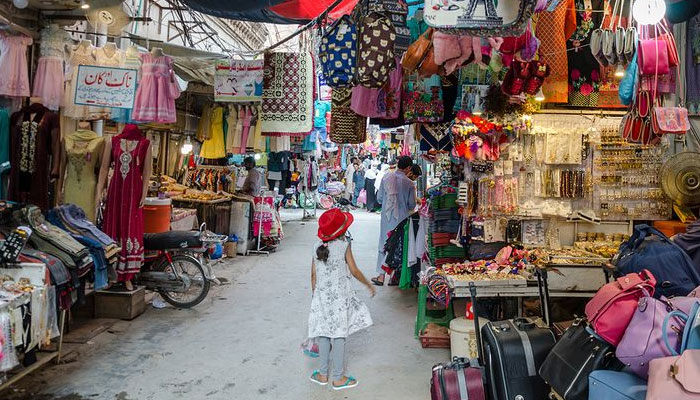
LAHORE: People the world over are not satisfied even where inflation is low. Wages do not keep pace with increase in prices and no new jobs are created. During higher inflation periods the wages also increase, and new jobs are created.
This is normal in most of the countries. That’s why most of the developed economies continue providing stimulus to maintain a certain level of inflation. In fact, the interest rates in most of these economies are zero or near zero.
Pakistan’s economy is not normal because the policymakers seldom succeed in maintaining a balance between inflation and growth. This government stifled economic growth in its first two years to control runaway inflation by increasing interest rates very high.
At the same time, it contained imports to historic lows that curtailed normal economic activities. The job and wage creation, accompanied with high inflation did not occur. Workers lost jobs and high inflation created miseries for the poor. It was because of these conflicting policies Pakistan suffered both growth and job losses amid huge price hikes.
During the tenure of the previous government the inflation was tamed to a reasonable level of 4-5 percent, while measures were taken to accelerate growth through the construction sector. There are only two avenues that are labour-intensive. One is construction sector, which absorbs the unskilled and semi-skilled labour, while the other is the apparel sector in textiles that provides livelihood to relatively skilled manpower. This sector creates a skilled workforce through on-job training.
The previous government was successful in accelerating the growth in the construction sector, which resulted in increases in wages of the unskilled workforce. Because of the boom in that sector, the labour shortages forced the entrepreneurs to increase wages as the public sector development programmes also competed for workers.
The central bank adopted an accommodative policy by keeping interest rates low. Masons, carpenters, plumbers, electricians, and painters saw their wages increase above the inflation. Its textile policy was criticised but if we look at the statistics apparel exports touched new highs. We benefited immensely from the GSP plus status. The performance of the basic textiles however suffered badly as they became globally uncompetitive because of inefficiencies and obsolete apparatus.
By the time that government was gone the textile millers had started upgrading their equipment, still the basic textile exports even during the tenure of this government remained low. The apparel exports are booming.
We lost around $3 billion in basic textile exports and added almost $4 billion in apparel exports in the final year of the previous government. As apparel is a labour-intensive industry, more jobs were created in textiles than destroyed in basic textiles (around 100 spinning mills were closed for good).
Overall, there was job creation in the country and wage increases were higher or nominally lower than the prevailing inflation.
The present regime made the blunder of discontinuing the economic policies of the previous government abruptly. That halted the growth momentum. The imports were squeezed to the extent that even the import of basic raw materials was impacted.
That slowed down the growth to a trickle and from annual growth of 5.8 percent it came down to 1.9 percent in its first year. The interest rates hit historic high. Since the government was the largest borrower, its debt servicing cost increased substantially.
The lower growth also meant lower revenues. The inflation also skyrocketed to double digits. So, in this high inflation there was no wage raise, no job creation and costs increased resulting in price hikes. Continuity of policies of the previous regime might have saved the day for the government. The changes in policy could have been planned in a systematic manner.
This is perhaps the only government that took a U-turn on all its policies after the pandemic. The imports were liberalised even for the luxury electric cars. The interest rate was slashed to 7 percent. It triggered growth even during a pandemic that was unusual elsewhere in the world. But the inflation remained stubbornly high. Industrialisation remained almost zero but the construction sector that caved in during its first year was revived.
However, the public sector development was missing and the wages of construction workers remained stagnant or increased nominally compared with high inflation. High inflation triggered a price hike never seen before. Rupee is in a free fall. The imports have gone out of hand. Now the government is taking another U-turn of squeezing imports and increasing interest rates. Let us hope the policymakers this time find a balance that keeps growth and wages moving up.







-
 Caleb McLaughlin Shares His Resume For This Major Role
 -
 King Charles Carries With ‘dignity’ As Andrew Lets Down
 -
 Brooklyn Beckham Covers Up More Tattoos Linked To His Family Amid Rift
 -
 Shamed Andrew Agreed To ‘go Quietly’ If King Protects Daughters
 -
 Candace Cameron Bure Says She’s Supporting Lori Loughlin After Separation From Mossimo Giannulli
 -
 Princess Beatrice, Eugenie Are ‘not Innocent’ In Epstein Drama
 -
 Reese Witherspoon Goes 'boss' Mode On 'Legally Blonde' Prequel
 -
 Chris Hemsworth And Elsa Pataky Open Up About Raising Their Three Children In Australia
 -
 Record Set Straight On King Charles’ Reason For Financially Supporting Andrew And Not Harry
 -
 Michael Douglas Breaks Silence On Jack Nicholson's Constant Teasing
 -
 How Prince Edward Was ‘bullied’ By Brother Andrew Mountbatten Windsor
 -
 'Kryptonite' Singer Brad Arnold Loses Battle With Cancer
 -
 Gabourey Sidibe Gets Candid About Balancing Motherhood And Career
 -
 Katherine Schwarzenegger Shares Sweet Detail From Early Romance Days With Chris Pratt
 -
 Jennifer Hudson Gets Candid About Kelly Clarkson Calling It Day From Her Show
 -
 Princess Diana, Sarah Ferguson Intense Rivalry Laid Bare