
Govt, other stakeholders influence judiciary: US State Dept
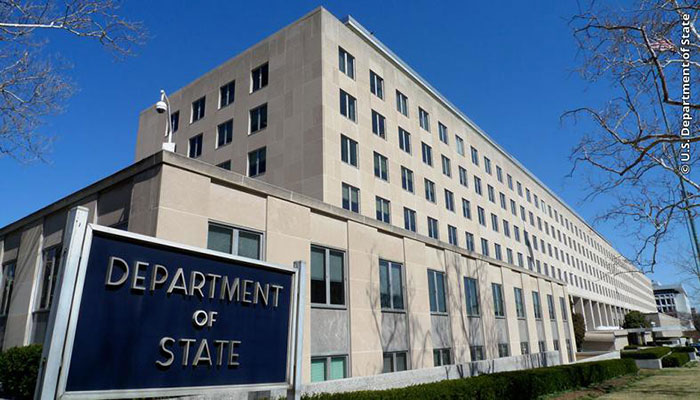
ISLAMABAD: The US State Department has portrayed the judiciary of Pakistan in an extremely negative manner and stated that theoretically the country’s judicial system operates independently of the executive branch but the reality is quite different.
In its latest report, ‘2021 Investment Climate Statements: Pakistan’, the State Department says, “Pakistan’s judiciary is influenced by the government and other stakeholders. The lower judiciary is influenced by the executive branch and seen as lacking competence and fairness. It currently faces a significant backlog of unresolved cases.”
According to the report, there are doubts concerning the competence, fairness, and reliability of Pakistan’s judicial system. Released recently, the report says, “Theoretically, Pakistan’s judicial system operates independently of the executive branch. However, the reality is different, as the establishment wields significant influence over the judicial branch. As a result, there are doubts concerning the competence, fairness, and reliability of Pakistan’s judicial system. However, fear of contempt of court proceedings inhibit businesses and the public generally from reporting on perceived weaknesses of the judicial process.”
The report adds that Pakistan’s Contract Act of 1872 is the main law that regulates contracts with Pakistan. British legal decisions, under some circumstances, have also been cited in court rulings. “While Pakistan’s legal code and economic policy do not discriminate against foreign investments, enforcement of contracts remains problematic due to a weak and inefficient judiciary,” reads the report.
Pakistan ranked 124 out of 180 countries on Transparency International’s 2020 Corruption Perceptions Index, the report noted, adding corruption persists due to the lack of accountability and enforcement of penalties, followed by the lack of merit-based promotions and relatively low salaries.
According to the report, bribes are classified as criminal acts under the Pakistani legal code and are punishable by law but are widely believed to be given across all levels of government. “Although the higher courts are widely viewed as more credible, lower courts are often considered corrupt, inefficient, and subject to pressure from prominent wealthy, religious, political figures and the establishment. Political involvement in judicial appointments increases the government’s influence over the court system,” it says.
The National Accountability Bureau (NAB), the report maintains, suffers from insufficient funding and professionalism and is viewed by Pakistan’s opposition as politically biased. Fear of prosecution by NAB has also deterred agency action on legitimate regulatory issues affecting the business sector. The State Department report says that local courts do not recognize and enforce foreign arbitral awards issued against the government. Any award involving a domestic enforcement component needs an additional affirmative ruling from a local court. There is no history of extra-judicial action against foreign investors.
Arbitration and special judicial tribunals do exist in Pakistan as alternative dispute resolution (ADR) mechanisms for settling disputes between two private parties, the report says. It adds that Pakistan’s Arbitration Act of 1940 provides guidance for arbitration in commercial disputes, but cases typically take years to resolve. To mitigate such risks, most foreign investors include contract provisions that provide for international arbitration.
The report maintains that Pakistan’s judicial system also allows for specialized tribunals as a means of alternative dispute resolution. Special tribunals are able to address taxation, banking, labour, and IPR enforcement disputes. However, foreign investors lament the lack of clear, transparent and timely investment dispute mechanisms. Protracted arbitration cases are a major concern. Pakistani courts have not upheld some international arbitration awards.
It says that Pakistan’s local courts do not recognize and enforce foreign arbitral awards. Any such award, involving local enforcement, requires direction from a local court. The Reko Diq mining dispute is an example where an international arbitral award against Pakistan was not enforced by local Pakistani courts and remains unresolved. The government, however, rejected the report terming it speculative and contrary to facts on the ground.


