
Between LOC and LAC
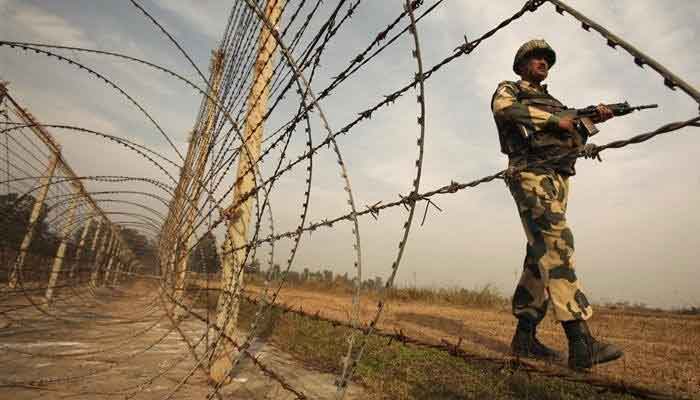
A fatal clash that broke out between Indian and Chinese troops, in the mountainous region of the Galwan Valley of Ladakh, resulted in the death of at least 20 Indian troops and critical injuries to several others. As per reports, Chinese troops also sustained injuries.
This was the first bloody fight between two nuclear armed countries since 1967 when the two sides faced off at Nathu La. Indian Prime Minister Modi, who projects himself as a tough statesman, in televised comments said, “Nobody has intruded into our border, neither is anybody there now, nor have our posts been captured.” His remarks not only seemed to be that of a weak leader but also undermined the ultimate sacrifices of the Indian army. However, PM Modi has a completely different approach towards the Line of Control (LOC) -- with Pakistan.
Despite the fact that India lost more than 20 of its soldiers including a colonel along with many other hostages to Chinese forces, there hasn’t been much war hysteria created by the Indian media, no political chest thumping to “teach China a lesson”. Instead: a complete black out of information. However, on the LOC, even pigeons aren’t allowed to fly into Indian territory. If they do, Indian authorities accuse them of spying and subject the poor birds to a thorough body screening.
Contrary to the LAC, India troops have unconditional support from the highest political office to use every kind of latest weapons against Pakistani forces and innocent civilians living along the border. Ironically, India accused Chinese forces of brutality and misconduct but in the first five months of 2020, it has committed 1,296 ceasefire violations along the LOC with Pakistan, which resulted in seven deaths and critical injuries to 98 civilians. Indian Occupied Kashmir (IOK) is already passing through one of its hardest times with all of its political leadership imprisoned and ethnic cleansing of the Kashmiri people on the rise.
There is a general perception that Indian belligerence is deeply motivated by the need of the Modi government to appear tough towards Pakistan. The Pakistan bogey is seen as a rallying point to galvanise public support for Modi, especially in the BJP’s core support base of chauvinist Hindutva hardliners who are also part of the BJP’s core decision-making body, particularly in its national security. One of the motivations behind the Modi government’s policy of belligerence towards Pakistan stem primarily from its belief that India is now a regional power with superior military capabilities over its arch rival. Such self-aggrandisement has largely been encouraged by its hawkish politico-military leadership in New Delhi. On the China front, however, there was complete silence during the recent crisis at the LAC.
Over a period of time, India has significantly improved its military structure both qualitatively and quantitatively. The influx of sophisticated military hardware from Russia, France, US and Israel has drastically increased India’s warfighting capabilities. As a result, over the last many years, India has maintained a top slot among the world’s largest arms importing countries. Despite its aspirations to become a sole regional policeman, India’s defence forces modernization remains Pakistan-centric.
The Indian army’s Land Warfare Doctrine (LWD), which was declassified in 2018, lays down broad contours for the Indian military to counter the “collusive threat” emanating from China and Pakistan. Though, former Indian chief Gen Bipin Rawat’s concept of a “two front war” encapsulates the military service’s warfighting principles against both China and Pakistan but in real terms, the LWD’s aim is to enhance contingency plans and military preparedness against Pakistan. That involves quick mobilization of Integrated Battle Groups (IBGs) along the LOC as well as employment of interoperable equipment to counter its primary front. Pakistan always remains India’s primary front, hence the LOC too.
The recent confrontation at the LAC put India’s hawkish leadership in an extremely tough spot. The hyper-nationalistic urge to ‘defeat’ Pakistan reaches an entire new level whenever a pigeon crosses the LoC. This kind of nationalist urge to defeat China is missing. The Indian jingoism masquerading as nationalism has nothing to do with China but only Pakistan.
One wonders if PM Modi will ever be able to project the image of a tough and strong statesman after the humiliating episode in the Galwan Valley. It’s time for Pakistan to be prepared, both militarily and politically. History tells us that, whenever there is a crisis in India, due to internal or external factors, Pakistan has been made a scapegoat in order to divert public opinion from the real crisis. Pakistan needs to be prepared to counter any misadventure.
The writer is a former SAV Fellow at Stimson Center, Washington DC.
Email: yasirhunzai1@gmail.com


