
ECC abolishes duties on items prone to smuggling
ISLAMABAD: Government on Thursday decided to abolish regulatory duties on smuggling-prone products in the country and revised framework for agreements concerning private hydropower projects.
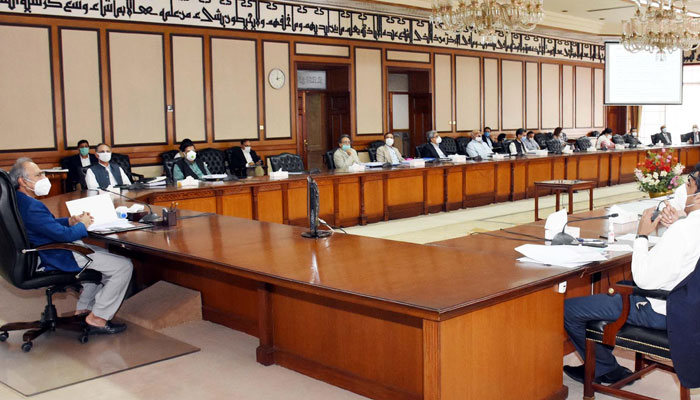
The Economic Coordination Committee (ECC) of the cabinet took the decisions during a meeting presided over by Adviser to the Prime Minister on Finance and Revenue Hafeez Shaikh.
The ECC decided in favour of removal/reduction of regulatory duty on the smuggling-prone items, including fabric, sanitary ware, LED/TVs, padlocks, blanket and electorodes.
Government resorted to regulatory duties on imports to reduce current account deficit and ease pressure on balance of payment position. Current account deficit narrowed 74 percent to $3.3 billion during the first 11 months of the current fiscal year as imports fell 19 percent year-over-year in the July-May period. In May, current account recorded a surplus of $13 million, largely driven by a year-on-year decline in imports that fell 36 percent to $2.8 billion in May due to lockdown related to coronavirus pandemic.
Smuggled goods happen to meet more than half of the consumer demand for petroleum, tea, mobile phones, auto parts, and other major products in the country, upending government’s revenue collection efforts and keeping industrial investments at bay, a trade body’s report said last year.
ECC also approved revised standard security package documents such as implementation agreements, government guarantee, power purchase agreement, and water use agreement under Policy for Power Generation Projects 2002 for the hydropower projects in the private sector.
In June last, share of hydropower generation in energy mix increased 1.4 percentage points year-on-year to 29.2 percent. Pakistan so far has only 5 percent of its total generation from renewable power -mainly from wind, a bit from solar and from bagasse as captive power plants at sugar mills. The government has decided to move to a renewable energy-reliant economy by 2030 in which hydropower will be the backbone. To keep pace with the demands of a growing economy, this would require the development of additional generation capacity of 20 GW of hydropower, wind and solar.
The ECC took up five proposals for technical supplementary grants (TSG) and approved them all, including Rs4.313 billion TSG for employee-related expenditure by the interior division, Rs900 million TSG for adjusting pays and allowances of the employees of National Commission for Human Development, Rs52.70 million TSG for necessary expenditure by the revenue division, Rs39.22 million TSG for the necessary expenditure by the Pakistan Rangers and Rs18.53 million TSG for the Islamabad administration for taking measures to control and fight the COVID-19 pandemic in the federal capital.


