
NJPMC resolves to fill vacancies in judiciary to clear backlog
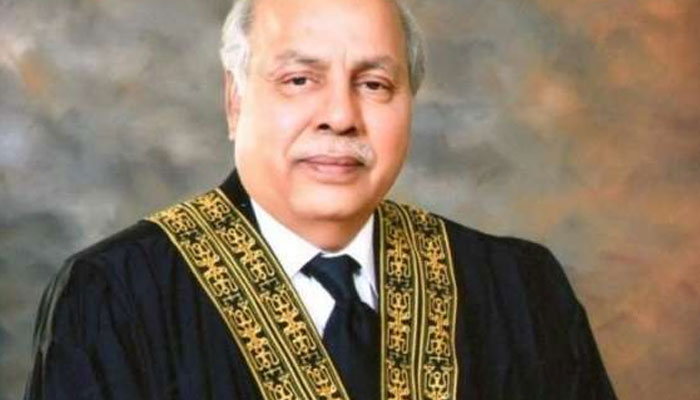
ISLAMABAD: The National Judicial Policy Making Committee (NJPMC) on Saturday resolved that in order to clear the backlog, vacancies in all cadres of judiciary and administrative tribunals and special courts be immediately filled.
The meeting was held under the chairmanship of Chief Justice of Pakistan/Chairman, NJPMC Justice Gulzar Ahmed. It was attended by the members of the NJPMC including, chief justice, Federal Shariat Court, provincial high courts as well as Islamabad High Court.
During the meeting Chief Justice of Pakistan Justice Gulzar Ahmed remarked that the vacancies in all cadres of judiciary and administrative tribunals and special courts be immediately filled for clearance of backlog. The committee was briefed about the status of vacancies in the superior courts and district judiciary and the various courts informed about the efforts made for filling up of the same.
The committee resolved that all the vacant posts in the judiciary be filled up within six months. Moreover, it was also resolved that in case the posts are not filled after an advertisement then the posts may be re-advertised for timely filling-up of vacant posts. Furthermore, the high courts may maintain a calendar whereby the process of appointment could be initiated in advance against a post which is likely to fall vacant”, the committee resolved.
Earlier, secretary NJPMC also briefed the committee about the vacancies in the administrative tribunals and special courts working under federal and provincial jurisdictions and status of institution, disposal and pendency of cases in the said tribunals and courts.
The committee deliberated upon the issues and remarked that there is a huge number of pendency of revenue, banking and commercial cases which may very likely affect public revenues and the economy.
It expressed concerns over non-filling of vacant posts and deliberated that the high courts should take up the issue with the respective governments for resolution as the non-filling up of vacant posts increases the backlog and which compromises trust of the public in the judiciary.
The committee further resolved that use of modern technology is the solution and directed the secretary NJPMC for arrangements for putting in place case follow management systems in all the administrative tribunals and special courts.
Likewise, the secretary NJPMC briefed the committee about the status of civil, criminal appeals and writ petitions pending in the high courts and district judiciary.
Meanwhile, the committee deliberated upon the issue and resolved that adjudication of old appeals and writ petitions may be prioritisded.
Similarly, the committee was also briefed about the status of Gender Based Violence Courts (GBV Courts) and juvenile justice and child courts. The secretary NJPMC informed that the Law and Justice Commission of Pakistan Secretariat in collaboration with Asian Development Bank (ADB) conducted two phases of training of judicial officers and prosecutors at the Punjab Judicial Academy, Lahore in July and December, 2019 and GBV related cases have been assigned to judicial officers throughout the country which are being adjudicated upon.
The Committee resolved that recent judgment of the Supreme Court of Pakistan regarding Gender Based Violence/Juvenile Justice cases should be disseminated to the judicial officers entrusted with GBV and juvenile justice and child related cases.
In this respect, the committee also directed the secretary NJPMC to collect district-wise data from police and district judiciary regarding juveniles who are kept in the police lockup, handcuffed and produced in the court along with adult offenders/accused, in violation of Juvenile Justice System Act, 2018, for examining and placing before the committee for further consideration.
During the meeting, the committee was briefed about the performance of cells established in the high courts for eradication of corruption. The committee deliberated upon the issue and resolved that zero tolerance should be adopted against corruption.
Justice Mushir Alam, Senior Puisne, Judge, Supreme Court of Pakistan remarked that the installation of office management systems would be useful in transparency of the system. While briefing upon the progress of the justice committees in the provinces and Islamabad Capital Territory, it was resolved that the meetings of the justice committees would be held regularly so that issues pertaining to the judiciary including infrastructure requirements could be effectively dealt with.
The committee also approved the recommendation of the National Judicial Automation Committee (NJAC) regarding establishment of core team of National Judicial Automation Unit (NJAU) at the old building of Federal Judicial Academy and which building will be handed over to the LJCP Secretariat for establishment of NJAU and nomination of IT experts for the core NJAU team.


