
Sindh govt’s eight commissions plan to meet challenges through collaboration
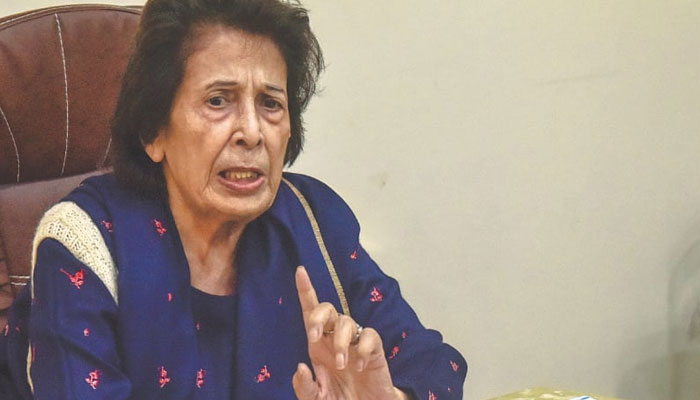
Since several commissions established by the Sindh government enjoy different powers and functions under their respective laws, there is an immense need for developing an information-sharing and complaint referral mechanisms, as well as for improving the performance of the commissions and focusing on other areas of cooperation deemed necessary to ensure effective service delivery.
This was the main crux of a consultative meeting attended by representatives of eight commissions at a hotel in Karachi on Friday.
The Sindh Human Rights Commission (SHRC) organised the meeting, which was attended by representatives from the National Commission for Human Rights, the Sindh Information Commission, the Provincial Public Safety and Police Complaints Commission, the Commission for Sindh HIV/Aids Control Treatment and Protection, Sindh Commission on the Status of Women, Sindh Health Care Commission and Commission Against Harassment at Workplace.
Zulifqar Shah, an SHRC member, was the moderator. Justice (retd) Majida Razvi, the SHRC chairperson, said that the main objective of the meeting was the future collaborations among the various commissions. “The mandates of all commissions are interlinked with each other and in one way or another they are overlapping,” she said. “The meeting will help us in understanding not only their mandates but also challenges, which will be very helpful in future joint endeavors.”
Murtaza Wahab, adviser on law, environment and climate change and coastal development, praised the SHRC for gathering representatives of all commissions to share their roles and responsibilities and scope of work.
“Such types of interventions will help the government. Issues could be resolved through dialogues that will help in creating in a healthy society,” he said. “Commissions should work autonomously as they are autonomous bodies,” he said.
Wahab said that the government had posted laws on its website in Urdu so that people could easily access them.
Shahid Gulzar Shaikh, chief commissioner of the Right to Information Commission, shared the challenges the commission faced and said that the government did not appoint the designated officers, and, because of it, the commission that was formed in May 2018 was not able to give information to the citizens.
“Article 19-A provides to the citizens the right to information and transparency. The right to information is the fundamental right of the citizen,” he said.
Other speakers included Anis Haroon, former member of the National Commission for Human Rights, Justice (retd) Shah Nawaz Tariq, the ombudsman for the Commission Against Harassment at the Workplace, Nuzhat Shirin, chairperson of the Sindh Commission on the Status of Women, and Sikandar Memon, provincial manager, Enhanced HIV/AIDS Control Program.


