
Pak-China FTA-2 to be effective from Jan 1, 2020
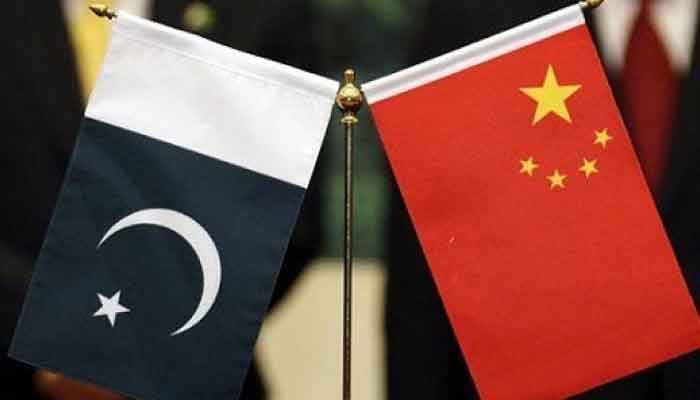
ISLAMABAD: The trade under second Pakistan-China Free Trade Agreement did not start from December 1, 2019 as earlier claimed by Adviser to Prime Minister on Commerce, Industries and Production, Textile and Investment Abdul Razak Dawood in various interactions with media persons, rather it is now likely to start from January 1, 2020, The News has learnt.
However, Pakistan has notified its protocol on FTA-II heralding that it has completed its all formalities and has attained all approvals at all official levels for trade under FTA-II. But, China has sought some days more informing that it has yet to attain some more approvals before enforcing trade modalities under FTA-II.
One of the top officials of Commerce Ministry, however, when contacted, confirmed the development saying that trade under FTA-II will start from January 1, 2020. However, Chinese government would manage more approvals from its various official forums and then both the countries would release the joint press release announcing that the trade under FTA-II would start getting materialised from January 1, 2020.
Pakistan and China inked the FTA-II in Beijing on April 28, 2019 and under the new FTA Pakistan has secured enhanced and deeper concessions on products of its export interests, revision of safeguards mechanism for protection of the domestic industry, inclusion of the balance of payment clause as a safety valve against balance of payments difficulties, and effective enforcement of the electronic data exchange.
About the Market Access, the official said that under the Phase-II of China Pakistan Free Trade Agreement, both countries will liberalise 75 percent of tariff lines for each other in a period of 10 years by China and 15 years by Pakistan. China will immediately eliminate tariffs on 313 most priority tariff lines of Pakistan’s export interest. Overall, China has granted concessions to products, which include textiles and garments, seafood, meat and other animal products, prepared foods, leather, chemicals, plastics, oil seeds, footwear as well as engineering goods including tractors, auto parts, home appliances, machineries, etc.
Pakistan has offered market access to China on raw materials, intermediate goods and machineries. Access to cheaper imported inputs and machinery will improve Pakistan’s export competitiveness and help upgrade its industrial production.
About Protected Tariff Lines, he said that 25 percent of tariff lines i.e., 1760 TLs have been placed in the protected list. The major protected industry includes textiles and clothing, iron and steel, auto, electrical equipment, agriculture, chemicals, plastics, rubber, paper and paper board, ceramics, glass and glassware, surgical instruments, footwear, leather, wood, articles of stones and plaster, and miscellaneous goods.
Mentioning about Safeguard Measures, he said that Safeguard Measures (SGM) are invoked to temporarily restrict imports of a product, which cause injury or threaten to cause injury to the domestic industry. The existing SGM, in CPFTA were inadequate to address the concerns of the industry and have lapsed since these could only be invoked during the transition period i.e. 2007-12. He said that some modifications have been incorporated in the agreement that include a) In Phase-I SGM were limited to the absolute increase in imports, but now can be invoked on relative increase in imports as well, b) The transition period has been increased to 10 years for CAT-I and 8 years for the remaining tracks, which in relation to Tariff Reduction Modality will be 15 years for CAT-II & 23 years for CAT-III. C) SGMs can be applied for 3 years, and can be extended to an additional 2 years. This has not been granted to any other country by China. d) In Phase-I SGM, injury to the industry had to be proved but an emergency measure of 180 days can be imposed in Phase-II without proving injury.
The official also said that with regard to balance of payment the provision has been introduced in the agreement as such measures can help forestall the imminent threat of a serious decline in monetary reserves.
And in order to avoid mis-declaration and under-invoicing of imports from China, a system of electronic data exchange has been enforced on the trade taking place under the framework of the Free Trade Agreement.


