
Meeting shapes plan for Pakistan’s food security
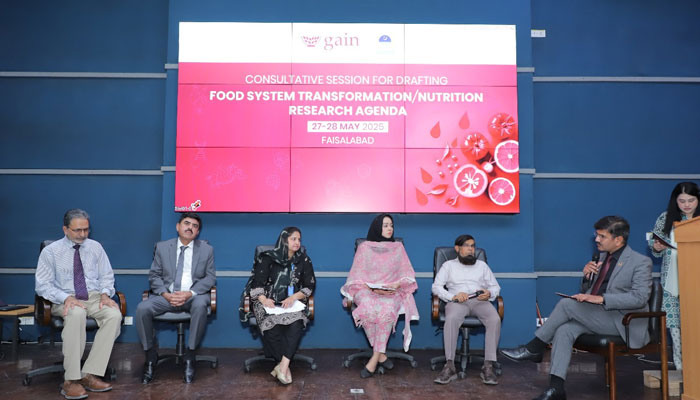
Islamabad: A high-level national consultative session on 'Priorities and Pathways: Developing a National Food Security and Nutrition Research Agenda for Pakistan' concluded at the UAF with leading academic, government, and development voices co-creating a research agenda based on equity, resilience, and evidence, says a press release.
The two-day event, co-convened by the Global Alliance for Improved Nutrition (GAIN), the National Institute of Food Science and Technology (NIFSAT), and the Pak-Korea Nutrition Centre (PKNC), gave rise to a powerful conversation on the food future of Pakistan.
The consultative session was inaugurated with enthusiasm by Professor Dr. Imran Pasha, Director General of NIFSAT, who welcomed the stakeholders and emphasised the great need for academic research in the challenges faced by food systems.
Farrah Naz, country director, GAIN said, "This dialogue is not about isolated initiatives. It's about shaping a collective response to dietary inequity, malnutrition, and food safety. The time to move from pilots to policy is now."
Beginning his address, Faiz Rasool, Head of Policy & Advocacy at GAIN, emphasised, "We're not starting from scratch-we're starting from strength. But we must now align our strengths into a coherent, actionable research agenda. This is not just a technical document, it's a social contract with every citizen of Pakistan who deserves safe, nutritious, and affordable food."
The participants appraised thematic discussions in-depth across six thematic areas: non-communicable diseases, diets and food environments, food safety, post-harvest losses, climate resilience, and governance, with each group producing actionable priorities ranging from taxing unhealthy food products and introducing AI tools for nutrition surveillance to strengthening food safety legislation and encouraging climate-resilient agriculture.
Offering his reflections on the state of food systems, Prof. Dr. Zulfiqar Ali, Vice Chancellor of University of Agriculture Faisalabad (UAF) and distinguished wheat breeder, publicly emphasised the evolution following World War II: "We overcame famine but at the cost of food quality. The hidden costs of our food systems now exceed 13 trillion dollars globally. Food systems transformation is no longer optional-it's urgent. And this agenda belongs not just to agriculture, but to all of government and society."







-
 2026 Winter Olympics Men Figure Skating: Malinin Eyes Quadruple Axel, After Banned Backflip
 -
 Meghan Markle Rallies Behind Brooklyn Beckham Amid Explosive Family Drama
 -
 Scientists Find Strange Solar System That Breaks Planet Formation Rules
 -
 Backstreet Boys Voice Desire To Headline 2027's Super Bowl Halftime Show
 -
 OpenAI Accuses China’s DeepSeek Of Replicating US Models To Train Its AI
 -
 Woman Calls Press ‘vultures’ Outside Nancy Guthrie’s Home After Tense Standoff
 -
 Allison Holker Gets Engaged To Adam Edmunds After Two Years Of Dating
 -
 Prince William Prioritises Monarchy’s Future Over Family Ties In Andrew Crisis
 -
 Timothée Chalamet Turns Head On The 'show With Good Lighting'
 -
 Bucks Vs Thunder: Nikola Topic Makes NBA Debut As Milwaukee Wins Big
 -
 King Charles Breaks 'never Complain, Never Explain' Rule Over Andrew's £12 Million Problem
 -
 Casey Wasserman To Remain LA Olympics Chair Despite Ghislaine Maxwell Ties
 -
 Shaun White Is Back At The Olympics But Not Competing: Here’s Why
 -
 Breezy Johnson Engaged At Olympics After Emotional Finish Line Proposal
 -
 King Charles Wants Andrew To 'draw A Line' Under Epstein Issue
 -
 John Wick Game Confirmed With Keanu Reeves And Lionsgate Collaboration