
Solar setback
Once visionary step, it now faces regressive shift prioritising thermal power interests over consumer benefits
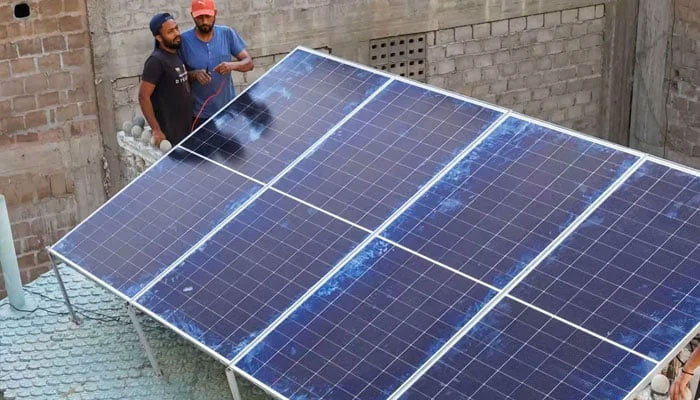
The Pakistani government’s proposal to slash the buyback rate for surplus solar electricity from Rs27 to Rs10 per unit has ignited debate. I have seen this policy evolve since its inception in 2018. Once a visionary step, it now faces a regressive shift that prioritises thermal power interests over consumer benefits.
Net metering has empowered 286,000 consumers, driving solar capacity to 4,124MW by 2024. A typical middle-class household with a 10kW system generated 1,000 units monthly, consuming 650 directly and exporting 350 to offset nighttime usage. This reduced electricity costs significantly. However, the new policy, announced this month, introduces gross metering, forcing users to sell energy at a meager rate while buying at inflated tariffs, disrupting affordability and adoption.
Energy Minister Awais Leghari justifies the change, citing a Rs150 billion burden on 40 million non-solar consumers, alleging they pay Rs1.5 per unit extra. Former finance minister Miftah Ismail disputes this, stating solar purchases amounted to Rs34.3 billion in bill reductions, far from the alleged Rs150 billion. He highlights that DISCOs suffer far greater losses -- 24,020GWh in transmission and distribution -- compared to solar’s 1,269GWh contribution.
Pakistan’s energy crisis stems from its 62.24 per cent dependence on thermal power, which accounts for 49.01 per cent of electricity generation. Renewables contribute only 4.75 per cent, a stark contrast to global trends where oil giants like BP, Shell and Aramco invest in solar and hydrogen. While these corporations pivot toward sustainability, Pakistan’s policy undermines solar growth, making consumers reliant on costly fossil fuel imports.
The shift dismantles net metering’s financial viability. Under the previous model, a consumer using 1,000 units but generating 500 through solar effectively paid for 500 grid units. Gross metering forces them to sell all 500 units at Rs10 each, earning Rs5,000, while still buying 1,000 at Rs50 each -- resulting in a Rs45,000 bill instead of Rs25,000. This discourages solar adoption and benefits DISCOs, thermal plants, and fossil fuel importers at consumers’ expense.
Earlier gross metering attempts failed due to technological constraints; imported inverters default to net metering. Moreover, solar inverters improve grid stability by delivering synchronised pure sine waves, reducing transformer stress. Instead of addressing corruption -- where net metering applications require bribes of Rs25,000–Rs45,000 -- the government penalises legitimate users.
Pakistan’s flawed energy policies have long favoured large captive power plants under USD-pegged contracts at 5-10 cents per kWh when global rates were under one cent. The same misstep now threatens solar consumers, shifting the burden onto middle-class households seeking relief from Rs48.8 per unit grid tariffs.
A pragmatic solution involves peak shaving, allowing solar users to offset peak demand, a fixed fee model instead of rate cuts, digitalised governance to curb corruption, and consistent policy aligned with international commitments to renewables. With solar adoption growing by 1,200MW annually, reinstating net metering could save Pakistan Rs250 billion in fuel costs by 2025.
Pakistan must balance fiscal prudence with its Vision 2025 renewable targets. Slashing net metering rates while protecting fossil fuel interests is a strategic blunder. The government must reverse this decision to ensure energy security, economic stability and a fair renewable transition.
The writer is an electronics engineer from GIKI and leads one of Pakistan’s first 15 certified net metering firms. He tweets/posts @zorayskhalid


