
Wahab proposes pedestrian zones, no heavy traffic on Sundays to combat air pollution
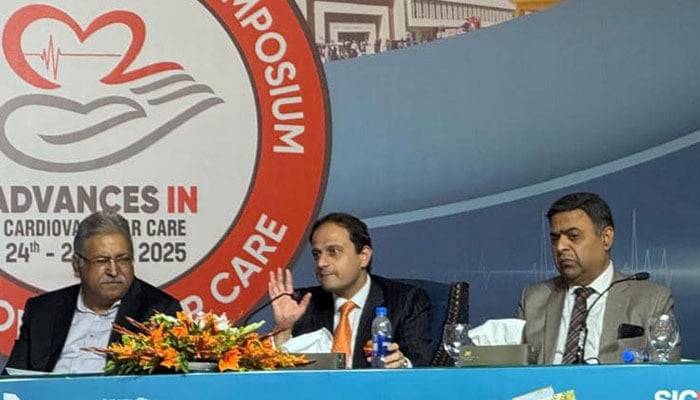
Karachi Mayor Barrister Murtaza Wahab has proposed creating pedestrian zones and banning heavy traffic in Karachi on Sundays to improve air quality and protect citizens from the adverse health effects of pollution.
Addressing a symposium on ‘Environment and Cardiovascular Health’ organised by the National Institute of Cardiovascular Diseases (NICVD) on Friday, he stressed the need for immediate environmental reforms to tackle the growing burden of heart diseases and other health issues linked to air pollution.
“The idea of banning heavy traffic on Sundays and declaring a road near Karachi’s beach a pedestrian zone can provide cleaner air and promote healthier activities like walking and cycling,” the mayor said.
He added that he had taken an initiative to sprinkle water on dusty roads to reduce dust pollution — a measure he adopted shortly after assuming the mayoral office but stopped due to criticism from some quarters.
The session, organised by the NICVD, brought together experts from various healthcare facilities, academia and other segments of society to discuss the critical connection between environmental pollution and cardiovascular health.
Speakers included Senator Sherry Rehman who sent a recorded message, healthcare experts from the Aga Khan University (AKU) and other private health institutions, and representatives from urban planning and environmental agencies.
Prof Khawar Kazmi, head of the preventive cardiology department at the NICVD, called for declaring at least one road in Karachi as vehicle-free and banning heavy traffic during daytime hours on weekends.
He also highlighted the significant contribution of the healthcare sector to environmental pollution. Hospitals and healthcare facilities must adopt sustainable practices to reduce energy consumption and waste production," he asserted.
In her recorded message, Sherry pointed out the alarming rise in nitrogen dioxide and particulate matter (PM2.5) levels in Karachi’s air, which were linked with hypertension, atherosclerosis and other cardiovascular conditions.
“Air pollution is not just an environmental issue; it’s a public health crisis. Addressing this issue can significantly reduce the burden of non-communicable diseases in Pakistan,” she remarked while lauding the NICVD’s efforts in advancing preventive and curative heart care.
Dr Zafar Fatmi from the AKU explained how air pollution contributed to heart attacks and other cardiovascular complications. He stressed the need for collaborative measures to improve air quality, which would have a direct positive impact on public health.
The AKU’s Dr Romaina Iqbal discussed the dangers of household pollution, terming it a significant but often overlooked health hazard in Pakistan. She urged reducing indoor pollution to protect vulnerable populations, especially women and children.
Dr Aasim Ahmed from a private health facility highlighted the environmental impact of healthcare practices, including energy consumption and waste production. "Sustainability in health care is crucial to minimise our contribution to environmental degradation," he noted.
Architect and town planner Shahid Abdullah advocated for designing cities in a way that promoted sustainable urban living, reduced pollution and encouraged health-friendly practices.
The session also featured Naeem Mughal, director general of the Sindh Environmental Protection Agency, who acknowledged the dangerously high air quality index (AQI) levels in Karachi.
"Diesel-powered heavy vehicles and unchecked construction activities are major contributors to air pollution in Karachi. Landowning agencies must work together to mitigate pollution," he said.
Prof Tahir Sagheer, NICVD executive director, announced plans to transition the institute towards greener operations by installing solar panels and recycling water for gardening purposes. “The NICVD is committed to becoming a green healthcare facility and playing its part in reducing environmental pollution,” he added.
Experts at the symposium unanimously called for coordinated efforts from policymakers, healthcare professionals, urban planners and citizens to address air pollution.







-
 Steph Curry's Future With Warriors In Doubt Amid Roster Concerns
 -
 John Cena Opens Up About The Two Surgeries That 'changed' His Life
 -
 Adrianne Palicki Seethes With Rage Over 'Friday Night Lights' Reboot?
 -
 Cavaliers Sign Mario Hezonja After Missing Out On LeBron James
 -
 Flash Flood And Severe Thunderstorm Warnings Issued For Parts Of US
 -
 Real Madrid Advance Yan Diomande Signing Amid Vinícius Júnior Transfer Rumours
 -
 Syria Seeking Security Deal With Israel, President Ahmed Al-Sharaa Says
 -
 Japan PM Takaichi's Approval Rating Slides As Inflation Weighs On Public: Poll
 -
 Nvidia Invests $1 Billion In South Korea's Naver To Expand AI Infrastructure
 -
 Meghan Markle Knows She Struck Cord With Right People Through ‘As Ever’
 -
 Iran Issues Warning To Ukraine Over Caspian Sea Shipping Attack
 -
 Nvidia In Talks To Back OpenAI With $250 Billion Financing Guarantee For Mega Data Center: WSJ
 -
 Netanyahu Says He Will Speak At UN In NYC Despite Zohran Mamdani’s Calls For His Arrest
 -
 Trump Border Czar Orders Review Of ICE Vetting After Maine Incident
 -
 'Remove Mamdani': Hundreds Of New Yorkers Chant For Mayor To Step Down
 -
 Shania Twain Recalls Finding Love Again After Ex-husband's Affair