
Winter adds to Kurram’s humanitarian disaster
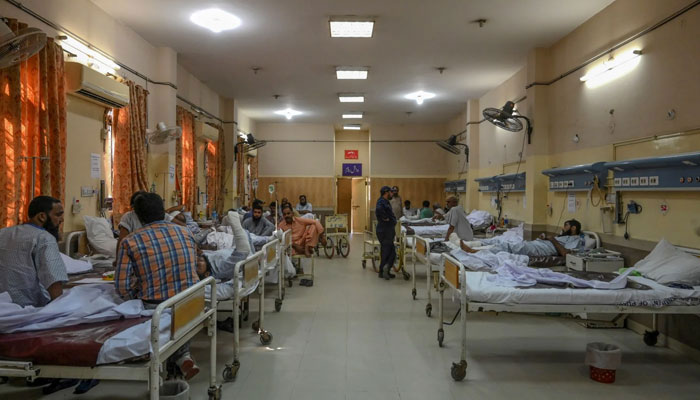
Kurram’s already fragile healthcare system has been buckling under weight of shortages and blockades
EARLIER this month, Syed Ajbar Hussain’s seven-month-old grandson developed a severe chest infection. Hussain, along with the child’s father, rushed the infant to a local hospital in the Parachinar area of Kurram, a tribal district in Pakistan’s Khyber Pakhtunkhwa province.
But the treatment they desperately sought was nowhere to be found. “We couldn’t find the medicines or even the injections we needed anywhere”, Hussain told The News over the phone. “Not even Panadol to reduce his fever.”
Without the necessary medication, the child’s chest infection quickly worsened into pneumonia. On December 11, the infant passed away.
Hussain cries uncontrollably as he recalls the loss of his grandson, whom he had named Syed Rohan Shah. “I have only one son, and he was recently blessed with a son. But now, he’s gone back to Allah.”
In recent months, Kurram’s already fragile healthcare system has been buckling under the weight of shortages and blockades. For which, Hussain, like many others in the region, holds the federal and provincial governments responsible for the dire situation.
“They have failed us. They have failed to establish their writ”, he said.
Kurram, a district of more than 600,000 residents near Pakistan’s border with Afghanistan, has long been a hotspot for sectarian violence. But recent months have seen escalating tensions, with clashes since July to date leaving over 200 people dead.
In October, the provincial government shut down the main highway leading into the district, effectively isolating Kurram and triggering a humanitarian disaster. According to local doctors, the lack of access to basic medicines has contributed to a rising death toll, particularly among children. Since October, at least 29 children have died in hospitals due to untreated illnesses, including chest infections and pneumonia.
However, Barrister Muhammad Ali Saif, the chief minister of Khyber Pakhtunkhwa’s advisor on information, has denied that the deaths are linked to the current crisis. In a press conference on December 18, Saif stated that while the provincial government is still investigating the cause of the deaths, “I can assure you that these deaths [of 29 children] were not due to lack of facilities. There may be other maternity-related issues. Misunderstanding is being spread.”
But the deaths of the 29 children were confirmed by four doctors and hospital records provided to The News.
Doctors further cautioned that the true death toll is likely higher, as many children may have died at home without receiving medical care.
Dr Hameed, a physician in the area, said that pneumonia has become the leading cause of death among children, with many dying because their infections could not be properly treated. “We simply don’t have the resources to treat them”. Dr Shujaat Hussain, another local doctor, expressed frustration over the scarcity of even the most basic medicines. “Something as simple as Panadol syrup has not been available for months”, he told The News. “We need Panadol to reduce a child’s fever, but it’s nowhere to be found.”
The provincial government, however, insists that it is providing assistance. In recent weeks, it has sent a large batch of medicines via helicopters. But Haneef Hussain, president of the local drug association, was critical of the aid. “They sent malaria medication and doctor’s gloves”, he said. “That is useless stuff. What we need are medicines to treat common illnesses like chest infections and pneumonia.”
This week, even philanthropist Faisal Edhi had to travel by helicopter to reach Parachinar to distribute relief supplies, since roads remain closed. “Hospitals are running out of oxygen tanks, fuel, and medicines”, he told The News. “Child wards in both public and private hospitals have been shut down because of the shortages.”
Edhi also pointed to the acute lack of basic supplies, including firewood for heating, which has made the already harsh winter even more unbearable for residents. “For a population of 400,000, sending one or two helicopters won’t solve the problem. The roads need to be reopened immediately to allow goods and medicines to reach the people”, he added.







-
 Royal Maundy Service 2026: King Charles And Queen Camilla In Pictures
 -
 Gucci Mane Robbery, Kidnapping: DoJ Makes Statement On Pooh Shiesty And Big30 Involvement
 -
 Why King Charles Gave Meghan Markle ‘ultimate Refusal’
 -
 Pam Bondi, Dubbed Trump's Ghislaine Maxwell, Gets Fired
 -
 King Charles Breaks Silence On Trump Claim About UK Government
 -
 Meryl Streep 'chuffed' After Surprising Family Link To Anna Wintour Revealed
 -
 Meghan Markle’s Plans To Move With Prince Harry: Insider
 -
 Jamie Lee Curtis Embraces New Role In Life: 'Greatest Lessons, Hardest Days'
 -
 Prince Harry And Meghan's Wedding Video Used For Engagement Farming
 -
 Prince William’s Biographer Breaks Down If Harry Can Find His Way Back To The Firm Before Coronation
 -
 Noah Schnapp Covers Up Relationship Mystery With ‘April Fools’ Prank
 -
 Macron Slams Trump: ‘Neither Elegant Nor Up To Standard’ Over Mockery
 -
 Kanye West Grows Frustrated Mid-performance During Comeback Show: 'Stop It, We Went Over This In Rehearsal'
 -
 Why Princess Anne's Son Had To Take Extra Step Before Remarrying?
 -
 Kylie Kelce Shuts Down 'ridiculous' Questions About Taylor Swift And Travis Kelce Wedding
 -
 Khloe Kardashian Shares Her Kids' Brutal Reaction To New Snack Line