
Govt borrowing surges 130pc to Rs8.564tr in FY24
On June 10, the State Bank of Pakistan cut its benchmark interest rate by 150 basis points, to 20.5 percent.
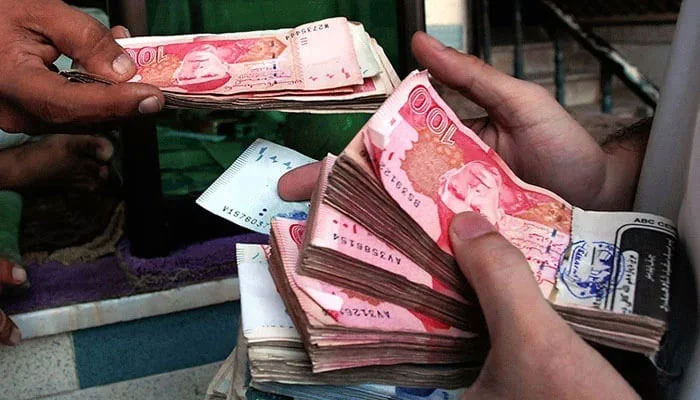
KARACHI: The government’s borrowing from banks more than doubled in the fiscal year 2023-24 as a result of significant financial needs to meet the budget deficit and higher debt interest payments.
According to the figures issued by the State Bank of Pakistan on Tuesday, the government borrowed Rs8.564 trillion from banks between July 1, 2023 and June 28, 2024. This amount is more than twofold the Rs3.716 trillion borrowed during the same period of the previous fiscal year. Comparing these borrowings to the corresponding period in the fiscal year 2023, there was a substantial increase of 130.46 percent.
According to analysts, the government’s increased borrowing was caused by the need to retire the debt of SBP to satisfy the requirements set by the International Monetary Fund and to finance the expanding budgetary requirements.
Notwithstanding considerable attempts to increase the revenue as specified in the budget, analysts predict that government borrowing would increase in FY25 at a similar rate due to the rising cost of debt servicing.
During FY25, the government plans to borrow Rs7.68 trillion locally through government securities and Rs0.66 trillion through external financing (commercial and Eurobond loan borrowing). Naturally, the government’s worsening financial situation is reflected in the jump in borrowing. Nearly all economic problems stem from low revenue and rising expenditure ratios to gross domestic product.
Pakistan’s government debt rose to Rs67.8 trillion in the eleven months of the fiscal year 2024, ending on June 30 after the government borrowed a large amount of money to cover its growing spending needs due to low revenue.
From July to May FY2024, the government added Rs6.976 trillion, or 11.46 percent, to the total debt. In July-May FY24, the government’s domestic debt increased by 19 percent to Rs46.2 trillion.
The government’s substantial budget deficit, maturing debt repayment and growing interest rates forced it to rely heavily on domestic borrowings to fund its budgetary needs. The government generally spends more money than it takes in through taxes. To fill this shortfall, it takes out a loan, which it must repay at an unprecedentedly high rate of interest.
The policy rate was lowered last month for the first time in four years as a result of the beginning of a decrease in inflation amid tight policies and slow growth. On June 10, the State Bank of Pakistan cut its benchmark interest rate by 150 basis points, to 20.5 percent.







-
 Prince Harry Warns Meghan Markle To 'step Back'
 -
 Selena Gomez Explains Why She Thought Lupus Was 'life-or-death'
 -
 New Zealand Flood Crisis: State Of Emergency Declared As North Island Braces For More Storms
 -
 Nancy Guthrie Case: Mystery Deepens As Unknown DNA Found At Property
 -
 James Van Der Beek's Brother Breaks Silence On Actor's Tragic Death
 -
 Megan Thee Stallion On New Romance With Klay Thompson: 'I'm Comfy'
 -
 Nicole Kidman Celebrates Galentine’s Day Months After Keith Urban Split
 -
 Justin Bieber Unveils Hailey Bieber As First Face Of SKYLRK In Intimate Campaign Debut
 -
 Caitlin O’Connor Says Fiance Joe Manganiello Has Changed Valentine’s Day For Her
 -
 Rachel Zoe Sends Out Message For Womne With Her Post-divorce Diamond Ring
 -
 James Van Der Beek's Final Conversation With Director Roger Avary Laid Bare: 'We Cried'
 -
 Jaden Smith Walks Out Of Interview After Kanye West Question At Film Premiere
 -
 Michelle Obama Gets Candid About Spontaneous Decision At Piercings Tattoo
 -
 Why Halle Berry Wasn't Ready For Marriage After Van Hunt Popped Question? Source
 -
 Bunnie Xo Shares Raw Confession After Year-long IVF Struggle
 -
 Brooks Nader Reveals Why She Quit Fillers After Years