
Kabul urged to address barriers to girls’ education
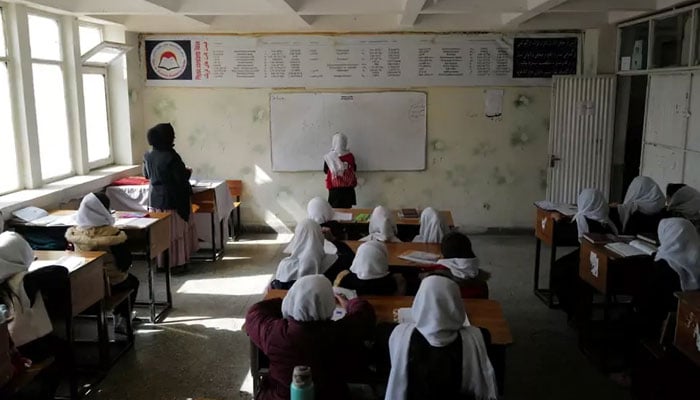
Islamabad : Religious scholars from Afghanistan and Pakistan have urged the Afghan government to address the barriers to girls’ education related to curriculum and infrastructure and launch teachers' capacity-building programmes with the support of international donor bodies and institutions.
They were deliberating several proposals concerning different areas of relationship between the two sides and the stability of the region at large at 2-day 4th round of Pak-Afghan Religious Scholars Dialogue, organised here by Centre for Research and Security Studies (CRSS).
They stressed the need to ensure women's access to employment opportunities to prevent socioeconomic regression in Afghanistan and appointments of key personnel and representatives on merit ensuring that all socioeconomic, political and ethnic groups are included.
Speaking on the occasion, Malick Ceesay, head of the Pakistan-based liaison office for the UN Assistance Mission in Afghanistan, said that UNAMA is engaging with all Afghans to help them achieve a broad-based governance system that includes everybody.
Mr Ceesay opined that the Taliban allowed Afghan females to work in some public offices related to passport, immigration, healthcare and agriculture but these concessions were overshadowed due to bans on the remaining women's access to employment and girls’ education beyond Grade Six. He emphasised the importance of the easement of restrictions on women’s access to education and employment and an inclusive system of governance in the country to pay the way for its recognition. “Islam never says that women should not go to school, and Islam never says that women should not go to work. Which (version of) Islam and which Quran says that? It's not found in there,” he added.
Mr Ceesay encouraged Taliban to attend a conference on Afghanistan later this month stating that it would help return much-needed global attention to the crisis-ridden country, as Ukraine war and Gaza hostilities dramatically shifted the international attention from Afghanistan and that was a concern for the United Nations. We do not want Afghanistan to be forgotten, he said. We are hopeful that this time around, the Islamic Emirate will send its representatives (to Doha) to be able to engage with the international community in a constructive and effective manner, the UN diplomat said.
Dr Qibla Ayaz, former Chairperson, Council of Islamic Ideology, highlighted the potential of religious diplomacy to serve as an unofficial communication channel between two countries’ leadership and people and help address the issues of bilateral, regional and international concern. He urged both sides to let go of the bitter baggage of history and foster vision-oriented engagement at different levels of the relationship in the interest of the two countries’ connected future.






-
 Queen Elizabeth II Knew Son Andrew Was The Most ‘vulnerable’ Of All Kids
 -
 Noah Wyle Achieves His '50-year' Dream In Hollywood: 'Truly Humbled'
 -
 Cardi B 'pauses' Divorce Drama After Offset Shooting Shock
 -
 Zendaya Reveals Which Disney Movie Inspired Her Past Fashion Style
 -
 Jennie Garth Reacts To Rumours About Her, Jason Priestly's Off Camera Love Affair
 -
 'Project Hail Mary' Beat Hit Space Movie At Box Office: Here's Which Film
 -
 Prince William Secretly Called Andrew Night He Lost All Titles: Expert
 -
 James Bourne's Bandmate Provides Health Update Post Life Threatening Scare
 -
 Chase Infiniti Shares What Surprised Her Most About Leonardo DiCaprio
 -
 Jackie Tohn's Hilarious Joke About Kristen Bell's Daughters Goes Viral
 -
 Queen Elizabeth II Apt Fashion Told ‘story Of A Lifetime’
 -
 Patrick Ball Recalls Challenging Times Before Landing 'The Pitt' Gig
 -
 Taylor Swift Steps Out Looking Like A Bride
 -
 Nicole Kidman 'embraces Independence' As She Navigates New Chapter Of Life Post Keith Urban Split
 -
 'Breaking Bad' Duo Aaron Paul, Bryan Cranston Drop Exciting News For Fans
 -
 BTS Kicks Off Massive World Tour