
Why did ANP lose popularity?
Though many people didn't expect ANP to be a major victor in province they did not anticipate ANP losing elections with such a high margin
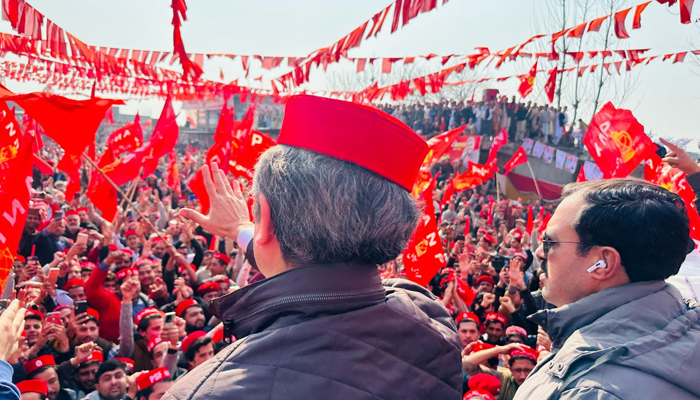
In the recently held election, perhaps the most unpopular and unfair election in Pakistan, the centre-left nationalist party the Awami National Party (ANP) is also one of the major casualties. It managed to win only one seat in its stronghold, Khyber Pakhtunkhwa (KP), and two provincial seats in the Balochistan Assembly.
Though many people did not expect the ANP to be a major victor in the province, they did not anticipate the ANP losing the elections with such a high margin. Until last year, most people had thought that the ANP would be a major victor in KP, along with the Maulana Fazlur Rahman-led JUI-F. These commentators predicted that the powers that be were going to give the reins of the province to the JUI-F and the ANP.
Now, the unexpected performance by the PTI where its candidates contesting as independents won a two-thirds majority in KP and the highest number of seats in the National Assembly has proven many commentators and political analysts wrong.
The humiliating ouster of the ANP from the KP Assembly in these elections has been analyzed and commented on by many. To a layperson like me, the fall of the ANP lies in factors within and outside the party. These reasons pertain to leadership, outdated narratives, and flaws in political manoeuvring or strategies.
The ANP was once led by leaders like Wali Khan. In its last win in KP, it was led by Asfandyar Wali Khan, Wali Khan’s son. Despite several shortcomings, the last government led by the ANP in the province performed considerably well while fighting terrorism and sacrificing many workers and leaders to the menace of terrorism.
The then chief minister Amir Haider Khan Hoti is regarded by many as a competent leader in the province whose government performed better not only in law-making but also in other important sectors like education. The famous 18th Amendment in 2010 also owes great credit to the ANP. Additionally, the party negotiated the rights of the provinces in matters relating to the distribution of the National Finance Commission (NFC) Award in an effective way.
Many ANP sympathizers would see the presidency of the ANP out of the Wali Bagh dynasty and wanted to have Amir Haider Hoti as its president instead. But this did not happen, and the son of Asfandiyar Wali Khan was ‘elected’ as the party’s president. This disappointed many.
Many still think that Aimal Wali Khan is not leading the party effectively. He is considered an unserious persona by many supporters too. Keeping the party's leadership confined to the Wali Bagh has pushed the party further deeper into the casket of dynastic parties such as the PML-N and the PPP.
Second, the Pashtun-centric narrative no longer worked. This cause has openly, more powerfully and more plainly, been taken over by the rights movement, the PTM. This movement has touched the scars of the victims of the ‘war on terror’ and missing persons as it has been fighting for their rights directly. It has also challenged Pakistan’s powerful quarters and in return faced persecution by institutions.
The ANP has been wary of supporting the PTM’s narrative. It even expelled a few stalwarts like Afrasiab Khattak and Bushra Gohar from its ranks, some say because these persons were supporting the PTM. This move was seen by many as the ANP’s attempt at wooing the powers that be for another turn in power sharing in the province. Later, when in early 2022, the ANP supported the no-confidence vote against the government of the PTI many commentators thought they were right about their assessment.
In the past, the ANP’s politics mainly revolved around issues like provincial autonomy, stopping the construction of the Kalabagh dam, and giving a Pashtun identity to the province. Provincial autonomy, people think, was achieved through the 18th Amendment in 2010 during the PPP-led government. With that amendment, the province’s name was changed to Khyber Pakhtunkhwa from North Western Frontier Province. Thus, the issue of a Pashtun political identity was also settled. And Kalabagh dam is now a forgotten story.
Third, going with the major political contenders for the no-confidence vote against the Imran Khan government also proved disastrous for the ANP. On the one hand, it supported the ouster of the PTI government while on the other it took no ministry. This could not be sold to the people for they only saw the obvious, and the obvious was its support in the no-confidence move.
The Pashtun victim card could no longer be used as there emerged a renewed and more organic political movement around this card. The ANP could not display itself as anti-establishment as it used to be for its leadership was mostly silent on the issues raised by the PTM. Instead, it was thought of as siding with those that are powerful.
The ANP tried to represent other ethnic nationalities in KP, but given certain entrenched ethnic and Pashtun nationalist posturing by some of its ideologues and intellectuals it could not win the sympathies of other nationalities, especially in Hazara Division and the southern districts of the province.
People in KP are not feudalized the way many in Sindh or Balochistan might be. The middle class here is growing because of earnings in foreign currencies (people working overseas). The feudal class can no longer garner support from the people the way they used to. The ANP still has a greater number of these feudal lords in its ranks, and they cannot perform in a considerable open society now.
People in KP are more emotional; they buy the victim card willingly. In 2002 they voted for the Muttahida Majlis-e-Amal (MMA), a religious agglomeration of six or so religious parties. The MMA had presented the US as a bigger victimizer, which had launched an offensive in Afghanistan.
In 2024, these people see Imran Khan as a greater victim – ousted from power, shot, jailed, sentenced under several cases, and deprived of the election symbol. Imran Khan has played the victim card well, openly exposing the usual suspects.
The vote for the PTI in Pakistan, especially KP, is against the powerful quarters as people think they are meddling in politics – keeping Imran Khan away from the political landscape – while the other political parties including the ANP are an accomplice to this.
The writer heads an independent organisation dealing with education and development in Swat. He can be reached at: ztorwali@gmail.com


