
Election split tests rupee, but exporters cushion the blow
KARACHI: The rupee is expected to trade in a narrow range in the coming weeks, as healthy dollar supplies from exporters offset the political uncertainty after a split election result, analysts and traders said on Saturday.
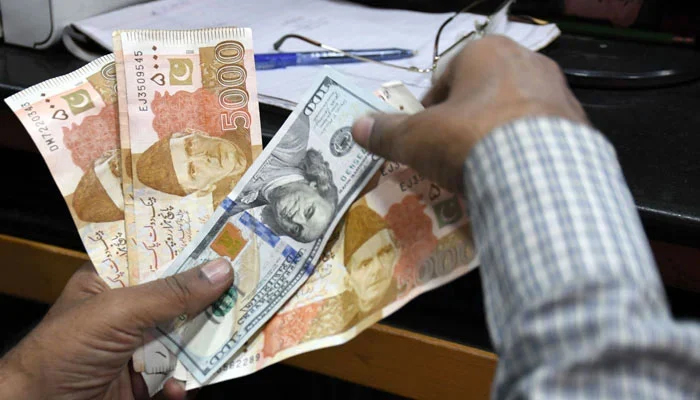
The rupee gained slightly against the greenback in the interbank market this week, closing at 279.28 on Friday, compared with 279.42 on Tuesday. The market was closed on Monday for Kashmir Day and on Thursday for the general elections.
The polls, which were marred by allegations of rigging and violence, produced a hung parliament, with no clear winner among the three main parties. The jailed former prime minister Imran Khan's party, which fielded many independent candidates, emerged as the largest single bloc, followed by the Pakistan Muslim League-Nawaz (PML-N) of Nawaz Sharif and the Pakistan People's Party (PPP) of Bilawal Bhutto Zardari.
Both Khan and Sharif claimed victory and vowed to form the next government, raising fears of a prolonged political deadlock that could delay much-needed reforms and foreign financing for the cash-strapped country.
"The political situation is very fluid and uncertain. There is a risk of protests and violence if the final results are not accepted by all parties," said Tresmark, a currency advisory firm, in a note to clients.
"This could affect the confidence of investors and creditors, and put pressure on the rupee and the external account."
Pakistan faces a widening current account deficit, dwindling foreign exchange reserves and a looming debt crisis. It is widely expected to seek a bailout from the International Monetary Fund (IMF) after the new government takes charge.
The IMF has already completed two reviews of Pakistan's $3 billion loan programme, but the third one, due in March, could face hurdles due to the political impasse and the possible change in economic policies.
"Despite the political noise, we expect the rupee to remain stable in the near term, as there is ample dollar liquidity in the market from exporters who are selling more in forward contracts," Tresmark said.
"The forward premiums are attractive, and we see more selling in the 15 to 60-day tenors. The market is also anticipating more inflows from bilateral and multilateral sources once the political dust settles."
Tresmark said the rupee was likely to trade in the 278-282 range this month, with limited upside potential.
"Any appreciation beyond the 276 level will hurt the competitiveness of exports, which are crucial for the economy. The new government will have to focus on curbing inflation and boosting the foreign exchange reserves, as well as addressing the structural issues of low growth, revenue and productivity," it said.
Pakistan's foreign exchange reserves held by the central bank fell by $173 million to $8.044 billion as of Feb. 2, according to the latest data.


