
Pakistan loses 20pc of forest area to urbanisation
Pakistan and Bangladesh have highest percentage of private ownership of forest land in South Asia, 36 and 34 percent respectively
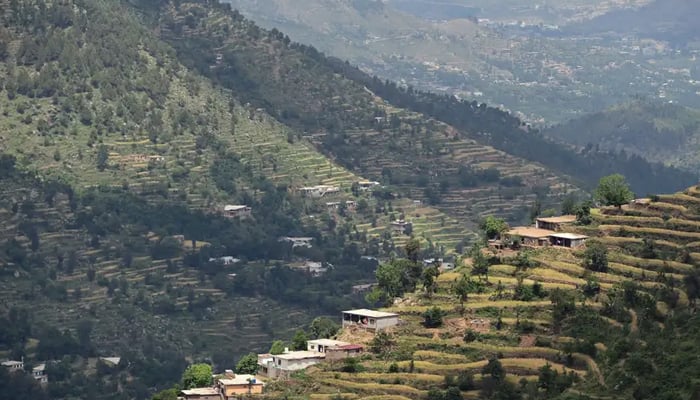
ISLAMABAD: In the past 24 years, Pakistan has lost almost 20 percent of its forest area mainly because of the rise in urbanization and shortage of energy, reveals Pakistan Institute of Development Economics (PIDE) latest research.
According to PIDE’s research on Challenges and Opportunities of The Billion Tree Tsunami Project (TBTTP), Pakistan has the lowest forestation rates in the world with almost 27000 hectares of forest clearance every year. Pakistan and Bangladesh have the highest percentage of private ownership of forest land in South Asia, 36 and 34 percent respectively, states research.
The highest forest area in Pakistan is in Khyber Pakhtunkhwa province followed by Sindh, Punjab, ex-Fata, Balochistan, Azad Jammu and Kashmir and Gilgit Baltistan (GB) respectively. Rapid population growth, rising urbanization, high poverty and shortage of energy such as gas are the main factors of deforestation in Pakistan, according to the research.
Further, in cities like Lahore and Islamabad, infrastructure development and construction of large road structures for individual mobility has taken a toll on forestation, reveals the study. Pakistan is among the countries with the lowest number of trees in the world with less than one billion trees. Pakistan has 1,131 trees per sq km (only higher than Afghanistan in South Asia) and only five trees per person whereas a desirable tree level for sustainable development requires 900 trees per person, states the research.
Countries with the highest landmass have the highest totals. Russia (642 billion) has the highest number of trees in the world followed by Canada (318 billion), Brazil (302 billion) and the US (228 billion). Pakistan is among the countries with the lowest number of trees in the world with less than one billion trees.
Since 2000, the total forest area of Pakistan has decreased by 20 percent. In 2021 just 4.8 percent (36.9sq km out of total land area of 770.8sq km) of Pakistan’s land area had forest cover compared to 5.9 percent (45.1sq km) in 2000. About 27,000 hectares of forests are cleared every year in Pakistan (out of which 50 percent is used for cooking and heating in households that lack access to gas).
The forest cover in Pakistan is significantly lower than the average value of 31.2 percent forest cover across the world, 18.9 percent in South Asia, 24.4 percent in India and 14.5 percent in Bangladesh. “Ideally, a country should have 25 percent forest cover for a healthy environment”, states PIDE research.
Further it notes, “Distribution of the country’s total forest area varies; it is the highest in Khyber Pakhtunkhwa (32.7 percent of total forest area of Pakistan), followed by Sindh (14.8 percent), Punjab (12.4 percent), Ex-Fata (11.9 percent), Balochistan (11.1 percent), Azad Jammu and Kashmir (9.6 percent), and Gilgit-Baltistan (7 percent)”.
“Within the forest cover area of the country, dry temperate forests account for the largest share of 36 percent, followed by sub-tropical broadleaved shrub (19 percent), moist temperate (15 percent), Chir Pine (13 percent), Riverine (4 percent), irrigated plantation (4 percent), thorn (3 percent), mangrove (3 percent) and subalpine forests (2 percent)”, said research.
In addition, according to PIDE’s research, owing to rapid population growth, rising urbanization, high poverty and shortage of energy, the forestation rate has declined in the country over time. Timber mafias and locals have chopped down immense swathes of forests. People, who do not have electricity or do not get it regularly, use wood fires for lighting, cooking and warmth. It further notes that South Asia has 11 million hectares of privately owned forests and their area is increasing, with Pakistan and Bangladesh having the highest proportion of privately owned forests (36 and 34 percent respectively in 2010). An increase in the share of private ownership of forests could have serious implications for sustainable forest management in the future.
Indigenous people own the least among all categories of forest ownership, and the ratio is on the decline. This may have serious implications not only for forest conservation but also for the empowerment of indigenous people, who are already among the most deprived.


