
Govt to borrow Rs3.2 trillion from banks in Feb-April to plug fiscal gap
KARACHI: The government plans to borrow Rs3.175 trillion from banks through treasury bills and bonds in the next three months to finance its fiscal deficit, the central bank said on Thursday.
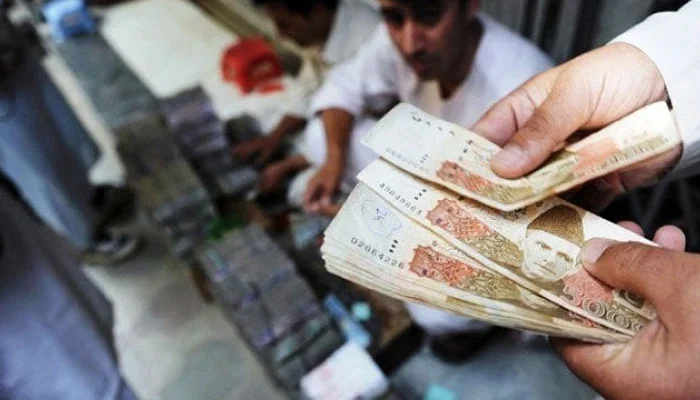
From February through April, the majority of the borrowing is expected to be done via fixed and floating rates Pakistan Investment Bonds (PIBs) that have maturities of three, five, 10, 15, 20 and 30 years.
The government will raise Rs1.645 trillion through long-term paper auctions, according to the central bank's auction calendar, which was released on Thursday.
The government plans to borrow Rs1.530 trillion from commercial banks through the auctions of market treasury bills.
Due to a widening budget deficit, rising markup payments on domestic debt amid high interest rates, the government is heavily dependent on bank borrowings to fund its spending needs. On the other hand, it also uses the Pakistan Stock Exchange (PSX) to conduct local currency Sukuk auctions to raise funds. The government seeks to expand and broaden the pool of potential investors for its debt by utilising Shariah-compliant securities. Furthermore, the strong possibility of securing foreign assistance from friendly countries will lessen the strain on domestic borrowings.
Pakistan’s budget deficit clocked in at Rs2.4 trillion or 2.3 percent of gross domestic product in the first half of fiscal year 2024, compared with Rs1.7 trillion or 2 percent of GDP in the same period last year.
Total revenue increased by 46 percent year-on-year to Rs6.9 trillion in July-December FY24, while total expenditures increased by 45 percent to Rs9.3 trillion.
The government markup payments rose to Rs4.2 trillion in July-December FY24, up 64 percent from a year earlier. This was due to high interest rates and debt stock.
The State Bank of Pakistan held its key interest rate steady at a record 22 percent on Monday due to elevated inflation amid higher energy prices.
The SBP stated that the real interest rates remained significantly positive on a 12-month forward looking basis, as inflation is expected to remain on a downward path. The Monetary Policy Committee of the SBP expects inflation to hover around 23-25 percent in FY24. Analysts anticipate monetary easing to start from March.
The IMF stated in its most recent country report that even though sentiment has improved, sustainability risks are still high because of significant financing needs and a lack of external funding.
With programme policies, sufficient funding, and persistent efforts, debt sustainability is attainable. It stated that low reserves and restricted market financing create difficulties with foreign exchange payments, and that policy lapses, inadequate funding, or external shocks could endanger sustainability.
The IMF claimed that high real interest rates increase the burden of debt.


