
Neutral expert to take up Pak-India dispute on two hydropower projects on 20th
India has built Kishenganga project on Jhelum River and is in process of building Ratle project on Chenab river
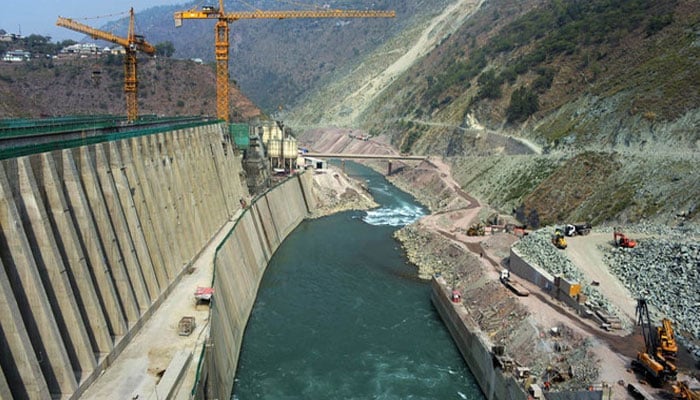
ISLAMABAD: The Neutral Expert is set to take up the legal battle between Pakistan and India over the controversial designs of 330-MW Kishenganga and 850-MW Ratle hydropower projects from September 20 to September 21 in The Hague.
“Pakistan’s delegation comprising Pakistan’s commissioner of Indus Waters, top officials of the Attorney General’s Office, and a team of international lawyers hired by the Government of Pakistan would advocate the country’s case for justice,” a top official at the Attorney General office told The News.
Earlier, Neutral Expert court proceedings were held on February 27-28, 2023 to finalize the rules of procedures on how to advance the legal fight on the designs of both the projects being built on Pakistan’s rivers by India.
India has built the Kishenganga project on Jhelum River and is in the process of building the Ratle project on the Chenab river.
Pakistan is fighting its case in the two forums -- Neutral Expert constituted by the World Bank as desired by New Delhi and Permanent Court of Arbitration (PCA) desired by Islamabad. India was evasive in fighting its case in the PCA as it feared that Pakistan would certainly win its case in the seven-member PCA. Now, India is left with no option but to attend the PCA proceedings. On July 7, 2023, PCA had rejected India’s six objections challenging the ongoing court’s jurisdiction to hear the case, declaring the court is competent to consider the disputes set forth in Pakistan’s request for arbitration.
The court, in its detailed Award de Ederer on July 7, accepted Pakistan’s stance and rejected India’s objections, and affirmed its competence. In relation to India’s non-appearance before the court, the PCA concluded that a party’s non-appearance did not deprive the court of competence, nor did it have any effect on the establishment and functioning of the court, including the final and binding nature of its awards.
At the same time, India’s non-appearance does not lessen the court’s standing duty to verify that it is competent and that it has jurisdiction over the dispute before it.
Pakistan desired to have its disputes resolved through the court of arbitration. India opposed it and scuttled the process by filing a parallel request for the appointment of a neutral expert. After filing a parallel request, India challenged the court of arbitration’s empanelment by saying that parallel proceedings cannot take place under the treaty. India wanted the court to declare the PCA illegal.
“Now the court has accepted Pakistan’s stance and rejected India’s six objections, paving the way for the court of arbitration to start hearing Pakistan’s claim on merit to the effect that the two said projects’ designs are in breach of the Indus Waters Treaty of 1961.”
The official said India feared that Pakistan’s case was very strong and in case New Delhi lost the fight, it would not be able to construct future projects on Pakistani rivers with poundage and spillways. To create hurdles for PCA proceedings, New Delhi issued a notice to Pakistan on January 25, seeking modifications in the Treaty two days before the court hearing that took place on January 27-28.
India had extended the notice by invoking Article 12 of the Treaty. However, Pakistan sent in the first week of April 2023 its response to India, saying it was ready to listen to New Delhi’s concerns about the prevalent treaty at the level of the Permanent Commission of Indus Waters (PCIW).
Pakistan has raised three objections to the Kishenganga project’s design, saying that the project pond is 7.5 million cubic meters, which is excessive and should be one million cubic meters. Pakistan also wants India to raise intake by up to 1-4 meters and raise the spillways up to nine meters high.
On the issue of the Ratle Hydropower plant, Islamabad raised four objections. Pakistan wants India to maintain the freeboard at one meter whereas India wants to keep it at two meters. In addition, India wants to keep the pond of 24 million cubic meters, but Pakistan wants it to be restricted to eight million cubic meters. Pakistan also wants the intake of the project to be raised by up to 8.8 meters and its spillways should be raised by up to 20 meters.


