
SBP allows credit card settlements at interbank exchange rate
Move comes after IMF asks Pakistan to fix its currency market
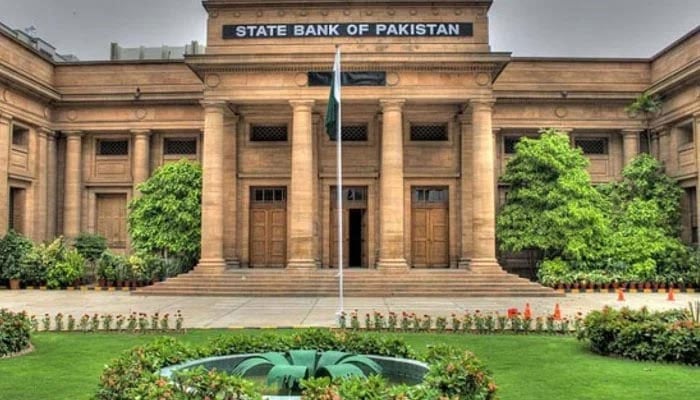
KARACHI: The central bank on Wednesday permitted banks to buy dollars from the interbank market to settle international card payments in an effort to reduce the exchange rate gap between the official and kerb markets.The move also followed the International Monetary Fund’s demand that Pakistan fixes its currency market prior to resuming a $6.5 billion bailout programme. “In view of the representations received from stakeholders, it has been decided to allow Authorised Dealers to purchase USD from Interbank for settlement of card-based cross border transactions with IPS [international payment schemes], the State Bank of Pakistan said in a circular.
These guidelines are effective immediately and last through July 31, 2023, it added.
For the settlement of card-based cross-border transactions using IPS like Visa, MasterCard, etc., banks used to buy US currency from exchange companies. Due to a lack of foreign currency, debit/credit card purchases on international websites and retailers could only be settled by banks purchasing dollars on the open market.
Digital instruments are being used and accepted more frequently in Pakistan. In its third quarterly review of payment systems, the SBP noted that of the total number of cards in use in Pakistan, 37.1 million debit cards account for 76.7 percent, followed by 9.2 million social welfare cards (19.1 percent), 1.9 million credit cards (4 percent), and 0.2 percent prepaid cards.It is no secret that Pakistan has been struggling with dwindling foreign reserves since last year. The IMF lending programme remained stalled for months . The government imposed import restrictions to save reserves that, as of May 19, totalled just $4.2 billion, or barely enough for one month’s worth of imports.
The currency exchanges run dry when imports are funded on the open market and the demand for credit and debit card payments is satisfied by money changers. As a result, the rupee suffered in the kerb market, falling to 316 to the dollar, although the local currency has remained largely stable in the interbank market over the past few months.
The price of a dollar on Wednesday in the interbank market was 285.47 rupees, but it sold for 25.53 rupees higher in the open market. The price of the dollar in the kerb market was 311 rupees.
“Now that the SBP will provide dollars to the interbank market, official rates to be used to settle credit card transactions. It will lessen pressure from the open market,” said Tahir Abbas, the head of research at Arif Hbib Limited.After Pakistani authorities relaxed their control over the rupee in January to help secure the IMF loan, the rupee has fallen more than 20 percent this year. Since then, the rupee has stabilised on the interbank market, but a discrepancy between the official rate and the rate offered by money changers has grown to about 9 percent.
“It is a positive step for the consumers as there is a big gap between interbank and open market rates,” said Fahad Rauf, the head of research at Ismail Iqbal Securities.
The SBP made the right decision at the appropriate moment, according to the general secretary of the Exchange Companies Association of Pakistan Zafar Paracha, which will cause the open market currency rate to drop by 20 to 25 rupees. The reduction in the official and kerb markets’ rates will also serve to increase remittance inflows, he said.
Any notable differential in rates between the official and kerb markets promotes transactions outside of the official banking system, Pracha added.
As it teeters on the brink of a sovereign default, Pakistan is intensifying its efforts to get funds. The nation has approximately $3.7 billion in foreign debt that is due in June.
The IMF is continuing in contact with Pakistan’s government to clear the way for a board meeting before a financing package ends at the end of June, according to the chief of the IMF mission for Pakistan in a statement.Three main agendas form the centre of the IMF’s engagement. First, there is a problem with how the foreign exchange market operates. The administrative steps adopted to control the exchange rate, including import curbs, have evidently drawn the ire of the IMF.
However, these actions have been seen as the only practical choice given to the low foreign exchange reserves and lack of an IMF programme. The IMF further stresses how crucial it is to pass the FY24 budget while keeping it in line with the programme’s objectives. According to the IMF, Pakistan must continue to get adequate finance from partners in order to preserve macroeconomic stability.Rauf acknowledged that a further devaluation is likely given the IMF’s views on the exchange rate, but he was unsure if the government wanted to resume the IMF plan or not.







-
 Halsey's Fiance Avan Jogia Shares Rare Update On Wedding Planning
 -
 Instagram Head Adam Mosseri Says Users Cannot Be Clinically Addicted To App
 -
 James Van Der Beek Was Working On THIS Secret Project Before Death
 -
 Las Vegas Father Shoots Daughter's Boyfriend, Then Calls Police Himself
 -
 'Hunger Games' Star Jena Malone Shocks Fans With Huge Announcement
 -
 Ex-OpenAI Researcher Quits Over ChatGPT Ads
 -
 Prince William Criticized Over Indirect Epstein Connection
 -
 'Finding Her Edge' Creator Explains Likeness Between Show And Jane Austin Novel
 -
 Margot Robbie Delivers Sweet Message Ahead Of Valentine's Day
 -
 How AI Boyfriends Are Winning Hearts In China: Details Might Surprise You
 -
 Blake Lively Mocked Over 'dragons' After Latest Court Appearance
 -
 Gmail For Android Now Lets Users Create Labels On Mobile
 -
 Emma Slater Reveals Final Moments With James Van Der Beek Before His Death
 -
 Princess Kate Makes Surprise Visit To Support Mental Health Initiative
 -
 Reese Witherspoon Sparks Nostalgia With 'Green Sisters' Tribute To Jennifer Aniston
 -
 Royal Family Faces Fresh Crisis While Andrew's Controversy Refuses To Die