
Strengthening democracy: ECP outperformed all stakeholders in 2022
Democracy has suffered and survived alike in the hands of major stakeholders right from political parties to army and judiciary, found an analysis of 2022 by a leading thinktank
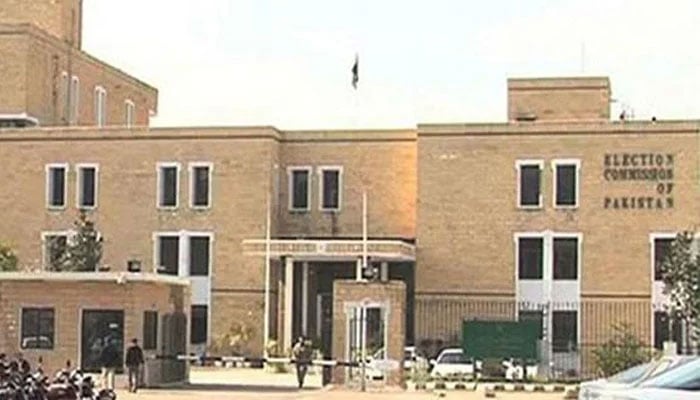
ISLAMABAD: Democracy has suffered and survived alike in the hands of major stakeholders right from political parties to army and judiciary, found an analysis of 2022 by a leading thinktank.
The only institution which adhered to its commitment was the Election Commission of Pakistan (ECP). A report on the outgoing year by Pakistan Institute of Legislative Development and Transparency (PILDAT) has chronicled the important events shaping the future of democracy right from the vote of no confidence resulting in the first-ever ouster of a prime minister to the lack of non-seriousness towards making Parliament an effective institution, the mixed signals from the establishment and the judiciary as well as dismissive attitude of political parties towards the third tier of government, the local bodies.
The report has also expressed concerns over the rising threat of populism, which, it said, has been chiefly personified by PTI chief Imran Khan. While it recognises PTI’s legitimate right to have a level-playing field like other political actors, the Pildat has also reminded that the classic manifestation of a populist leader in Khan means more challenges than opportunities for consolidation of democracy in Pakistan.
To his ouster from PM Office through the no-confidence motion, the report has discussed this in a section titled “A break from authoritarianism” in which it listed his government’s anti-democracy tactics like assault on free media, trolling of dissenting voices through social media and political witch-hunt in the name of accountability. His government paid a little focus on engaging Parliament which Khan barely attended which reflects through his attendance record (11 percent). In the Senate, he went only once.
It is difficult to argue, the report notes, whether personal proclivities of Khan dominated his style of authoritarian governance or the hybrid governance model actively aided by the military in his support was the leading cause behind the governance malaise. However, the record of his predecessors and successors is not plausible either in terms of giving time to Parliament, the report reminds. Nawaz Sharif and Shehbaz Sharif each attended 14 percent sessions. Shahid Khaqan Abbasi was a bit better with 19 percent attendance during his stint as prime minister.
While Khan’s removal was a breather, there is little to the credit of the coalition government in terms of the positive impact of quality of democracy and governance. The economic situation has gone from bad to worse and the removal of finance minister Miftah Ismail within five months has not helped in economic and political credibility of the PMLN when compared with the PTI which changed four finance ministers in three years and eight months.
Commenting on the announcement of now-retired army chief with regard to the pull-out from politics, the report said Gen Qamar Bajwa where confessed for the first time the role his institution played in politics and subsequent resolve of doing it never again, he had also resolved to serve the country beyond its mandate on economic front. Gen (R) Bajwa had said this in context of the role that army played in Reko Diq, FATF, cheap gas from Qatar and facilitation of loans from friendly countries, managing Covid and flood relief operations.
The report has also declared “unbecoming” the role of assemblies’ while referring to the case of vote of no confidence as deputy speaker Qasim Suri had dismissed the motion in violations of the constitution and the subsequent dissolution of the assembly by the President Arif Alvi on the advice of beleaguered PM Khan. Punjab Assembly witnessed even more embarrassing behaviour during the election of Punjab CM which could only take place on the order of Lahore High Court.
While the Supreme Court played a plausible role by undoing the orders of the National Assembly’s deputy speaker and the dissolution of the assembly, its judgment in another case was controversial. Interpreting the Article 63-A of the Constitution, the court ruled that votes cast by legislators in violation of their party’s stance must not be taken into account while determining the outcome of a motion, the report said. The bench headed by Chief Justice Umar Ata Bandial was hearing a presidential reference.
The report has also criticised the apex court in its failure to evolve the criteria of appointment of judges where in the chief justice stuck to his position outrightly ignoring the opinion of fellow judges like Qazi Faez Isa and others who had to resort to writing public letters calling for a transparent and well-defined criterion. This is another story that two government nominees, attorney general and law minister, changed mind in the next meeting and voted in support of the chief justice’s recommendations fueling speculations of different kinds.
The Pildat report has also criticised the interference of judiciary into the affairs of ECP as a bench of Lahore High Court declared invalid the action of ECP against officials allegedly involved in irregularities in the Daska by-election held in February 2021. The report lauded ECP for the resolute steps it took to stem the tide of future attempts of rigging. “Despite this bold and right step by the ECP, it is unfortunate that the ECP was subjected to continuous undue criticism by the PTI while in government and even after its ouster from government. It is even more surprising that after routing the PMLN in 15 out of 20 seats in the by-election held on July 17, 2022 in Punjab despite being out of office, the PTI leader criticised the ECP and alleged it for playing a partisan role,” said the report.
The Pildat has also deplored the role of all political parties towards establishing a local government system as it is depriving the people of their right to have elected governments at local level. The ECP has made numerous attempts, the report notes, to hold elections in Sindh, Punjab and Islamabad but each attempt has been scuttled under one or the other pretext. The latest assault came from the National Assembly, which, on December 22, hurriedly moved to amend the Islamabad Capital Territory Local Government Act, 2015 and shelved the plan of elections scheduled on December 31. This was done without consulting ECP.


