This week You! is in conversation with Dr Subeika Rizvi, a distinguished academic who has earned her PhD in Financial Literacy.
woman @ work
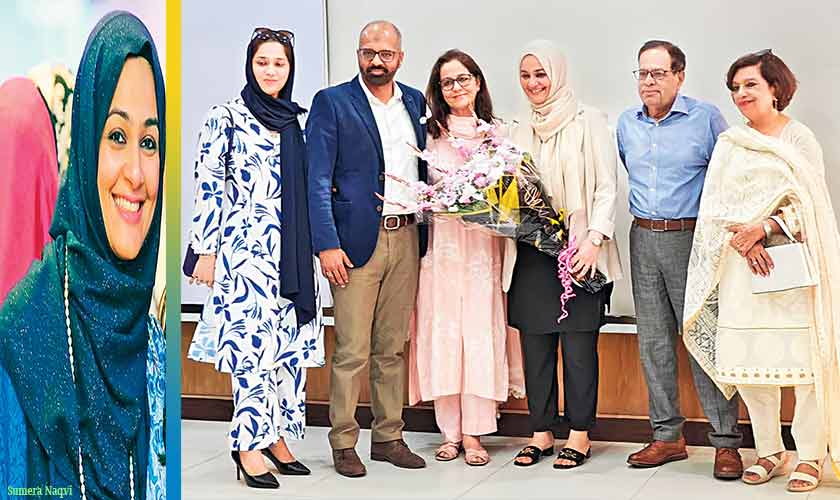
Dr Subeika Rizvi has recently earned her prestigious doctoral degree from Suffa University in Karachi. Her research focuses on empowering Pakistani women through financial inclusion - a critical issue, given the limited understanding of banking and restricted access to financial services among women in Pakistan.
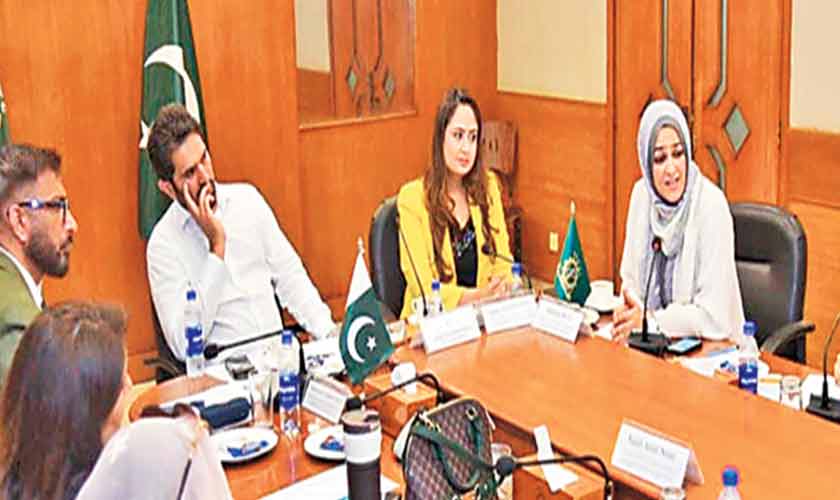
Surveys indicate that only 14 per cent of women in Pakistan have access to financial services, compared to 56 per cent of men. Overall, just 35 per cent of both men and women utilise digital financial services. In such a challenging landscape, educating Pakistani women - particularly entrepreneurs - about financial literacy and encouraging them to use banking services is vital.
As a mother of four, Dr Subeika is not only a dedicated parent but also a passionate advocate for women’s right to financial services, which inspired the focus of her research.
This week, You! talks to Dr Subeika Rizvi about her doctoral thesis. Read on…
You! Tell us about your PhD journey, how it started, and what inspired you?
Subeika Rizvi: I have always been ambitious and a high achiever in academics, and pursuing a PhD was a lifelong dream. For a long time, I never thought I would be able to achieve it while balancing family responsibilities and professional commitments. The journey was challenging, exhausting, and at times overwhelming - but also deeply rewarding.
My inspiration came from the remarkable figure, Hazrat Khadija (AS). In the days of ignorance, she stood as a beacon of intelligence, dignity, and unmatched business acumen. Her legacy as a pioneering woman entrepreneur in early Islam has always fascinated me. I felt it was only fitting to dedicate my PhD to women’s entrepreneurship, in honour of her contributions.
You! What are some of the findings of your study?
SR: My doctoral research - ‘Empowering Pakistani Women through Financial Inclusion’ - focuses on how financial knowledge, access, and confidence impact women’s entrepreneurial success. The findings highlight that financially literate women are more likely to access credit, adopt digital financial tools, and make sound business decisions.
Overall, the study shows that financial literacy is a key determinant of financial inclusion and can serve as an effective policy tool to increase the use of formal financial services among women in Pakistan. Reforms such as the National Financial Inclusion Strategy, National Financial Literacy Programme, and Banking on Equality initiative by the State Bank of Pakistan (SBP) support this agenda.
You! How does your research align with national efforts - like SBP’s Banking on Equality policy - aimed at improving women’s financial inclusion?
SR: My research on financial literacy and financial inclusion directly complements and supports national initiatives such as the State Bank of Pakistan’s Banking on Equality policy, which seeks to bridge gender gaps in the financial sector. In fact, my work provides empirical evidence that financial literacy goes beyond simply opening bank accounts - it empowers women to actively use financial services for business growth and household decision-making. This closely aligns with the policy’s pillars, including improving product design, increasing digital adoption, and strengthening women’s financial decision-making power.
You! How important is it for women to be financially inclusive?
SR: Women’s financial inclusion is not just important - it is essential. When women have access to financial services, they gain the ability to save, invest, and make independent decisions. This not only improves household well-being but also fosters entrepreneurial growth. No economy can reach its full potential if half of its population remains excluded. Ensuring women’s financial inclusion is therefore both a matter of equity and a strategic driver of national economic growth.
You! What does women’s empowerment mean to you?
SR: To me, women’s empowerment means giving women the tools, opportunities, and confidence to make their own choices and shape their own futures. It is not limited to participation - it’s about ownership, decision-making, and influence at every level, from households to boardrooms. Empowerment is when a woman has the financial independence to support herself, the skills to build and lead, and the voice to be heard in policies and practices that affect her. Ultimately, it means creating an environment where women are not just included, but recognised as equal partners in economic and social progress.
You! Reflecting on your PhD journey, what challenges did you face - and how did you overcome them?
SR: My PhD journey was one of the most demanding yet rewarding experiences of my life. Balancing research with family responsibilities and professional commitments was an enormous challenge - I often felt stretched in every direction. There were moments of exhaustion, self-doubt, and the sheer pressure of meeting deadlines while ensuring academic rigour.
What helped me overcome these hurdles was perseverance, discipline, and a clear sense of purpose. I reminded myself constantly why I started: to contribute meaningful knowledge on women’s financial inclusion and entrepreneurship, a subject close to my heart. Support from mentors, structured time management, and a resilient mind-set kept me moving forward.
You! How did you balance work with home and children?
SR: Balancing a PhD, a full-time professorship, community work, and raising four children was never easy, but it taught me the value of structure and priorities. I managed my research in the early mornings and late nights, kept my teaching and university responsibilities efficient during the day, and treated family time as non-negotiable.
I involved my children and family in my PhD work, so they became part of the journey. They encouraged me not to lose hope as I navigated challenges, and we celebrated milestones together. Rather than seeing my roles in isolation, I created a sense of synergy - my PhD on financial literacy and inclusion informed my teaching and community work, while those real-world experiences enriched my research.
This balance was about presence and persistence. It showed my students and children alike that with planning, passion, and support, it is possible to pursue academic excellence while nurturing both family and community.
You! What is the biggest lesson you have learnt in your life?
SR: When you truly set your mind to something, perseverance and determination always yield results - there are no shortcuts to hard work.
You! What advice would you give to young aspiring women of the country?
SR: My advice to young women is to believe in your potential and never underestimate the power of perseverance. Invest in yourself through education, skills, and continuous learning -these are the tools that will help you break barriers. Don’t be afraid to take on challenges; instead, see them as opportunities to grow stronger and more resilient. Build networks, seek mentorship, and, most importantly, take ownership of your dreams. Remember, empowerment starts with confidence, and once you trust your own voice, you can make a meaningful impact - not just in your own life, but in the progress of the nation as well.
The writer is a storyteller and a published writer. She can be reached at sumera.naqvi@gmail.com