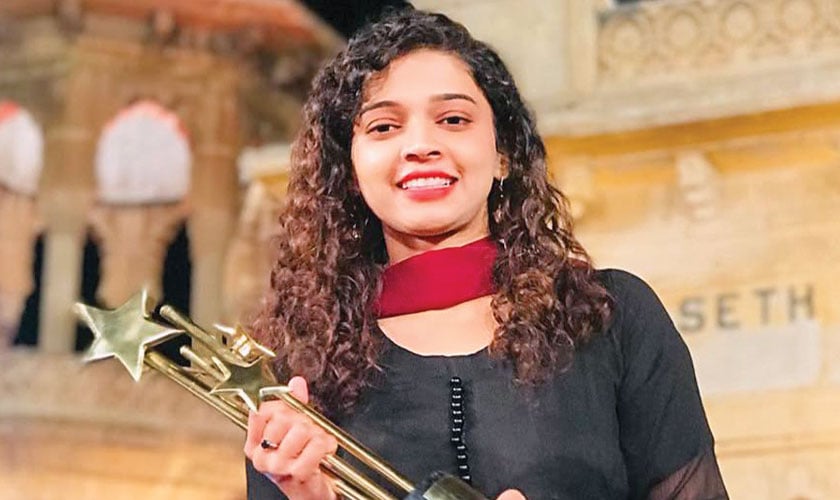
This week You! is in conversation with Shaheera Jalil Al Basit – an unconventional actor and an activist...
interview
We have all heard the story of Ukraine’s President Volodymyr Zelenskyy - the actor-turned-politician who believed that storytelling could change minds and even shape nations. In a different, but equally powerful way, Shaheera Jalil Al Basit is walking a similar path. She’s not running for office, but she is choosing the screen to ask uncomfortable questions, challenge deeply rooted norms, and bring society’s overlooked truths into the spotlight.
Shaheera is not your conventional actor. In fact, acting wasn’t even part of the plan. With a degree in Geophysics and a Fulbright scholarship to study Public Policy in the U.S. in 2017, she seemed headed toward a very different future. But life, as she says, had other plans. What began as a passion for impactful storytelling has grown into a fast-rising acting career - with roles that leave a mark long after the credits roll.
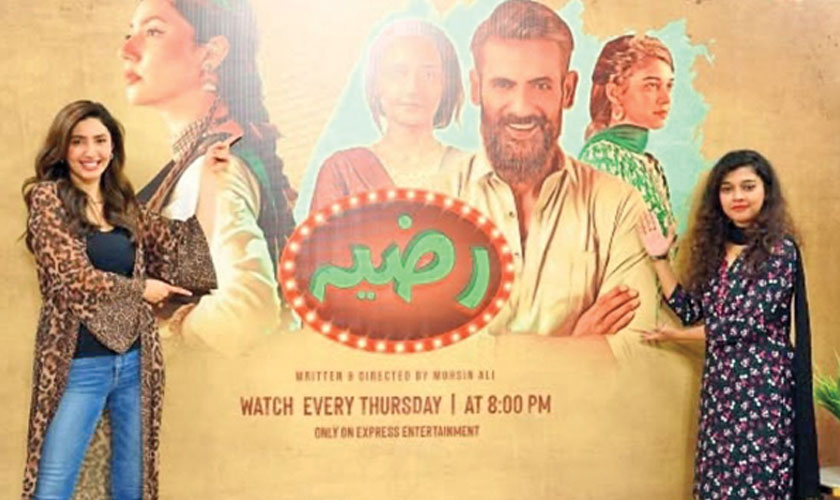
Her debut as Razia - directed by Mohsin Ali - did just that. It was a character that cracked open important conversations about patriarchy, gender roles, and the life choices women are often denied. Talking to You! about how ‘Razia’ came into her life, Shaheera humbly admits, “I got lucky.” Director Mohsin Ali saw one of her audition monologues and, within ten seconds, decided she was his Razia. But what really struck her was hearing the story from him directly. “He had written it himself, and when he narrated it to me, it was so emotional - I had goose bumps; I even started crying.”
The moment became even more surreal when she learned she’d be acting alongside Mahira Khan, Momal Sheikh, and Mohib Mirza. “I called my mom and said, ‘It’s finally happening.’ We were both in shock.”
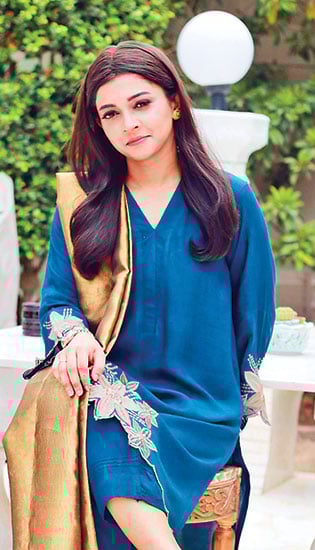
Since then, Shaheera’s roles have only become more nuanced and layered. Her performance in Manjhli – directed by Syed Wajid Raza, where she plays a complex middle child grappling with emotional scars, has also sparked conversations - and some controversy. Many on social media called the character ‘rude’ and ‘badtameez’. Shaheera wasn’t surprised.
“Even I thought she was a bit problematic when I first read the script,” she says. But instead of brushing it off, she dug deeper. “I gave a month to understand her. I sat with the character, internalised her trauma, and built her world before stepping into her shoes. The point was never to justify her actions, but to show how trauma can shape someone,” elucidates Shaheera.
She adds that audiences often fail to understand the silent battles some people live through. “We all see mentally disturbed people around us, but no one knows their back story. It’s easy to judge them when you don’t know what they’ve been through.”
Still, she believes in responsible storytelling. “Yes, storytelling is evolving. We’re finally seeing characters with depth and flaws. But we shouldn’t romanticise or excuse wrongdoing just because someone has a traumatic past. Wrong should still be portrayed as wrong.”
While she’s drawn to characters with emotional depth, Shaheera admits they take a toll. “Razia and Manjhli both the characters took my breath away. I was emotionally drained.”
Next up, Shaheera is stepping into history. In Fatima Jinnah – a webseries, she plays the role of Vijay Lakshmi Pandit, daughter of Motilal Nehru, portrayed by Usman Peerzada.
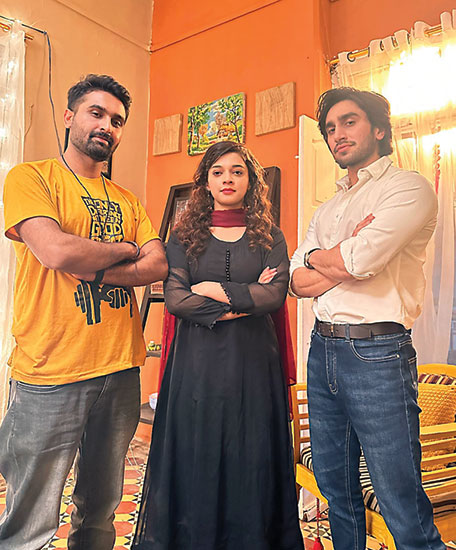
“Vijay Lakshmi had a powerful identity of her own. She was a politician, an ambassador, a strong voice in her own right. It was an honour to step into her shoes,” she expresses.
Having worked on a period drama like this, Shaheera says she’d love to explore more biographical roles. “I fell in love with the whole process of Fatima Jinnah. Yes, I’d love to do biographies now, period dramas are difficult to make, but there are so many untold stories in Pakistan - from sports, politics, to philanthropy. We have no shortage of incredible people whose lives deserve to be portrayed.” She also informs that volume one of the much-anticipated series Fatima Jinnah has been beautifully shot.
Shaheera’s commitment to storytelling doesn’t stop at the screen. It’s deeply rooted in personal grief, and activism born from loss. She takes us back to a day she remembers clearly - 18th May 2018 - the day her 17-year-old cousin Sabika Sheikh was shot and killed in the Santa Fe school shooting in Texas. “Sabika was on a year-long exchange programme in the U.S. - one I had actually pushed her to apply for. She had just 21 days left before coming back home. That day, she was in her art class when a shooter came in and killed eight students and two teachers. Sabika was one of them,” recalls Shaheera.
Shaheera was in Washington D.C. when it happened. “I had a gut feeling. I found out through her Facebook that she had passed away. I brought her body back to Pakistan, and something inside me shifted forever,” she shares.
That tragic incident launched her into advocacy against gun violence in the U.S. - a country where it remains a deeply polarising issue. She joined forces with ‘March For Our Lives’, an organisation working on gun control reform, and despite being an exchange student unfamiliar with American legal frameworks, she drafted three bills addressing gun violence.
“It wasn’t easy. I met lawyers, activists, and kept pushing Sabika’s story forward. Two days before my flight back to Pakistan, I got a call from Sheila Jackson - the bills I had drafted were going to be presented in the U.S. Parliament. It was a moment of both grief and pride. I had finally done something for Sabika,” sighs Shaheera.
Back in Pakistan, Shaheera continued her advocacy and, in 2019, drafted the Youth Quota Bill, pushing for 30 per cent youth representation in parliament. “I called every MNA and MPA I could. The effort was real. But unfortunately, the bill didn’t move forward. The technicalities and lack of political will stalled it,” she laments.
She believes that if the bill had passed, it could have paved the way for more examples like Zohran Mamdani - young voices representing real people. “If we had secured space for the youth then, maybe today we’d be closer to seeing real change in our assemblies,” she points out.
From policy rooms in Washington to film sets in Karachi, Shaheera Jalil Al Basit is harnessing every platform to amplify voices often left unheard. She is set to shine in the upcoming project ‘Khan’ and will take the lead opposite Adnan Siddiqui in ‘Aakhri Bar’.
The writer is a Lifestyle & Entertainment journalist at Geo Digital. She can be reached at kehkashan.fiza@geo.tv