This was a good weekend for Pakistani fashion in London. Four of the country’s designers showcased at London Fashion Week and did the country proud. While Omar Mansoor lent some international exposure to Koya hand woven fabric (perhaps this will lead to foreign brands working with weavers in Pakistan),
Designer: Omar Mansoor
This weekend Omar Mansoor showcased his 11th collection at London Fashion Week whereas Wardha Saleem, The House of Kamiar Rokni and Zaheer Abbas shone under the Fashion DNA spotlight.
This was a good weekend for Pakistani fashion in London. Four of the country’s designers showcased at London Fashion Week and did the country proud. While Omar Mansoor lent some international exposure to Koya hand woven fabric (perhaps this will lead to foreign brands working with weavers in Pakistan), Wardha Saleem, The House of Kamiar Rokni and Zaheer Abbas took indigenous ethnic elements and adapted them to LFW’s western sensibility. This may sound like a cliché but repeatedly showing to western audiences and adapting motifs of our culture for western consumption is the only way that Pakistan’s fashion will be seen and perceived as ‘Pakistani’ as opposed to Indian.
London Fashion Week
Omar Mansoor showcases his A/W2016 collection, L’art Vivante
Originally from Faisalabad, Omar Mansoor moved to London to study fashion several years ago and today, he can say that he has successfully showcased 11 collections at London Fashion Week. This year’s collection, titled L’art Vivante (Living Work of Art), was inspired by eccentric Italian heiress Marchesa Casati who was a patron of the arts in the early 20th century. More interestingly, Mansoor worked with Koya silk
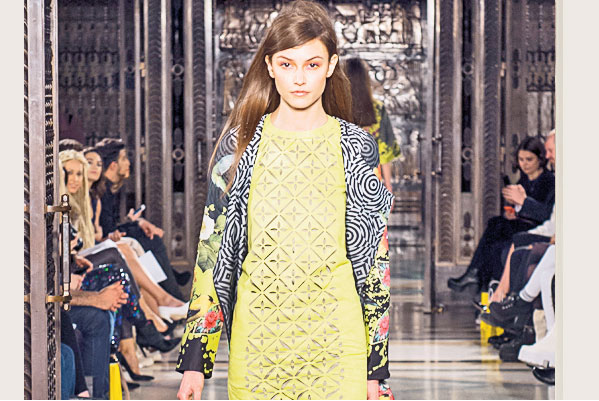
Warda Saleem
in three of his outfits. Meaning Cocoon in Urdu, Koya is a movement headed by veteran Pakistani designer Maheen Khan, in which she hopes to revive, re-introduce and even rehabilitate the dying craft of hand woven fabric. It found its way from Karachi’s Banaras Colony to London, quite a success in its own right.
Fashion DNA
Wardha Saleem, The House of Kamiar Rokni and Zaheer Abbas adapt ethnicity to a global perspective
The Fashion DNA showcase during London Fashion Week was originally expected to feature four designers from Pakistan but Akif Ilyas, reportedly, was unable to send his collection on time.
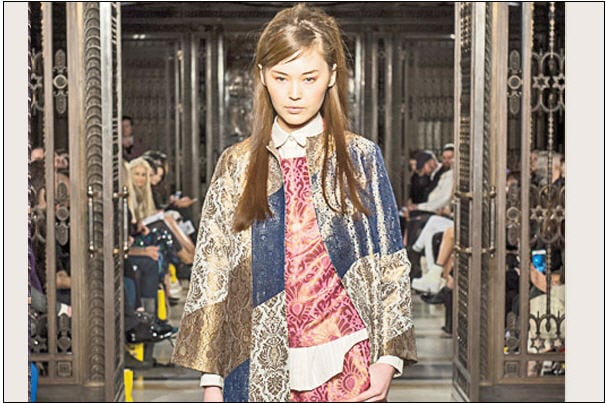
The House of Kamiar Rokni
Amongst those who did, Wardha Saleem’s A/W2016 collection was a delightful mix of colour and craft, evident in the vivid palette and liberal use of laser cutting. Using cultural influences from Pakistan, Wardha incorporated the popular Poppy flower and motifs such as the eye, adapted from truck art. Her favourite, she says, was a realistic depiction of flora and fauna. “It was a mix of cultures,” the designers explained. “Our mentors advised us to go minimal with the embroidery to keep it cost effective.” The bags, developed with Jafferjees were as big a hit on the runway and the brand, receiving many queries about them, will eventually be retailing them on their e-store. Wardha will be showcasing this collection at Fashion Pakistan Week in Karachi, this April.
The House of Kamiar Rokni’s Fashion DNA collection was a tribute to their heritage. “We were keeping some sense of where we’re from,” Kamiar spoke to Instep. The focus of the collection was its use of fabric that could be reproduced in Pakistan, therefore the liberal use of lush brocades, jacquards, cotton, karandi and jamavar. Done in an evidently contemporary way the capsule featured pantsuits and menswear inspired silhouettes. “We layered the cuts and fabric,” Kamiar further explained. “We created texture and layering; there was a sense of Eastern mysticism. Embellishment was minimal but it was handcrafted, wherever incorporated.”
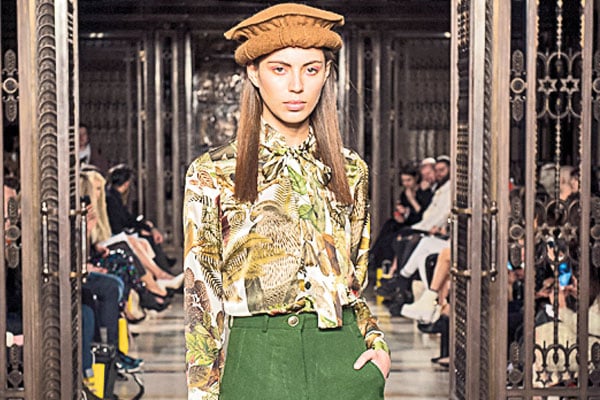
Zaheer Abbas
“We have agents that we’ve worked with in Europe so hopefully that’ll lead to something,” the designer said about retailing the collection. He will be adding five more pieces to this capsule and showing it at the PFDC Sunsilk Fashion Week next month.
Instep was unable to speak to Zaheer Abbas after the show but his collection did speak for itself. Committing to his signature prints from Printology, the designer made use of the Pakol, the woolen Chitrali cap, worn in the Northern areas of Pakistan.
The fashion show was a great round up of all the work and mentoring these designers had gone through in the past several months. It would have been ideal had they been in London to attend the shows and interact with potential buyers and media but that opportunity was lost as their visas did not come through on time. They also missed the chance to attend several workshops scheduled in London around this time. That said, the program ended constructively and that itself is a good enough beginning, so to speak.
– Pictures by Shahid Malik