The train will make as many stops along the way as the owner requests....
BITS’N’ PIECES
A culmination of 30 years of concept work, the G Train is the world’s first private luxury train, the estimated cost of which according to the French designer Thierry Gaugain is “more than $350 million.”
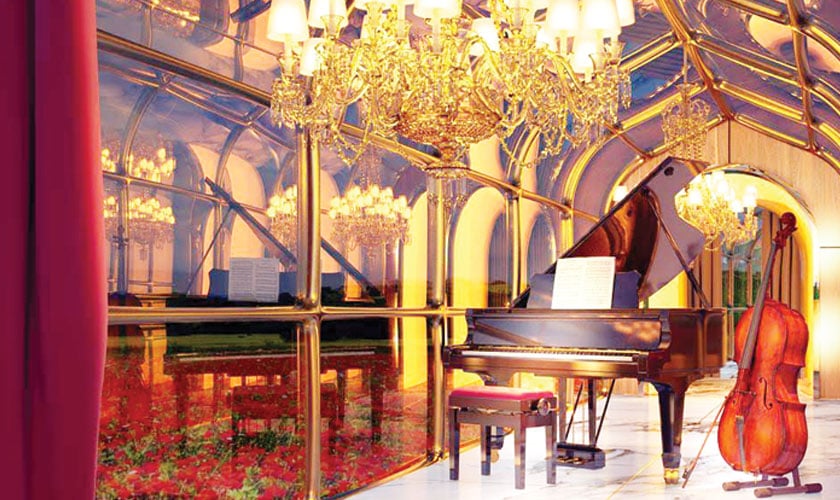
It is a masterpiece of 21st century design and engineering. It can best be described as a “palace on rails” with 14 cars stretching over 400 metres, sheathed in 3,500 sqm of special technical glass. Despite its length, the train will run at a speedy 160 kilometres per hour, with four bespoke locomotives adapted to railways across the Americas and Europe, from Mediterranean shores up to Scandinavia and Russia. The train will make as many stops along the way as the owner requests.
With space for 18 overnight guests, the train has two sections: one for the owner’s accommodation and entertainment space and the other for crew and guests’ quarters. There’s one large VIP suite, three VIP suites and three additional suites, plus a VIP salon. For social events, wings fold down to form alfresco terraces for parties, dinners or concerts. There’s even a garden onboard.
The exterior of the train will be made of new-generation technical glass making the train either visible or invisible to anyone who sees the train pass, creating a gold hued, opaque exterior design. This new smart glass will quickly change from transparent to black by touching a button, offering immediate privacy.
The G Train is now available to build for her owner as a more eco-friendly, relaxed alternative to private jet travel.

Chefs and bakers spent 14 hours mixing, kneading, chopping and frying ingredients in a temporary outdoor kitchen in the east of the capital, Kampala, to set the new Guinness world record for Uganda’s popular dish: the Rolex.
The dish, found at road-side stalls throughout the country, is made from a vegetable omelette with added tomatoes wrapped up in a chapati. It is quick to prepare and can take less than three minutes when all the ingredients are ready.
But for this challenge, it took a team of 60 people to prepare the meal. The ingredients that went into the hefty dish included 1,200 eggs, 90kg of vegetables (onions, tomatoes, cabbages, carrots and peppers), 72kg of flour and 40kg of cooking oil. Moreover, the challenge involved physics as well as cooking skills. Moving the dough to the frying plate without it breaking apart proved tricky, as well as getting it onto a weighing machine.