Then Tharid (a dish prepared from meat and bread) would be prepared and the Talbina would be poured on it....

BITS ‘N’ PIECES
Narrated by Aisha (R.A)
[the wife of the Prophet(S.A.W )] that whenever one of her relatives died, the women assembled and then dispersed (returned to their houses) except her relatives and close friends. She would order that a pot of Talbina be cooked. Then Tharid (a dish prepared from meat and bread) would be prepared and the Talbina would be poured on it. ‘Aisha would say (to the women),“Eat of it, for I heard Allah's Apostle saying, ‘The Talbina soothes the heart of the patient and relieves him from some of his sadness.’ ”
Sahih Bukhari, Volume 7, Book 65, Number 328
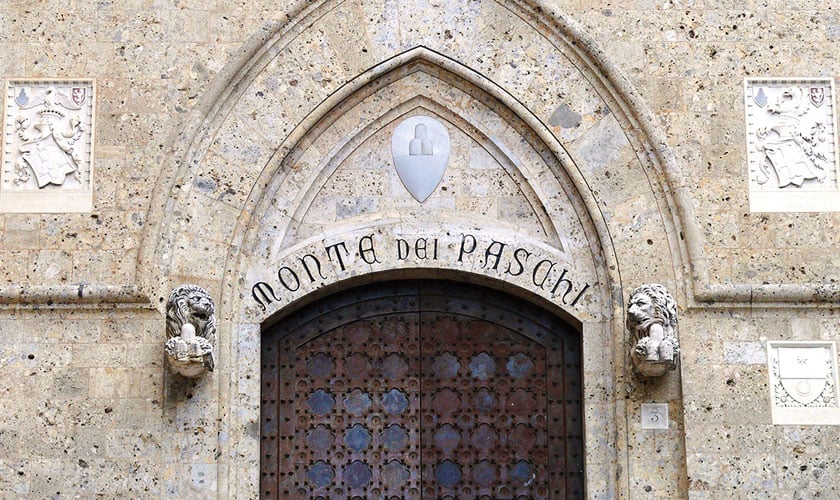
The oldest surviving bank was founded in Siena, Italy.
Banca Monte dei Paschi di Siena S.p.A. (MPS) is the world’s oldest surviving bank, with a history dating back to 1472. Founded in Siena, Italy, MPS has played a crucial role in the development of modern banking, evolving from a local financial institution into a significant player in the Italian and European banking sectors.
MPS was established by the Magistrature of the Republic of Siena to provide financial support to the city’s economy. Over the centuries, it expanded beyond its original purpose, financing trade and agriculture and helping shape Italy’s financial landscape. The bank survived political upheavals, wars, and economic crises, cementing its reputation as a resilient institution.
During the 20th century, MPS grew significantly, acquiring other banks and expanding its services. It became a leader in retail banking, wealth management, and corporate finance. By the early 2000s, it was one of Italy’s largest banks, serving millions of customers across the country.
The 2008 global financial crisis marked a turning point for MPS. In 2007, the bank acquired Banca Antonveneta for €9 billion in a rushed deal that strained its finances. The crisis further weakened MPS, leading to significant losses. Allegations of fraud and mismanagement emerged, and the bank required multiple government bailouts to stay afloat.
In 2013, the European Central Bank and Italian authorities intervened, imposing restructuring measures. Despite efforts to stabilize its finances, MPS struggled with non-performing loans and declining investor confidence. The Italian government injected billions of euros to prevent its collapse, making it the majority shareholder in 2017.
In recent years, MPS has undergone restructuring to regain stability. The bank has reduced costs, improved digital banking services, and streamlined operations. In 2022, it raised €2.5 billion in capital to strengthen its position. Discussions of mergers with larger banks, such as UniCredit, have surfaced as potential solutions for long-term viability. While its future is uncertain, its rich history and ongoing restructuring efforts reflect its determination to remain a key financial institution. Whether through government intervention or strategic partnerships, MPS continues its journey in the evolving banking landscape.