When the Export Facilitation Scheme (EFS) was first launched, it was celebrated as a bold initiative to place Pakistan firmly on the path of export-led growth. The promise was simple yet ambitious: exporters would gain relief through duty-free import of raw materials, allowing them to compete more effectively in global markets.
TRADE POLICY
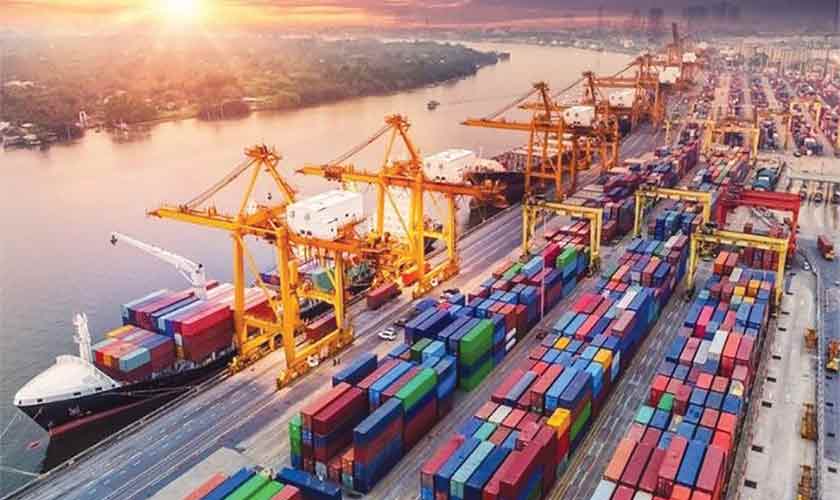
When the Export Facilitation Scheme (EFS) was first launched, it was celebrated as a bold initiative to place Pakistan firmly on the path of export-led growth. The promise was simple yet ambitious: exporters would gain relief through duty-free import of raw materials, allowing them to compete more effectively in global markets.
But several years later, the results tell a very different story. Exports have remained stagnant, failing to break past modest levels, while imports under EFS have multiplied. The scheme, instead of driving export growth, has created distortions that actively undermine local industry. We must now ask the difficult but necessary question: has EFS become less about export facilitation and more about import promotion?
If EFS had delivered on its promises, Pakistan’s export figures would reflect a strong upward trajectory. Yet, they remain stuck and show little sign of the breakthroughs policymakers anticipated. The cost relief provided by duty-free imports has not translated into meaningful export gains. On the contrary, the scheme has turned into an open invitation for increased imports.
Importers benefit from duty-free access, while local manufacturers — particularly in sectors such as chemicals and other intermediate goods — face unfair competition from regional manufacturers dumping their goods in the country. EFS does not allow dumping duties to be in place, which is the lever used by countries to safeguard domestic industry against this practice.
Why would buyers choose domestically produced goods when cheaper duty-free and dumped imports are readily available? This policy contradiction is striking. Pakistan, already saddled with a chronic trade deficit, should be cutting reliance on imports. Instead, EFS has deepened dependency on imported raw materials, even when viable domestic alternatives exist.
In effect, we are bleeding foreign reserves to buy inputs that our own industries are capable of producing.
Pakistan has been down this road before. In the 1990s, under the IMF and the World Bank, structural reforms and tariff liberalisation were presented as a cure-all for competitiveness. Average tariffs were slashed from 46.6 per cent in 1996 to just 14.3 per cent by 2005. The result was not export-led growth, but ballooning deficits.
Exports increased only 3.7 times in three decades — from $8.7 billion in 1995 to $32 billion in 2025. In contrast, imports skyrocketed nearly eight times within the same timeframe, from $11.8 billion to $80.3 billion. The trade deficit widened from $3.1 billion to a staggering $48.3 billion. Meanwhile, regional peers forged ahead: Bangladesh’s exports grew 12.6 times, India’s 14.3 times and Vietnam’s industrial output surged thirty-fold. Pakistan, by comparison, experienced premature de-industrialisation, with industrial growth of just six times over the same period.
The Export Facilitation Scheme was meant to be a driver of growth. Instead, it risks becoming a subsidy for imports, draining reserves and penalising local producers
The recently announced National Tariff Policy 2025–30 risks compounding these challenges. It seeks to cut average tariffs further, from 10.4 per cent to below 6.0 per cent by 2030, reducing slabs to 0 per cent, 5.0 per cent, 10.0 per cent, and 15.0 per cent. This is far below the tariff structures of India (up to 70.0 per cent) and Bangladesh (up to 25.0 per cent), both of which continue to safeguard domestic industry while enjoying broader market access through trade deals.
Early signs are worrying. In the first two months of partial implementation, Pakistan’s trade deficit jumped 29.0 per cent to $6 billion, while exports dropped 12.5 per cent in August. The policy is effectively stripping away Pakistan’s last bargaining chip — tariffs — without securing reciprocal concessions through free or preferential trade agreements.
Unilateral liberalisation without safeguards has left Pakistani industry dangerously exposed. The previous tariff policy (2019–24) had drawn a clearer line, lowering duties on essential inputs and machinery while maintaining higher tariffs on luxury and finished goods. This allowed production costs to fall without overwhelming local manufacturers.
The new policy, however, offers no such protection. Domestic producers are now forced to compete head-on with a flood of imports, often subsidised and dumped by stronger economies. The result will be further industrial decline, rising trade deficits and instability in the external account.
If EFS and tariff liberalisation policies are to have any future, they must be urgently reformed. Several steps are essential. We must protect local alternatives. Duty-free imports must not be allowed where domestic production capacity already exists and exporters availing EFS should be required to demonstrate substantial value addition, not simply re-export goods made from cheap imported inputs. Antidumping duties must also be applied. All imports including those under EFS should be subject to antidumping duties, which are levied by the countries under international trade laws to promote fair competition, and regular audits must track whether beneficiaries are actually delivering export growth.
Policy dialogue is also crucial. Local manufacturers must be consulted before policies that directly affect their survival are introduced. Above all, Pakistan must recognise that the era of naive globalisation is over. Today, trade is shaped by reciprocity, smart deals and protection of strategic industries. Our peers — from Bangladesh to India — understand this reality and safeguard their industries accordingly.
The Export Facilitation Scheme was meant to be a driver of growth. Instead, it risks becoming a subsidy for imports, draining reserves and penalising local producers. Unless reformed, it will drag Pakistan further into dependency and deficit. It is time to realign our policies with present global realities. Tariffs must be used strategically as a negotiating tool, not surrendered unilaterally. Domestic industry must be protected and exports must be built on true competitiveness and value addition.
Only by correcting course can Pakistan move towards a resilient, competitive export base — one that strengthens, rather than undermines, its economic security.
The writer is a freelance contributor.