Pakistan has one of the largest reserves of untapped minerals. Underneath its soil, there are more than 90 types of minerals, ranging from copper, gold, lithium, cobalt as well as other rare earth elements. They are estimated to be worth $68 trillion, but mining still contributes only 3.2 per cent to Pakistan's GDP and less than 0.1 per cent towards the overall mineral exports globally.
MINING
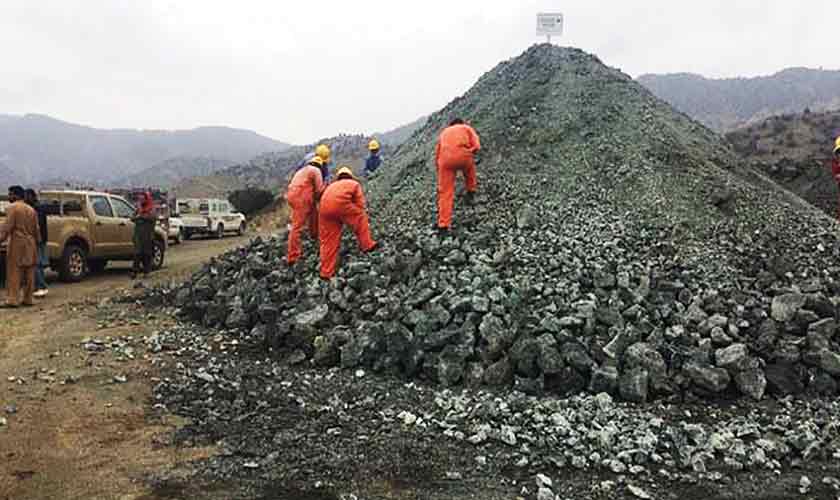
Pakistan has one of the largest reserves of untapped minerals. Underneath its soil, there are more than 90 types of minerals, ranging from copper, gold, lithium, cobalt as well as other rare earth elements. They are estimated to be worth $68 trillion, but mining still contributes only 3.2 per cent to Pakistan's GDP and less than 0.1 per cent towards the overall mineral exports globally.
This mineral base of Pakistan has recently acquired strategic importance, highlighted by the memorandum of understanding (MoU) worth $500 million between the Frontier Works Organisation (FWO) and US Strategic Metals (USSM), due to the global energy transition and digitalisation. This MoU will help position Pakistan in the global power play.
The FWO-USSM MoU, signed in September 2025, represents the most concrete sign of Pakistan’s growing role in critical mineral supply chains. The agreement focuses on the development and processing of minerals such as antimony, copper, tungsten and rare earths.
Within weeks of its signing, the accord delivered visible results: in October, Pakistan sent its first shipment of rare earth minerals to the US. American officials welcomed the agreement, describing it as proof of “the strength of US-Pakistan ties” and emphasising the central role of minerals in advanced manufacturing and energy systems.
Washington’s interest is strategic. China currently controls 80–90 per cent of the world’s rare-earth refining capacity, while the US accounts for roughly 12 per cent. American diplomats have therefore courted Islamabad. Politically, the MoU follows a broader pitch. Pakistan’s courting of Washington has occurred alongside improved US-Pakistan ties and tariff concessions. It also signals an effort to diversify. In a realist lens, Islamabad is hedging between competing powers to maximise leverage.
However, Pakistan’s pivot towards the US does not mark an abandonment of China. Beijing remains a major investor in infrastructure and energy projects under CPEC, and Chinese firms have expressed interest in mining. Islamabad’s creation of the Special Investment Facilitation Council (SIFC) has raised some eyebrows. Meanwhile, members of the Khyber Pakhtunkhwa Assembly have boycotted a new mines bill, alleging it is being passed “to please Americans who want to counter China”. Such domestic scepticism reflects Pakistan’s delicate balancing act: securing investment without igniting such sentiments.
Pakistan’s mineral resources connect geology, politics and governance. To make the most out of this opportunity, the country needs a comprehensive mineral diplomacy plan. Internally, laws must be made clear, roles between federal and provincial authorities must be defined and oversight should be independent
China’s dominance in rare-earth processing cannot be ignored. A report highlights that mismanagement of resource wealth can lead to arbitration penalties and lost billions, as seen when Pakistan cancelled the original Reko Diq contract and faced $11 billion in penalties. The government now seeks to avoid repeating past mistakes by adopting a National Minerals Harmonisation Framework. However, overlapping mandates and inconsistent contract enforcement continue to deter investors. Islamabad must also manage the geopolitical tug-of-war between Washington and Beijing, ensuring that agreements serve national interests rather than tying the country to any single patron.
Governance weaknesses remain the most persistent challenge in the process. Mining regulations are fragmented between federal and provincial levels and the Harmonisation Framework is still new and untested. Foreign firms regularly complain of unpredictable taxation and poor dispute resolution. Without stronger institutions, the mineral sector risks sliding into corruption and resource grabs rather than becoming a source of shared national wealth.
Environmental and social protections are also significantly weak. Companies are required to submit environmental impact assessments (EIAs), but in practice, rules are not strictly followed. There have even been proposals put forward to shut down the Pakistan Environmental Protection Agency, which has raised significant concerns among environmentalists. In provinces like Balochistan and Gilgit Baltistan, where lithium and rare earth deposits exist, water is already very limited. Mining without proper care could make poverty worse and damage the environment.
Pakistan’s mineral resources connect geology, politics and governance. To make the most out of this opportunity, the country needs a comprehensive mineral diplomacy plan. Internally, laws must be made clear, roles between federal and provincial authorities must be defined and oversight should be independent.
A sovereign wealth fund for minerals could save revenues for the future and stop misuse. The National Minerals Harmonisation Framework should be transparent and include strong environmental and social standards. EIAs must be imposed, and the Environmental Protection Agency should be strengthened. Local communities should be given royalties, jobs and joint ventures, and their complaints should be handled peacefully via dialogue.
At the global level, Pakistan should not depend only on one country. Partnerships with the US, China, Gulf countries and others should be made in a way that brings technology transfer and value addition domestically. The USSM-FWO deal plans to build refineries and plants in Pakistan; this type of condition should be in every mineral contract. Regarding human rights, Pakistan can invite international monitoring and adhere to standards such as the Extractive Industries Transparency Initiative (EITI). Only through such careful and fair policies can Pakistan turn its mineral wealth into a real economic opportunity.
The writer is a freelance contributor.