For the people living in the rugged Kirthar Range of Dadu district in Sindh, each monsoon season is not a blessing but a time of fear. Flash floods, driven by intense seasonal rains, frequently devastate the region -- sweeping away homes, drowning livestock, damaging infrastructure and leaving fertile but rain-dependent lands parched for most of the year.
NATIONAL PROJECTS
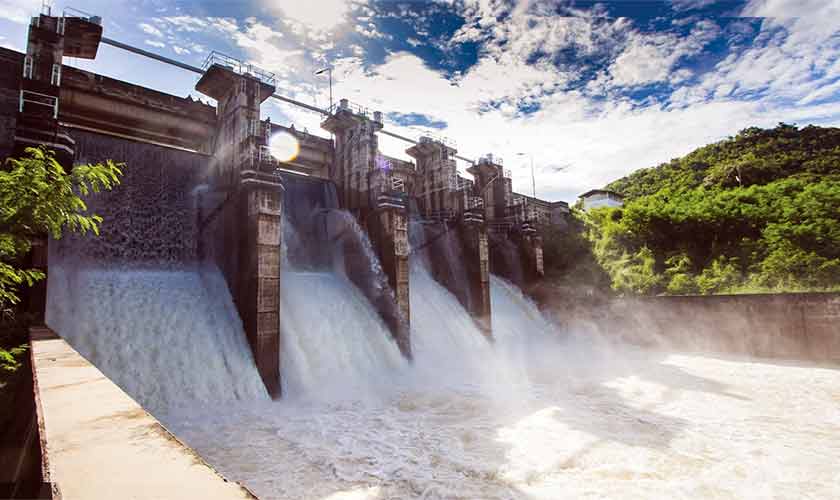
For the people living in the rugged Kirthar Range of Dadu district in Sindh, each monsoon season is not a blessing but a time of fear. Flash floods, driven by intense seasonal rains, frequently devastate the region -- sweeping away homes, drowning livestock, damaging infrastructure and leaving fertile but rain-dependent lands parched for most of the year.
In 2024, monsoon rains submerged nearly 200 villages in the region as the Gaj River swelled beyond its seasonal limits, repeating a pattern of destruction that has persisted for decades.
At the heart of this repeated disaster lies a long-unfinished promise: the Nai Gaj Dam. Conceived over 20 years ago as a multi-purpose development project, the dam was intended to control floods, provide water for irrigation, replenish the rapidly drying Lake Manchar, generate clean energy and spur socioeconomic uplift in one of Pakistan’s most underdeveloped areas. Today, it stands as a stark reminder of institutional failure -- partially built, vastly over budget and still years away from completion, if at all.
The Nai Gaj Dam was designed as part of the Lower Indus Right Bank Irrigation and Drainage Project. Its site lies on the seasonal Gaj River, a tributary of the mighty River Indus. Located roughly 65 kilometres northwest of Dadu city, the project was envisioned as a lifeline for the water-scarce region of Kachho and surrounding areas.
Once completed, the earth-fill embankment dam -- 59 meters high -- was expected to store 3.0 million acre-feet (MAF) of water, with a live storage capacity of 1.6 MAF. This would support irrigation on a cultivable command area of 28,800 acres within a gross command area of nearly 57,000 acres. It would also ensure the supply of 110 cusecs of water to Kachho and Kohistan and 50 cusecs to Lake Manchar -- the largest natural freshwater lake in Pakistan, which is now under ecological threat due to drying up.
In addition to flood control and water supply, the dam includes a 4.2MW hydropower component to generate 17.67GWh of clean electricity annually. A fisheries development programme and local water supply schemes were also part of the original plan to support livelihoods and improve the quality of life in this remote and impoverished region.
The original timeline for the project was optimistic. Although a feasibility study was prepared in 2006 by a subsidiary of Wapda -- the executing agency -- the project’s foundation stone was laid even earlier in February 2005. The dam was scheduled to be completed within four years.
However, real construction began only in May 2012 after the project’s PC-I was approved in 2009 by the Executive Committee of the National Economic Council (ECNEC) at a cost of Rs16.924 billion. Since then, the project has suffered a near-constant cycle of delays, design changes, stoppages, and cost revisions. As of June 30, 2025, financial progress remains just over 50 per cent, with Rs25.195 billion already spent, but it belies the actual physical progress on the ground. The official completion date has been extended multiple times -- from 2015 to 2020, then to 2024, and now to 2028 -- though that, too, appears increasingly unlikely.
Frequent funding disruptions and a lack of coordination between federal and provincial agencies have stalled work repeatedly. The contractor has often suspended operations over price escalation disputes and delays in payments. In several instances, the contractor resorted to litigation, further complicating progress.
The project’s history is riddled with complications. Based on Wapda’s tender process, the construction contract was awarded on April 4, 2011, to a joint venture comprising one Chinese company and three Pakistani firms. The contract was awarded at Rs38.70 billion -- more than double the original PC-I project cost and ECNEC-approved cost, reportedly in violation of rules.
The Nai Gaj Dam is no longer just a stalled development project. It is a cautionary tale of how institutional inertia, poor oversight and lack of political will can sabotage even the most urgently needed infrastructure. Unless there is a complete overhaul in approach, the dam risks being permanently shelved
The most notorious episode in the project’s troubled history, however, occurred in August 2012, when Wapda discovered that the contractor had submitted a fake performance security via a bank guarantee of Rs2.715 billion. This led to the termination of the contract. The matter dragged on in litigation by the contractor and finally, through arbitration under orders of the Sindh High Court, the issue was settled in February 2021 and work resumed -- after nearly a decade of lost time. It remains unclear whether the contractor ever replaced the fake bank guarantee with a valid one.
Meanwhile, the Export-Import Bank of China (China Eximbank), which had committed a preferential buyer’s credit of $318.53 million for the project, withdrew its support in 2019, ostensibly due to the unresolved contractor dispute. Earlier, on July 25, 2009, the China Eximbank had agreed to finance the Nai Gaj Dam under a broader small dams programme in Pakistan. Initially, the loan amounted to $212.07 million, effective May 1, 2012. The government was left to proceed without any foreign exchange component, relying entirely on federal PSDP allocations in rupees.
The dam’s cost has escalated sharply. Revised to Rs26.236 billion in 2012, it rose to Rs41.791 billion by 2019. The latest approved PC-I in 2021 puts the cost at Rs45.081 billion. However, critical components such as the sprinkler irrigation system and a 52-kilometer water supply pipeline were reportedly dropped to limit costs. If reinstated, the actual cost would exceed Rs48 billion. Despite this, no progress has been made on the procurement of machinery for the power plant, which itself would require about five years for installation and commissioning.
While the federal government bears the bulk of the financial burden, the Sindh government’s role has been far from helpful. Initially expected to share 50 per cent of the cost, the provincial government eventually contributed only four per cent -- primarily for land acquisition. Even this commitment has been sluggish: by 2019, just 303 acres had been acquired out of the 7,507 acres needed. As late as May 2025, a decision was made to acquire an additional 295 acres of private land, raising fresh concerns over further delays and cost escalations.
The late-stage acquisition of land, lack of planning and bureaucratic inertia reveal deep flaws in inter-agency coordination and project governance. Despite repeated inquiries by parliamentary committees, there has been little accountability, if any, for the delays, cost overruns, and key administrative bottlenecks.
Given the gravity of the situation, the Nai Gaj project has been taken up by the Supreme Court and parliamentary committees on multiple occasions. In 2018, the apex court began monitoring its progress, expressing serious concern over alleged corruption, funding lapses and slow work. It directed the federal government in November 2024 to submit a report -- an order that was ignored. The Sindh High Court later issued a show-cause notice to the Wapda chairman in June 2025 for failing to comply.
The Senate Standing Committee on Planning, Development and Reform even recommended in 2019 referring the matter to the National Accountability Bureau (NAB), given the scale of mismanagement and suspected irregularities. Despite all this scrutiny, the project remains in limbo and the affected communities continue to suffer.
Beyond the monetary losses, the failure to complete Nai Gaj Dam has had profound human and environmental consequences. Entire communities remain vulnerable to floods and droughts. Agricultural potential remains unrealized. Access to clean drinking water and electricity is still a dream in many remote villages. Lake Manchar, once a vital ecological resource and economic lifeline for thousands of fisherfolk, continues to dry up.
The dam project, once touted as a regional game-changer with annual economic benefits estimated at over Rs6.8 billion, now symbolises dysfunction and broken promises. The contractor has once again suspended work, abandoning the site in March 2025 due to a funding crisis, and has gone to court in May 2025 seeking another price escalation.
The Nai Gaj Dam is no longer just a stalled development project. It is a cautionary tale of how institutional inertia, poor oversight and lack of political will can sabotage even the most urgently needed infrastructure. Unless there is a complete overhaul in approach -- encompassing financial discipline, political ownership, inter-agency coordination and transparency -- the dam risks being permanently shelved, like the ill-fated Kalabagh Dam, a vital national project that never materialised despite significant public investment.
It is not too late to rescue the Nai Gaj Dam project. But doing so will require more than rhetoric. It will require commitment, accountability and, above all, the political will to prioritise the lives and livelihoods of the people it was meant to serve.
The writer is a retired chairman of the State Engineering Corporation.