Is the Pentagon using Twitter for disinformation?
Pentagon has launched inquiry after a Washington Post report exposed fake social media accounts
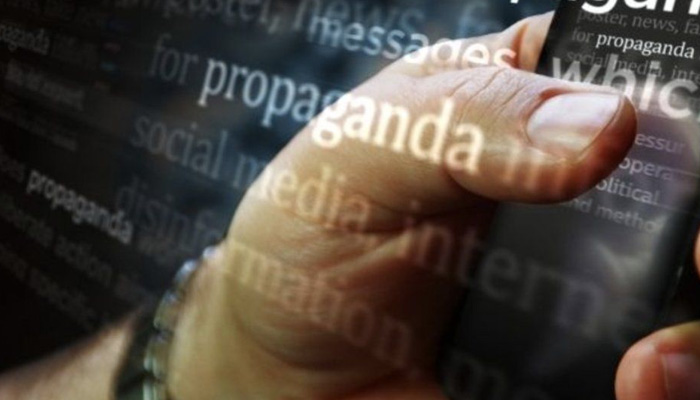
WASHINGTON: The US Department of Defense has launched a review of its psychological warfare operations after the discovery of fake accounts on social media promoting pro-West disinformation, an official confirmed Tuesday.
Pentagon spokesman Pat Ryder confirmed the review after a Washington Post report said social media giants Facebook and Twitter had shut down a number of fake accounts suspecting they were created by the US military.
Ryder did not say confirm or deny that the military was behind fake accounts, and said the information still needed to be reviewed.
He cautioned against assuming that the Defense Department was behind the accounts, leaving it possible that another government agency was involved.
He said the review is "an opportunity for us to assess the current work that’s being done in this arena."
The Washington Post noted a report last month by Graphika and the Stanford Internet Observatory on pro-Western covert influence operations.
The report said Twitter and Facebook parent Meta had removed nearly 150 US and Britain-origin accounts in July and August engaging in "inauthentic behaviour."
The Graphika-Stanford investigation said that, after analyzing the accounts they discovered an interconnected web of accounts on eight social media platforms that had been using "deceptive tactics" to promote pro-Western narratives in the Middle East and in Central Asia.
The accounts came from a series of campaigns over five years rather than one single effort, the report said.
The accounts "consistently advanced narratives promoting the interests of the United States and its allies while opposing countries including Russia, China and Iran," it said.
Citing unnamed government sources, the Washington Post tied at least some of the activity to the Pentagon, and said that officials of the US Central Command, which oversees operations in the Middle East, were "facing scrutiny."
Ryder said the military’s psychological operations, or "military information support operations," are structured and legal, and are to support activities in the field.
"These are not public affairs operations," he said.
"It’s an aspect of warfare as old as warfare itself, and we conduct those operations in support of national security priorities," he told reporters.
He noted that military deception operations were crucial in World War II, and are an integral part of the warfighting toolkit.
"There are opportunities in conducting operations against adversaries where you may want to use information in a way that is going to help them think a certain way -- not truthful information," he said.
"What I would highlight is that they must be undertaken in compliance with US law and Defense Department policy and we have safeguards in place and are committed to observing those safeguards," he said.


-
 Trump makes last-minute Russia sanctions move, citing ‘US national interests’
-
 Trump defends himself and Elon Musk after Zelenskiy's criticism over Starlink
-
 Sanae Takaichi under fire for saying women work longer hours because of makeup and chores
-
 Trump urges Zacharia to reconsider White House spokeswoman role
-
 Amber Guyger, Dallas officer who shot Botham Jean in his own apartment, released on parole
-
 Canada changes Express Entry rules for high-paying jobs and removes LMIA requirement
-
 Istanbul hit by worst floods since 1942, as record rainfall kills four
-
 Elon Musk's $158 million GOP donations revealed in new federal election filings
-
 Pope Leo and Putin hold phone call over Ukraine war as Vatican seeks humanitarian ceasefire
-
Alex Murdaugh lawyers question police handling of murder weapons ahead of retrial
-
Cyprus court allows British dad to return home after son's fatal fall at holiday resort
-
IMF chief warns AI risks could outweigh benefits without proper safeguards