Coronavirus ground zero Wuhan slowly returns to normal
Wuhan has had time to look back on its trauma, though only some memories make it into the official narrative
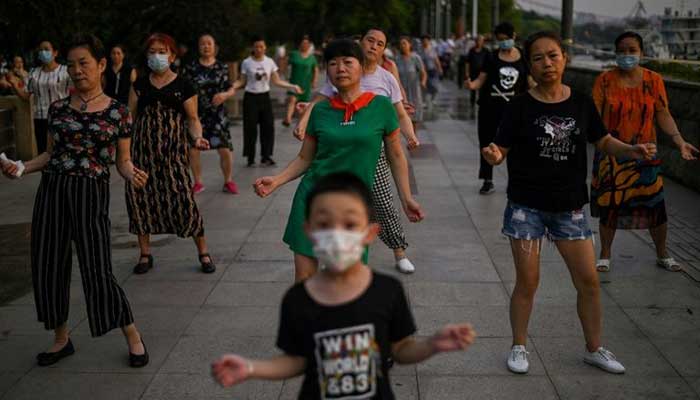
WUHAN: Coronavirus ground zero Wuhan may have seen normalcy a distant dream in January but now the city can see fans dancing at an electronic music festival, long lines at breakfast stands, gridlocked traffic.
The central Chinese city's recovery after a 76-day lockdown was lifted in April has brought life back onto its streets.
The queues snaking outside breakfast stands are a far cry from the terrified crowds that lined up at the city's hospitals in the first weeks after the city was quarantined in January to curb the spread of COVID-19.
The hazmat suits and safety goggles that were once the norm have given way to umbrellas and sun hats as tourists shield themselves from the scorching summer sun, posing for photos in front of the city's historic Yellow Crane Tower.
But all is not back to normal.
Business remains slow in Wuhan, a city of 11 million people where the coronavirus was first detected late last year before it unleashed a global pandemic.
"In the first half of the year, we only opened some projects that had been decided before the outbreak," Hu Zeyu, an employee at a local real estate company, tells AFP.
"Business volume has been greatly reduced."
Food stall owner Yang Liankang says things are improving slowly, with sales growing from around 300 yuan ($28.72) a day a month ago to more than 1,000 yuan.
"It's not as good as my ideal," he says.
In some Wuhan neighbourhoods, plastic barriers ubiquitous during the lockdown continue to restrict traffic.
Many of the people first found to be infected worked at the Huanan Seafood Market, which was sealed off by the authorities.
It still stands empty behind blue barriers. Some vendors have reopened their stalls elsewhere.
Wuhan has also had time to look back on its trauma, though only some memories make it into the official narrative.
At a pandemic-themed exhibition, families peer through glass at autographed hazmat suits used by medical workers at the height of Wuhan's outbreak, in an attempt to document an unprecedented period in the city's history.
China has largely brought its domestic epidemic under control, but sporadic outbreaks and a summer of severe flooding have exacerbated the economic fallout.
Despite fears of a resurgence, some Wuhan residents are keen to enjoy the city's recovery.
"Now I enjoy every day as if it were the last," says Hu Fenglian.
"I don't want to worry too much."


-
 Ryanair challenges injured passenger’s account of terrifying mid-air window incident
 -
 Iceland plans permanent Whaling ban, leaving only Norway and Japan
 -
 Carney cabinet meets behind closed doors as Trump targets more Canadian imports
 -
 Who could get Trump’s $500 Obamacare rebate checks and when will they arrive?
 -
 Doug Ford announces major Ontario cabinet shuffle and creates new AI minister role
 -
 Zelenskyy announces new Canadian air defence support as Ukraine faces missile shortage
 -
 H-1B workers face major setback as Trump proposes ending 60-day grace period: What to know
 -
 Savannah Guthrie refers to Nancy in past tense, crime junkie reporter notes