Apple to replace face ID with in-display fingerprint in upcoming iPhones
Tech giant Apple is buckling up to bring a major change to its upcoming models of iPhone, freeing it of the face identification system from 2020.
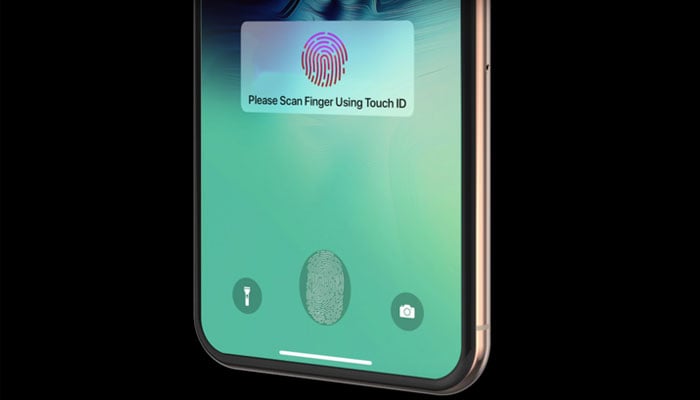
Tech giant Apple is buckling up to bring a major change to its upcoming models of iPhone, freeing it of the face identification system from 2020.
Citing an analyst from Credit Suisse, China Times reports that Apple will remove the face ID feature from iPhones as it plans to release at least one model in 2020 that eliminates the notch.
According to the report, it is expected that iPhone will feature an under-screen camera and full-screen fingerprint authentication.
The fingerprint scanner could be implanted inside the glass, which means the iPhone would almost certainly have an appearance akin to that of the Galaxy S10 which uses the ultrasonic fingerprint scanner and a punch hole camera in the front.
It is also claimed in the report that Apple is actively developing an in-display fingerprint scanner technology on its own and not working with third-party part suppliers.
Moreover, other circulating reports also claim that Apple is working on a new and cheaper iPhone model for the Chinese market which comes without a face ID.
On the other hand, top Apple analyst Ming Chi-Kuo also tends to believe that one of Apple’s 2020 iPhone could feature a smaller camera lens and an upgraded screen-to-body ratio.


-
 Moon water acts nothing like it does on Earth, study finds
 -
 Hawaii’s Hōlei sea arch collapses after centuries on Big Island: What happened
 -
 Solar system may have a much shorter lifespan than we thought
 -
 Singapore builds world’s ultra-precise clock outperforming US, China
 -
 NASA expands Moon base research with three new investigations
 -
 Are Europe's data centres hiding their water use?
 -
 SpaceX set to send Google AI chips into space for data centers
 -
 New report warns of record ocean warming and rising seas